15 models compared across 4 generations. Some of them free. Some of them genuinely excellent. And some already discontinued.
The Gemini model lineup has gotten confusing fast since Google launched the first version in December 2023. Pro, Flash, Flash-Lite, Nano, Ultra. What does each one do? Which one should you actually use?
I use Gemini models regularly (mostly via the API and Antigravity CLI), and I keep this overview updated as new models drop. Here is everything you need to know about features, prices, and availability of all ChatGPT and Claude competitor models from Google.
- Gemini 3.8 Flash is Google's current Flash generation, with a 1,048,576-token context window, up to 65,536 output tokens, and pricing of $0.75 / $3.75 per million tokens through the end of 2026
- According to Google, Gemini 3.8 Flash improves Terminal-Bench 2.1 to 90.8% and SWE-Bench Pro to 61.6%; on Humanity's Last Exam, its 45.4% trails 3.7 Flash slightly
- Gemini 3.8 Flash Cyber is a separate defensive-cybersecurity variant, available only to vetted defenders through the Fairwind program
- In the independent Vals AI comparison, Gemini 3.1 Pro remains ahead on reasoning; that chart uses an older, consistent model cohort and is not interchangeable with Google's vendor figures for 3.8 Flash
- Gemini 2.5 Flash-Lite remains the cheapest powerful LLM on the market; the newer Gemini 3.5 Flash-Lite offers more quality for high-throughput tasks at a somewhat higher price
- All modern Gemini models (from 1.5) are natively multimodal and process text, images, audio, and video simultaneously with up to 1 million token context
What are Gemini Models?
Gemini models are Google's advanced Large Language Models developed by DeepMind and Google Research.
What makes Gemini different? A few things stand out immediately:
First: Native multimodality from the start. Google trained Gemini with text, images, audio, and video, not like other providers who patched that in later. This gives Gemini a much deeper understanding of all these modalities together.
Then there's the context window: Gemini 3.1 Pro processes up to 1 million tokens. That's approximately 700,000 words or over 1,400 book pages. In a single request. That's... very large.
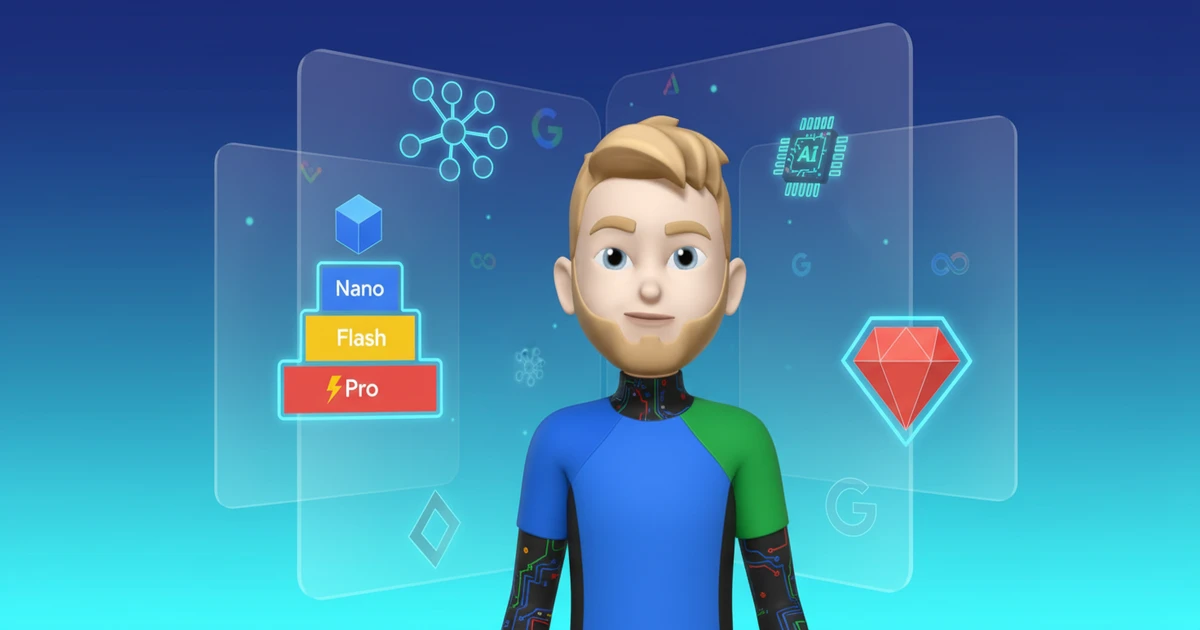
Google also doesn't have a one-model strategy. Instead: Nano for smartphones, Flash for most standard tasks, Pro for demanding stuff. Each has its place. And because Gemini is deeply integrated into Google Search, Workspace, and Android, it works particularly well there.
Google has taken a different approach with Gemini than OpenAI: Instead of focusing on maximum benchmark performance, the focus is on practical versatility, multimodality, and integration into the Google ecosystem.
Before we look at the individual models, here are the key milestones of Gemini's evolution from 2023 to today.
Comparison of All Gemini Models
Here's a detailed overview of all Gemini models with their key properties:
Model | Release | Status | Input | Output | Cache Input |
|---|---|---|---|---|---|
| Gemini 2.0 Flash | 12/2024 | Discontinued | $0.1 | $0.4 | $0.03 |
| Gemini 2.5 Flash-Lite | 06/2025 | Active | $0.1 | $0.4 | $0.01 |
| Gemini 2.5 Flash | 04/2025 | Active | $0.3 | $2.5 | $0.03 |
| Gemini 2.5 Pro | 03/2025 | Active | $1.25 ≤200K / $2.5 >200K | $10 ≤200K / $15 >200K | $0.13 ≤200K / $0.25 >200K |
| Gemini 3 Flash | 12/2025 | Preview | $0.5 | $3 | $0.05 |
| Gemini 3 Pro | 11/2025 | Discontinued | $2 ≤200K / $4 >200K | $12 ≤200K / $18 >200K | $0.2 ≤200K / $0.4 >200K |
| Gemini 3.1 Pro | 02/2026 | Preview | $2 ≤200K / $4 >200K | $12 ≤200K / $18 >200K | $0.2 ≤200K / $0.4 >200K |
| Gemini 3.5 Flash | 05/2026 | Active | $1.5 | $9 | $0.15 |
| Gemini 3.6 Flash | 07/2026 | Active | $0.75 | $3.75 | $0.07 |
| Gemini 3.7 Flash | 08/2026 | Active | $0.75 | $3.75 | $0.07 |
| Gemini 3.8 Flash | 09/2026 | Active | $0.75 | $3.75 | $0.07 |
| Gemini 3.8 Flash Cyber | 09/2026 | Limited access | — | — | — |
| Gemini 3.5 Flash-Lite | 07/2026 | Active | $0.3 | $2.5 | $0.03 |
| Gemini Nano-1 | 12/2023 | Active | — | — | — |
| Gemini Nano-2 | 05/2024 | Active | — | — | — |
Gemini 3.8 Flash
Released: September 2026Gemini 3.8 Flash has been available as a stable API model since September 2, 2026. Google positions it for coding, agents, and knowledge-intensive workflows. It accepts text, images, video, audio, and PDF files and produces text.
The model keeps the 1,048,576-token context window and maximum output of 65,536 tokens from 3.7 Flash. Its documented knowledge cutoff is March 2026, although Google still lists January 2025 for some knowledge domains. Reasoning levels include low, medium, and high. It supports function calling, structured outputs, code execution, Google Search, URL context, file search, and computer use in preview.
In Google's own matched measurements, 3.8 Flash scores 90.8% on Terminal-Bench 2.1, 61.6% on SWE-Bench Pro, and 45.4% on Humanity's Last Exam. Under the same setup, 3.7 Flash scores 81.6%, 60.4%, and 45.7%. The largest published gain is therefore in terminal work, not in the broad knowledge benchmark. SWE-Bench Pro remains a secondary signal because some tasks are disputed.
- Price through December 31, 2026: $0.75 input / $3.75 output per million tokens
- Price from January 1, 2027: $1.50 input / $7.50 output per million tokens
- Context caching through 2026: $0.075 per million cached input tokens
- API string: gemini-3.8-flash
Gemini 3.8 Flash is the first Flash model to test when coding or agentic work is the priority. Google also notes that it may use more tokens than 3.7 Flash on some tasks, so existing production workflows should be evaluated with their own prompts.
Gemini 3.8 Flash Cyber
Released: September 2026Gemini 3.8 Flash Cyber is Google's defensive-cybersecurity variant of Gemini 3.8 Flash. Google describes it as a model for vulnerability discovery and automated patching. It shares the foundational intelligence of Gemini 3.8 Flash, while its deployment and safety boundaries are tailored to cybersecurity work.
Access is limited to vetted defenders through the Fairwind program. Google has not published a separate public API price or context-window value for Flash Cyber, so it should not be compared with the regular API models in the pricing table.
Google reports 86.2% on CyberGym Pass@1 and 47.2% on CWE-Bench Pass@1 for Flash Cyber. It also cites more than 70% on an internal real-world vulnerability benchmark. These are vendor-reported figures from the Fairwind context and are not directly comparable with the Gemini Flash scores above because the evaluation setups differ.
Gemini 3.7 Flash
Released: August 2026Gemini 3.7 Flash has been available as a stable API model since August 13, 2026. Google positions it for fast agentic workflows, coding, and complex multi-step tasks. It accepts text, images, video, audio, and PDF files and produces text.
The model provides a 1,048,576-token context window and up to 65,536 output tokens. Reasoning levels include low, medium, and high. It also supports function calling, structured outputs, code execution, Google Search, URL context, and computer use in preview.
Key features:
- Context window: 1,048,576 tokens
- Maximum output: 65,536 tokens
- Knowledge cutoff: March 2026
- Price through December 31, 2026: $0.75 input / $3.75 output per million tokens
- Context caching: $0.075 per million cached input tokens
- API string: gemini-3.7-flash
One cost-planning detail matters:
Google labels this as time-limited introductory pricing. According to the current pricing table, standard rates rise to $1.50 for input and $7.50 for output on January 1, 2027. The calculator and price index always show the currently valid price.
Gemini 3.6 Flash
Released: July 2026Gemini 3.6 Flash arrived on July 21, 2026. It did not replace Gemini 3.5 Flash, but was tuned for greater token efficiency: 17% fewer output tokens according to the Artificial Analysis Index, plus fewer reasoning steps and tool calls in multi-step workflows. Gemini 3.7 Flash has sat above it as the newer Flash generation since August 2026.
Google has since reduced the price. Through the end of 2026, Gemini 3.6 Flash costs $0.75 for input and $3.75 for output per million tokens. Google lists $1.50 / $7.50 from January 1, 2027. Its knowledge cutoff also moved forward significantly from January 2025 to March 2026.
Key Features:
- More token-efficient: 17% fewer output tokens than 3.5 Flash, fewer reasoning steps and tool calls
- Agentic coding: 58.7% on SWE-Bench Pro (3.5 Flash 55.1%, 3.1 Pro 54.2%)
- Computer use: 83% on OSWorld-Verified (up from 78.4%)
- DeepSWE: 49% (up from 37%), MLE-Bench: 63.9%
- 1 million token context, knowledge cutoff March 2026 (previously January 2025)
- Price through the end of 2026: $0.75 input / $3.75 output per million tokens
- Context caching: $0.075 for cached inputs
- API string: gemini-3.6-flash
What makes Gemini 3.6 Flash special?
Gemini 3.6 Flash is not a pure benchmark jump, it is an efficiency generation: at comparable or slightly better quality, the model needs noticeably fewer output tokens and tool calls to reach a result. In agentic workflows with many intermediate steps, that shows up directly in the price.
Availability: Gemini 3.6 Flash has been available since July 21, 2026 in the Gemini app, for developers through Google Antigravity, AI Studio, Android Studio, and via the Gemini API and Vertex AI.
Gemini 3.5 Flash-Lite
Released: July 2026Gemini 3.5 Flash-Lite is Google's newest Lite model, announced on July 21, 2026 and a step up from its predecessor 3.1 Flash-Lite (February 2026) as well as the older 2.5 Flash-Lite. It is built for high-throughput, low-latency tasks such as agentic search and document processing.
The quality gain over 3.1 Flash-Lite is substantial: on Terminal-Bench 2.1, the model reaches 54% instead of 31%, a 23-point jump. It also outpaces several larger predecessor models on coding and computer-use tasks.
Key Features:
- Terminal-Bench 2.1: 54% (3.1 Flash-Lite: 31%)
- Agentic coding: 54.2% on SWE-Bench Pro (Gemini 3 Flash: 49.6%)
- Computer use: 74.0% on OSWorld-Verified (up from 65.1%)
- Long context: 72.2% on GDM-MRCR v2
- 1 million token context
- Price: $0.30 input / $2.50 output per million tokens
- Context caching: $0.03 for cached inputs
- API string: gemini-3.5-flash-lite
What makes Gemini 3.5 Flash-Lite special?
Gemini 3.5 Flash-Lite shows how fast the Lite lineup keeps moving: for high-throughput use cases like bulk classification or agents with many small intermediate steps, it delivers noticeably more quality than 3.1 Flash-Lite at a similarly low price. For the absolute cheapest option, Gemini 2.5 Flash-Lite remains the right pick.
Availability: Gemini 3.5 Flash-Lite has been available since July 21, 2026 in the Gemini app and through the Gemini API. Integration into Google Search has been announced but hasn't rolled out yet.
Gemini 3.5 Flash
Released: May 2026Gemini 3.5 Flash is Google's agentic Flash generation, unveiled at Google I/O 2026 (May 19, 2026). Gemini 3.6 Flash has since joined it as an even more token-efficient Flash model, but 3.5 Flash remains fully available. It brings frontier performance on agentic tasks and beats Gemini 3.1 Pro on several coding and agent benchmarks, while costing a fraction.
Key Features:
- Agentic coding: 76.2% on Terminal-Bench 2.1 (beats 3.1 Pro's 70.3%)
- Tool use: 83.6% on MCP Atlas
- Multimodal reasoning: 84.2% on CharXiv Reasoning
- ~4x faster on output tokens than comparable frontier models
- 1 million token input, up to 64,000 tokens output
- Multimodal: text, images, audio, video, and PDF
- Price: $1.50 input / $9 output per million tokens
- Context caching: $0.15 for cached inputs (90% discount)
- API string: gemini-3.5-flash
What makes Gemini 3.5 Flash special?
Gemini 3.5 Flash is the first Flash model that competes with Pro-tier models in agentic workflows. It wins 11 of 15 published benchmarks against Gemini 3.1 Pro, especially on tool calls, long-running tasks, and browser agents. On pure reasoning (Humanity's Last Exam, ARC-AGI-2), 3.1 Pro still leads, but for most coding and agent applications, 3.5 Flash is the better and significantly cheaper choice.
The API has also changed: instead of an integer `thinking_budget`, you now set a string enum `thinking_level` with values minimal, low, medium (the new default), and high. If you migrate from 3 Flash, set it explicitly to high or the model will think less than before.
Availability: Gemini 3.5 Flash has been generally available since May 19, 2026 through the Gemini API, Google AI Studio, Vertex AI, Google Antigravity, AI Mode in Google Search, and the Gemini app. Computer Use is not yet supported on 3.5 Flash, so stay on gemini-3-flash-preview for that. Gemini 3.5 Pro has been announced, but Google hasn't confirmed a release date yet.
Gemini 3.1 Pro
Released: February 2026Gemini 3.1 Pro is Google's strongest pure-reasoning model and marks a massive leap over all predecessors. Since February 2026, it has been generally available through the Gemini API, Google AI Studio, and Vertex AI.
Key Features:
- 2x reasoning leap over Gemini 3 Pro on complex tasks
- 94.3% on GPQA Diamond (PhD-level reasoning), a new best score
- 80.6% on SWE-bench Verified (agentic coding)
- 1 million token input, up to 64,000 tokens output
- Multimodal: text, images, audio, video, and PDF
- Tiered API pricing: $2.00 / $12.00 per million tokens (under 200K context), $4.00 / $18.00 (over 200K context)
- Context caching: 90% discount on cached input tokens ($0.20 / $0.40)
- API string: gemini-3.1-pro
Availability: Gemini 3.1 Pro is generally available since February 2026 through the Gemini API in Google AI Studio, Vertex AI, and Gemini Enterprise. It is positioned as the premium model for demanding research, code, and analysis tasks.
Gemini 3 Flash
Released: December 2025Gemini 3 Flash is Google's balanced model that combines frontier intelligence with high speed and low cost. Generally available since December 2025, it is the default model in the Gemini app.
Key Features:
- Frontier performance: 90.4% on GPQA Diamond, 81.2% on MMMU Pro
- Agentic coding: 78% on SWE-bench Verified
- 3x faster than Gemini 2.5 Pro at comparable quality
- 15% better than Gemini 2.5 Flash in overall accuracy
- 1 million token input, up to 64,000 tokens output
- Multimodal: text, images, audio, video, and PDF
- Price: $0.50 input / $3.00 output per million tokens
- Context caching: 90% cost reduction on cached tokens ($0.05 input)
- API string: gemini-3-flash
Availability: Gemini 3 Flash is generally available through the Gemini API in Google AI Studio, Vertex AI, and Gemini Enterprise. It is the default model in the Gemini app and AI Mode in Google Search. Companies like JetBrains, Bridgewater Associates, and Figma use it in production.
Gemini 3 Pro
Released: November 2025Gemini 3 Pro was the third generation of Google's premium AI model with frontier intelligence, Deep Research, and premium performance. Generally available from November 2025 to March 2026.
Key Features:
- Frontier intelligence from Google DeepMind
- Improved reasoning capabilities over Gemini 2.5 Pro
- Deep Research for complex, multi-step analyses
- Multimodal improvements especially in video understanding
- 1 million token context window (input), up to 64,000 tokens output
- Tiered API pricing: $2.00 / $12.00 per million tokens (under 200K context), $4.00 / $18.00 (over 200K context)
- API string: gemini-3-pro
Availability: Gemini 3 Pro was superseded by Gemini 3.1 Pro and retired in March 2026. If you need premium performance today, go straight to Gemini 3.1 Pro.
Gemini 2.5 Pro
Released: March 2025Gemini 2.5 Pro was Google's premium variant through late 2025 and remains a solid choice for demanding tasks. (More about the Gemini API in our separate guide.)
What does Pro offer specifically?
- Top-tier performance on complex reasoning and code tasks
- 1 million token context window (experimentally also 2 million)
- Tiered pricing: $1.25 / $10 for standard prompts (≤ 200K tokens), $2.50 / $15 for longer ones
- Native multimodality (process text, images, audio, video together)
- Prompt caching with 90% discount on cached inputs ($0.125 / $0.25 instead of $1.25-2.50)
- API model string: gemini-2.5-pro
What makes Gemini 2.5 Pro special?
Gemini 2.5 Pro is Google's answer to the then-current Claude 4 Opus and GPT-4o. It offers comparable performance on complex reasoning tasks and surpasses both competitors in processing very long contexts.
The 1 million token window enables analysis of complete books, large codebases, or hours of video transcripts in a single API call.
The tiered pricing structure is competitive: for most standard prompts you pay only $1.25 / $10, below Claude Opus 5.5 ($4 / $20) on both input and output.
Where can you get it? The Google AI API, Google AI Studio, Vertex AI, or Google Cloud.
When do you need Pro? When you want to analyze entire codebases, comb through long research papers, summarize thick contracts, or process hours of video in one shot. This isn't meant for chatbots. That's what Flash is for and it's cheaper.
Gemini 2.5 Flash
Released: April 2025Gemini 2.5 Flash is the balanced variant, the model evergreen of the 2.5 series. It delivers 90% of Pro performance but costs a fraction and is significantly faster.
The key specs:
- 90% of Pro performance at a fraction of the cost
- 2-3x faster than Pro (inference speed)
- 1 million token context
- $0.30 input / $2.50 output per million tokens
- Prompt caching: $0.03 for cached inputs
- Multimodal: text, images, audio, video
- API string: gemini-2.5-flash
What makes Gemini 2.5 Flash special?
Gemini 2.5 Flash is the ideal production model for 90% of all use cases. It offers nearly the same quality as Pro (90% performance) at 80% lower cost and 2-3x faster response time. This makes it perfect for chatbots, content generation, and automation workflows where fast responses matter more than absolute highest precision.
Compared to ChatGPT GPT-4o ($2.50 / $10 per million tokens), Gemini 2.5 Flash offers 75-88% cost savings at similar quality, a strong price-performance ratio.
You can find Flash via Google AI API, Google AI Studio, Vertex AI, Google Cloud, and it's also the backend model for many Google products.
Specific use cases: Chatbots that need to respond quickly. Content generation (articles, marketing copy, social posts). Data extraction from unstructured sources. Email classification, sentiment analysis, summaries. Screenshot understanding and OCR. For all this, you don't need Pro, Flash is sufficient and saves money.
Gemini 2.5 Flash-Lite
Released: June 2025Gemini 2.5 Flash-Lite is what it says: The cheapest usable LLM on the market. And extremely fast at the same time.
The key numbers:
- $0.10 input / $0.40 output per million tokens (cheapest on the market)
- 5x faster than Pro models
- Still 70-80% of Flash performance
- 1 million token context
- Prompt caching: $0.01 for cached inputs
- Multimodal: text, images, audio, video
- API string: gemini-2.5-flash-lite
Why is this so interesting? It's roughly a third cheaper than GPT-4o-mini and a fraction of the price of Claude 4.5 Haiku. And it's not slow. Rather the opposite.
The quality? 70-80% of Flash performance for chatbot responses, simple text generation, and classification. If you need millions of API calls daily, the cost savings are enormous.
Where can you find it? Google AI API, Google AI Studio, Vertex AI.
Use cases: Chatbots with millions daily. Large-scale content moderation. Sentiment analysis, categorization, tags. Real-time applications where low latency matters. Massive batch processing on a small budget.
Gemini 2.0 Flash
Released: December 2024Gemini 2.0 Flash is the older version of Flash and was discontinued in June 2026. Its big advantage was the free API tier with rate limits.
Quick info (as of its discontinuation):
- Free tier (rate limits: 15 req./min, 1,500/day, 1M/month) or paid tier: $0.10 / $0.40 per million tokens
- ~80% of 2.5 Flash performance
- 1 million token context
- Multimodal: text, images, audio
- API string: gemini-2.0-flash
If you still use 2.0 Flash in legacy projects, migrate to 2.5 Flash. For free prototyping, the free tier in Google AI Studio remains available.
Gemini 1.5 Pro
Released: February 2024Gemini 1.5 Pro was a big deal in 2024: First model with 2 million token context. That was a world record at the time.
Today: It was shut down on April 30, 2025. If you're still using 1.5 Pro, migrate to 2.5 Pro or newer. Better performance, less hassle.
What 1.5 had: 2 million tokens (impressive back then). Native multimodality. Strong video and document analysis. But that was 2024.
Gemini 1.5 Flash
Released: May 2024Gemini 1.5 Flash was basically the cheaper, faster version of 1.5 Pro. Also deprecated.
The facts: 1 million token context. Fast, low cost. Multimodal. But it went offline on April 30, 2025. Users should switch to 2.5 Flash or newer.
Gemini 1.0 Pro and Ultra
Released: December 2023Gemini 1.0 was the first attempt. Today: No longer relevant.
What was it? 32,000 token context. Text-only, no images/videos. Pro was standard, Ultra was premium. Both are long gone. Google quickly replaced them with 1.5 and 2.x, much better models.
Gemini Nano
Released: December 2023 / May 2024Gemini Nano is different: On-device AI for smartphones. Runs locally, no cloud.
What's important:
- On-device: Directly on smartphones, no cloud call
- Two variants: Nano-1 (text-only) and Nano-2 (multimodal)
- 4,000 token context (small, but sufficient for smartphone tasks)
- Privacy: Everything stays local
- Hardware: Pixel smartphones, Samsung Galaxy S24+, other Android devices
- Use cases: Smart reply, live transcription, offline translation, photo editing
Availability: Already integrated in various Android phones. Google rolls it out via system updates. Developers can use the AICore API.
Price Comparison of All Gemini Models
The following table shows a detailed overview of all Gemini prices (all figures in $ per million tokens). For a detailed analysis, we recommend our API cost calculator:
Important notes on the price table:
- Gemini 2.5 Pro has tiered pricing: Lower prices for prompts ≤ 200,000 tokens ($1.25 / $10), higher prices for longer prompts (greater than 200,000 tokens: $2.50 / $15)
- Gemini 3.1 Pro uses a two-tier model: $2.00 / $12.00 per million tokens under 200K context, $4.00 / $18.00 above 200K
- Context caching (prompt caching) enables up to 90% discount on cached input tokens with repeated use. Example: Gemini 2.5 Flash input normally costs $0.30, cached only $0.03
- Output prices for cached prompts remain the same as standard (no discount on output)
Gemini models in a consistent Vals AI evaluation setup

It gets even more interesting when you plot coding performance against API price and compare Gemini with Claude.