Most lists of OpenRouter alternatives have a catch.
A vendor wrote them and ranked its own product near the top. EUrouter, my number one here, isn’t in any of them.
You use OpenRouter in n8n, Claude Code, or your own app. The 5.5% fee on every top-up nags you. Maybe you’d rather run your own router, or your prompts carry customer data that has to stay in the EU.
And Stripe has announced it’s buying OpenRouter.
I pull OpenRouter’s endpoint prices into my LLM price index every day. For this comparison, I also went through the pricing pages, data processing agreements, and docs of 18 providers.
Below, you’ll see which of the 18 OpenRouter alternatives fits your reason for switching, what the fees really cost, and which ones keep your requests in the EU.
One heads-up before you switch.
If EU data is your only worry, you might not have to leave OpenRouter at all.
- Of the 18 alternatives, EUrouter is the simplest way to keep every request in the EU, while Opper with 3% and Cortecs with 5% charge lower fees.
- If you only care about the fee, Vercel’s AI Gateway adds no markup on tokens, and with self-hosted LiteLLM you pay the model providers directly.
- The percentages don’t compare one to one, because OpenRouter takes 5.5% when you buy credits while EUrouter adds 3 to 15% to your token costs plus €0 to €99 a month.
Which OpenRouter Alternative Is Right for You?
It comes down to one question.
What bugs you about OpenRouter?
Your answer points you to a different provider:
- You want a lower fee than 5.5%: Vercel’s AI Gateway adds no markup on tokens. Opper charges 3% when you buy credits.
- You want full control over the router: LiteLLM, open-source software you host yourself. You pay the model providers directly and nobody takes a cut.
- Your requests have to stay in the EU, with nothing to configure: EUrouter, because it has no other mode.
- You want an EU router with a smaller fee: Opper with 3% on credit purchases or Cortecs with a 5% service fee. Both companies are based in the EU and publish their data processing agreement.
- You want open-source models from German cloud providers: IONOS or STACKIT, both priced in euros.
- You want Mistral’s models processed in the EU: only through Mistral’s own EU endpoint, which costs 10% more.
- The fee doesn’t bother you and your prompts contain no personal data: Stay with OpenRouter.
I wouldn’t go with the biggest name here. Read the two or three sections that match your reason and skip the rest.
How far apart the providers are on fees, location, and model count only becomes clear side by side, though.
All 18 Alternatives Side by Side
At first glance, almost every fee lands between 3% and 15%.
The fine print tells a different story.
Those percentages measure three different things. OpenRouter, Opper, and Eden AI take their cut when you buy credits. EUrouter and Requesty add theirs on top of your token costs.
EUrouter also charges a monthly fee on two of its plans. Cortecs contradicts itself, with the homepage and the pricing page disagreeing on whether the 5% applies at top-up or to token costs. And Vercel says it takes no markup at all.
 gradually.ai
I’ll turn those percentages into real money further down. For a quick overview, the table does the job. You can sort every column, and wherever a provider doesn’t say, the cell reads “n/a.”
 OpenRouter OpenRouter | Router | n/a | Partly | Yes | 5.5% (Business 8%) | 500+ | Yes |
 EUrouter EUrouter | Router | Amsterdam, NL | Yes | Yes | 3 to 15% plus plan | 142 | Yes |
 Cortecs Cortecs | Router | Vienna, AT | n/a | Yes | 5% | 150+ | n/a |
 Opper Opper | Router | Sweden | Partly | Yes | 3% (Control Plane 5.5%) | 700+ | Yes |
 Requesty Requesty | Router | London, GB | Partly | No | 5% | 600+ | Yes |
 Eden AI Eden AI | Router | Villeurbanne, FR | Partly | Yes | 5.5% | 500+ (global) | n/a |
 LLMrouter.eu LLMrouter.eu | Router | Munich, DE | n/a | Yes | 3.5 to 7.5% plus plan | Catalog after login | Yes |
 LiteLLM LiteLLM | Gateway | n/a | n/a | n/a | No markup | 100+ | Yes |
 Vercel AI Gateway Vercel AI Gateway | Gateway | Covina, US | Partly | n/a | No markup | n/a | Yes |
 Cloudflare AI Gateway Cloudflare AI Gateway | Gateway | San Francisco, US | n/a | n/a | 0%, 5% with Unified Billing | n/a | Yes |
 Portkey Portkey | Gateway | San Francisco, US | n/a | n/a | n/a | 1,600+ | Yes |
 NanoGPT NanoGPT | Router | n/a | n/a | No | No markup, 5% exceptions | n/a | n/a |
 Together AI Together AI | Model provider | San Francisco, US | No | n/a | Token price only | 200+ | n/a |
 Mistral Mistral | Model provider | Paris, FR | Partly | Yes | Token price only, EU endpoint +10% | Own models only | n/a |
 IONOS AI Model Hub IONOS AI Model Hub | Model provider | Montabaur, DE | Yes | n/a | Token price only | Open-source models only | n/a |
 STACKIT AI Model Serving STACKIT AI Model Serving | Model provider | Bad Friedrichshall, DE | Yes | n/a | Token price only | n/a | Yes |
 Scaleway Generative APIs Scaleway Generative APIs | Model provider | Paris, FR | Yes | n/a | Token price only | n/a | Yes |
 Amazon Bedrock Amazon Bedrock | Model provider | USA | Partly | n/a | Token price only | n/a | n/a |
 Langdock Langdock | Platform | Berlin, DE | Yes | n/a | Markup not stated | 40+ | Yes |
A check means yes, a cross means no, and a half circle means partly. “n/a” means the provider doesn’t say. Under “Public DPA,” no means you can’t read the data processing agreement publicly, for example because it’s only available on request. Each provider charges its fee on something different (credit purchases, tokens, or a plan), so the percentages don’t compare one to one. The OpenRouter row is there for reference. Data as of October 1, 2026.
Why this order and not simply the cheapest first? Here’s how I ranked them.
How I Ranked the 18 Providers
No ranking is neutral. So you get my criteria along with this one.
For this comparison, I went through the pricing pages, data processing agreements, and docs of 18 providers on October 1, 2026. Where company location or billing was the question, I also read the imprint and terms of service. I weighted the criteria in this order:
- EU processing is the default, so you don’t have to switch anything on.
- The data processing agreement (DPA) is public. Under the GDPR, you need one whenever a vendor handles personal data on your behalf.
- The fee, measured against your monthly token spend.
- The number of models.
- The API is OpenAI-compatible, so you only swap the address and the key.
- You can start for free.
I’ll be just as clear about what I didn’t do.
I didn’t run any of the 18 providers in my day-to-day work over several weeks, and I didn’t measure response times. Everything you read here comes from the providers themselves, plus my take on it.
The criteria set the order. The first six spots go to routers with EU processing, followed by four gateways you run yourself or in the cloud. After them come two global providers, four European model providers without a router, and finally Amazon Bedrock and Langdock.
If you’re in the US and don’t care where your requests run, my first criterion matters less to you. Jump to LiteLLM, Vercel, Cloudflare, and NanoGPT, then check the fee math further down.
That brings us to the strictest provider on criterion number one.
1. EUrouter
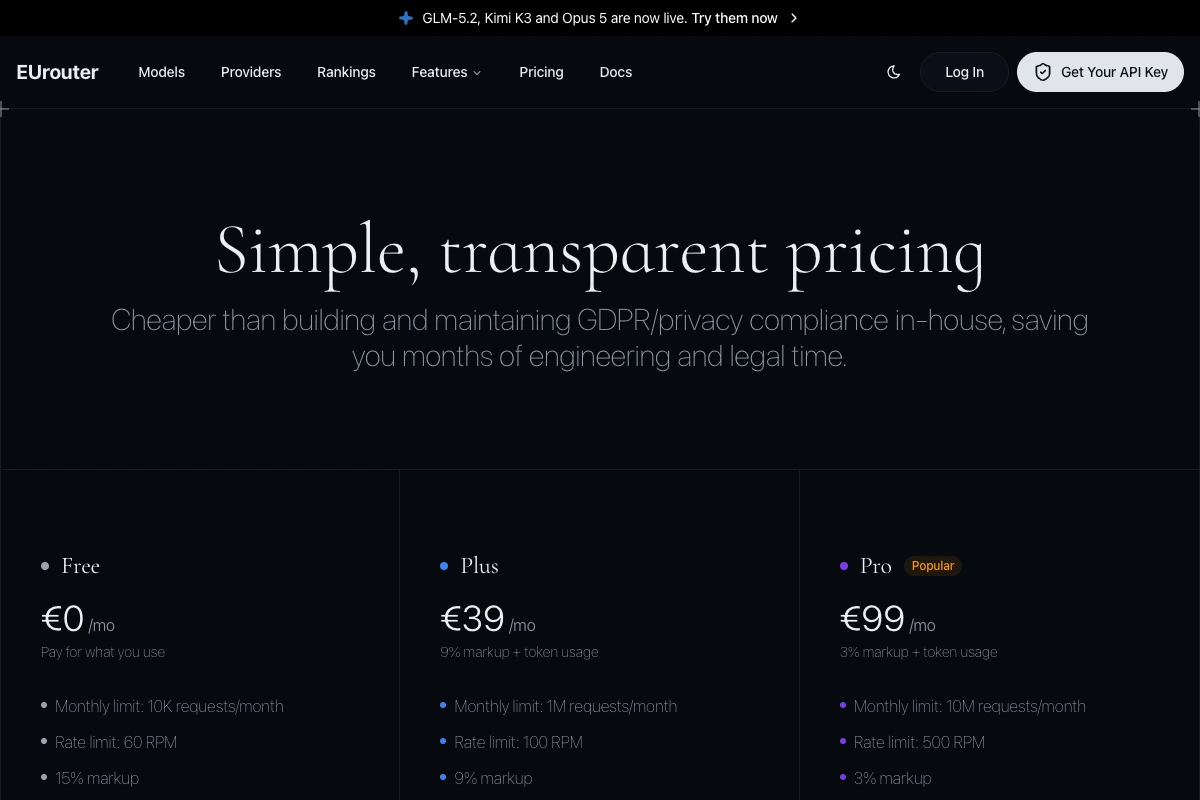
EUrouter does exactly one thing differently from OpenRouter. There’s no way out of Europe.
EUrouter belongs to EUrouter B.V. in Amsterdam and processes every request in Europe. Its DPA limits processing to the European Economic Area. A non-EU country only comes into play with your written permission.
For you, that means there’s no switch to hunt for.
Of all the EU alternatives to OpenRouter, this one needs the fewest settings.
Behind EUrouter sit 15 inference providers in an EU configuration, including IONOS, Mistral, Scaleway, and OVHcloud. Two of them, AWS Bedrock and Microsoft Foundry, are headquartered in the US. The model page lists 142 models.
By default, EUrouter doesn’t store prompts or responses. Metadata such as timestamps and token counts stays for up to twelve months. You can download the DPA right away, including a signed version.
The API is OpenAI-compatible, and the base URL is https://api.eurouter.ai/api/v1. In the routing settings, you can also filter providers by headquarters and region.
EUrouter gets my top spot because you never have to switch EU processing on. It’s the only mode. Add a public DPA and a free plan, and you have my reasons.
How Much Does EUrouter Cost?
That said:
EUrouter isn’t cheap. On the Free plan, it adds 15% to your token costs. The Plus plan costs €39 a month and drops the markup to 9%. On Pro, you pay €99 and 3%.
Topping up credits is free, and you can send requests from €0.10. You can pay by card, SEPA direct debit, or bank transfer.
Opper and Cortecs charge less.
At small volumes, EUrouter even costs more than OpenRouter. With €100 in monthly token spend, you pay €15 instead of €5.50.
EUrouter is also young. The team around founder David Lo Dico is small, and the Free, Plus, and Pro plans come without an uptime guarantee.
I’d start on the Free plan. Plus only pays off once your token spend passes €650 a month.
- Every request stays in the European Economic Area under the DPA, with nothing to configure.
- The DPA is public, and you can download a signed copy.
- The Free plan costs €0 a month with a €0.10 minimum balance, so you can start with almost no money.
- You pay in euros, also by SEPA direct debit or bank transfer.
2. Cortecs
If EUrouter’s 15% feels like too much, take a look at Vienna.
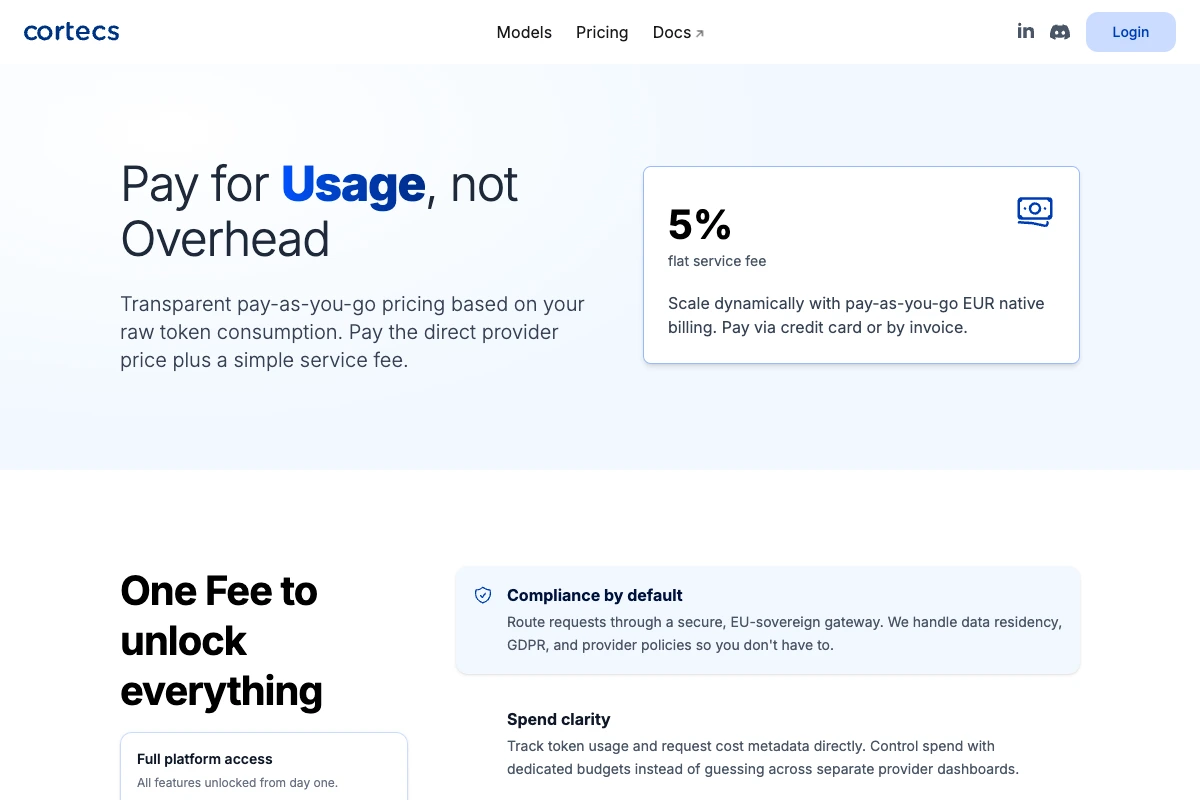
That’s where Cortecs GmbH is based, and it calls its product “Europe’s LLM Router.” Cortecs offers more than 150 models and, per its pricing page, charges a flat 5% service fee. Billing runs in euros, with invoices if you need them.
Cortecs says it doesn’t store your prompts or train on them. Operational data stays for up to twelve months. The DPA is public, and the current version is dated August 11, 2026.
Its list of subprocessors does include the EU subsidiaries of Microsoft, Google, and Amazon. Besides OpenAI-compatible tools, you can also connect tools that speak the Anthropic API.
To me, Cortecs is the obvious pick if you need euro invoices and want to pay less than at EUrouter. One thing bugs me, though. The homepage and the pricing page say different things about what the 5% actually applies to.
- The flat 5% service fee comes in just under OpenRouter’s 5.5%.
- You pay in euros, by card or invoice.
- Cortecs doesn’t store your prompts or train on them.
- The DPA is public and up to date.
3. Opper
The lowest fee among the EU routers doesn’t come from Vienna. It comes from Sweden.
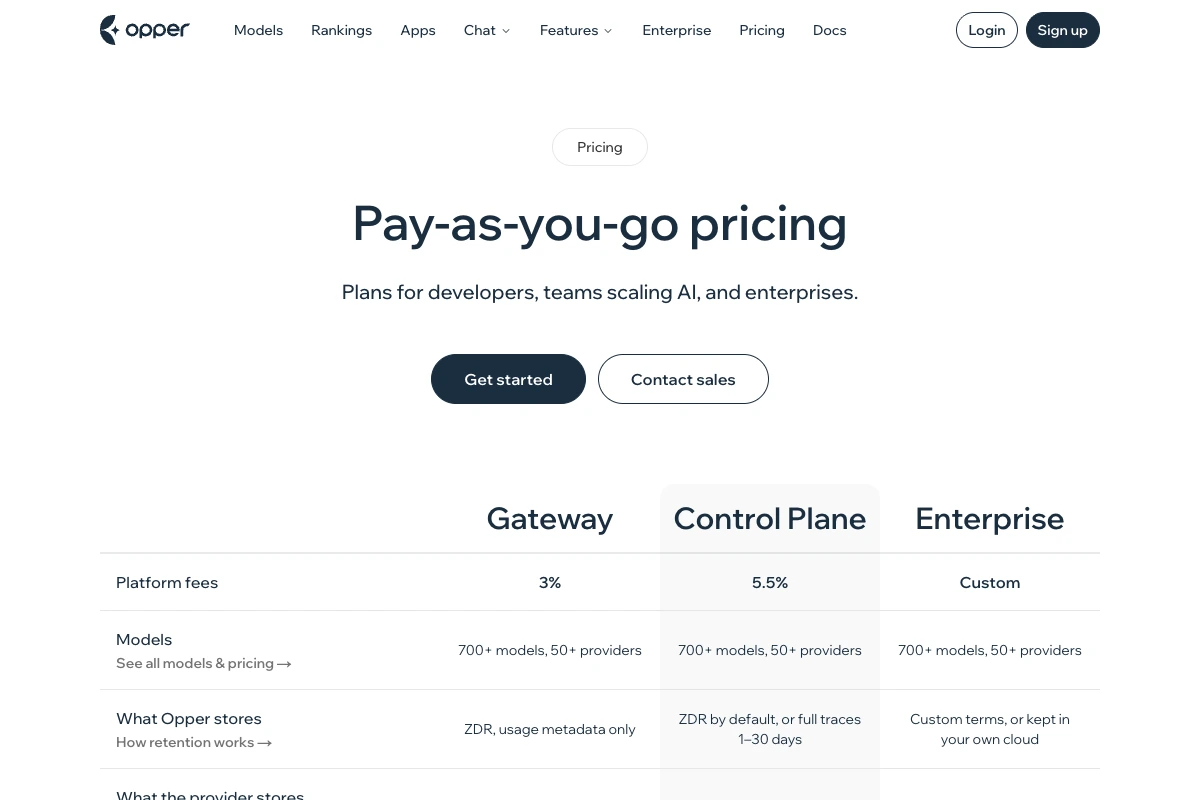
Opper belongs to the Swedish company Opper Technology AB and runs in the AWS Stockholm region. On the Gateway plan, you pay 3% when you buy credits. For that, you get more than 700 models from over 50 providers.
If you want more control over spending limits and data retention, the Control Plane plan raises the fee to 5.5%.
That’s exactly what OpenRouter Standard charges.
Opper itself doesn’t store prompts or responses by default. The model provider behind it is a different story, and that depends on the route. On the Gateway plan, some routes store nothing and others keep the data.
The DPA is public and, according to Opper, covers every model. It also says openly that not all processing happens inside the European Economic Area.
You don’t need a credit card to get started. You get your API key right away, and the free models work in the playground and through the API.
Opper would be my pick if the fee matters most and you’re willing to check the retention rule for each model.
For customer data, I’d only allow routes that store nothing.
- At 3% on credit purchases with no monthly fee, Opper has the lowest fee of the routers based in the EU.
- You can choose from more than 700 models from over 50 providers.
- You start without a credit card and can use free models right away.
- The API is OpenAI-compatible.
4. Requesty
Opper and Cortecs are EU companies. Requesty isn’t, but it runs an endpoint in Frankfurt.
Behind Requesty is Requesty Ltd in London. Send your requests to router.eu.requesty.ai and they go through Frankfurt, on every plan.
The important part hides in one clause of the privacy policy. The EU endpoint only covers where Requesty itself processes data. Where the model runs depends on which model you pick.
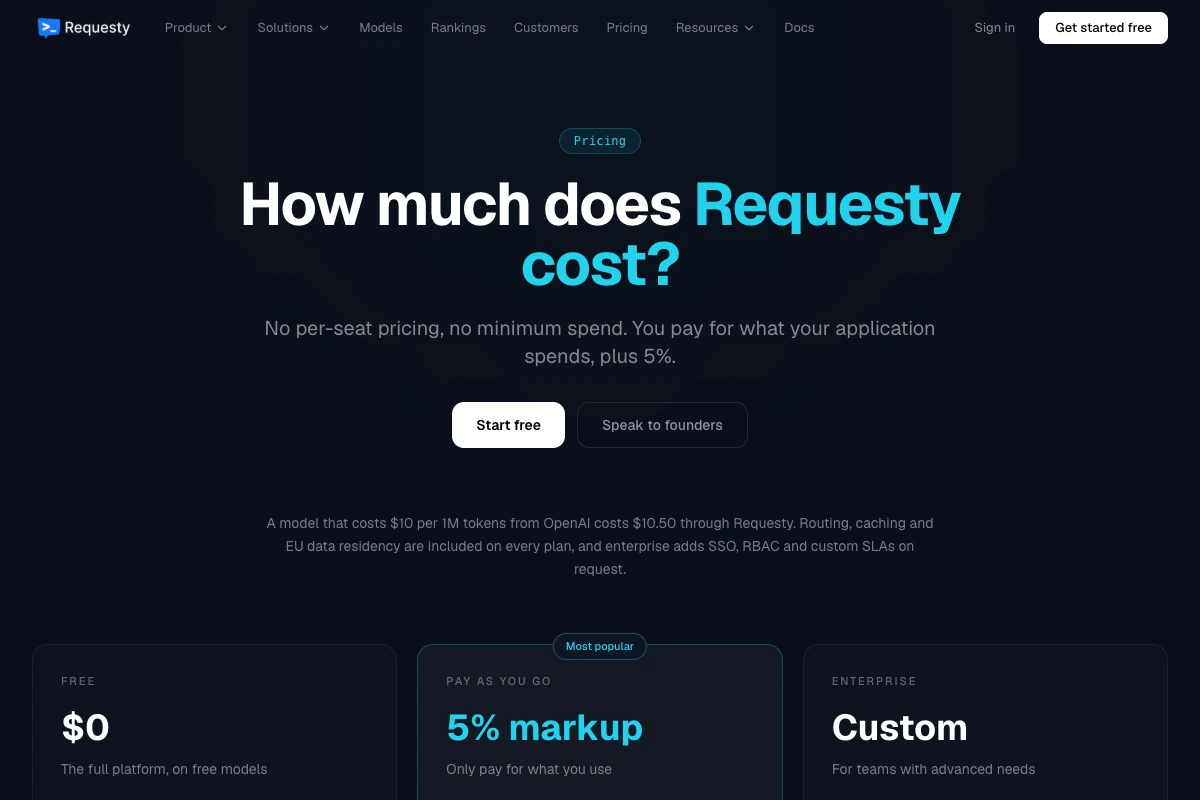
On its pricing page, Requesty shows a 5% markup, so $10 becomes $10.50. The docs, on the other hand, say you only pay the provider prices.
I’m going with the pricing page here.
On the plus side, the catalog is big, with more than 600 models. For free, you get 200 requests a day to free models, no credit card needed. Requesty sends you the DPA by email on request, usually signed within a few business days.
Requesty fits if you want a large catalog and an EU endpoint for the router’s own processing is enough for you.
- More than 600 models run through one OpenAI-compatible API.
- The EU endpoint in Frankfurt is included on every plan.
- Without a credit card, you get 200 requests a day to free models.
5. Eden AI
With Requesty, only the router’s own processing stays in the EU.
Eden AI goes further. It would rather let a request fail than let it leave Europe.
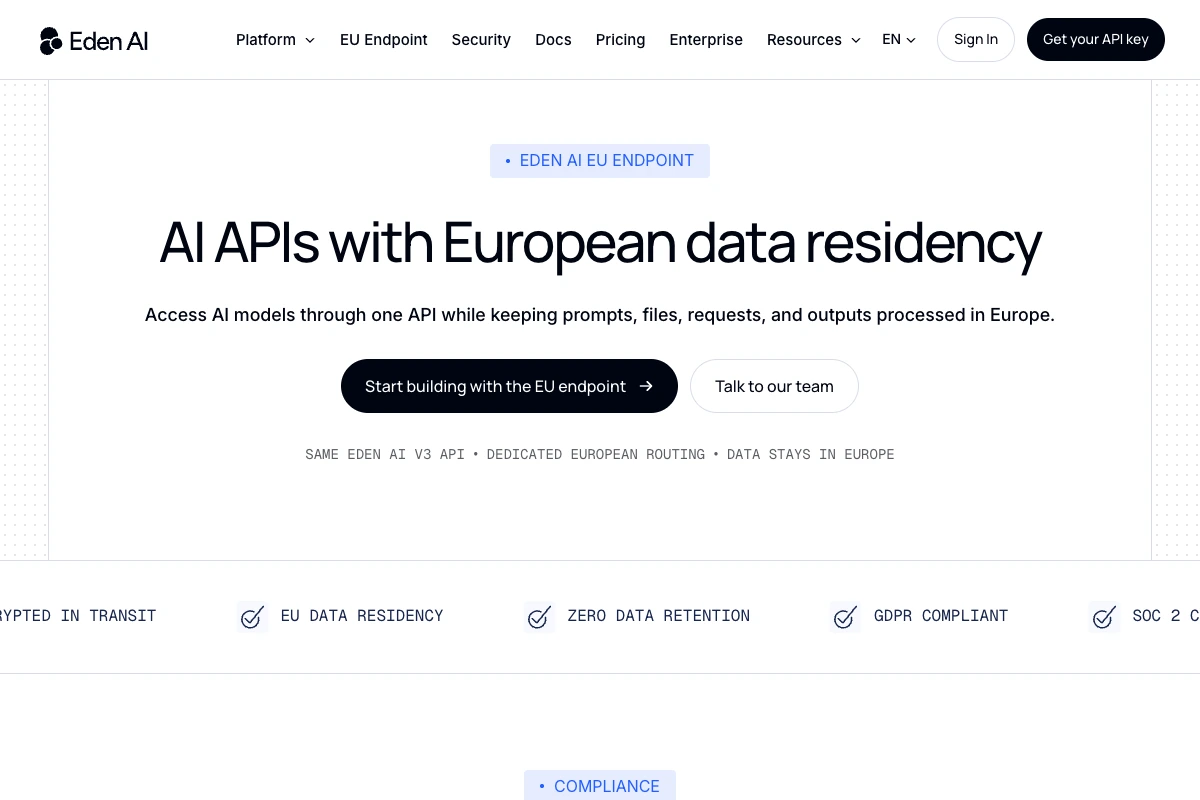
Eden AI is a French SAS from Villeurbanne, near Lyon. For its EU endpoint api.eu.edenai.run, Eden AI states plainly, “The request will not be routed outside Europe.”
Under the DPA, Eden AI doesn’t store prompts or outputs. At the global endpoint, though, the same DPA allows transfers outside the European Economic Area, depending on which providers you choose.
The price for that hard line is a smaller catalog. Eden AI advertises more than 500 models globally, but not every provider is available at the EU endpoint. When you buy credits, Eden AI takes 5.5%, the same as OpenRouter.
If a hard border matters more to you than the biggest catalog, I’d take a closer look at Eden AI.
- At the EU endpoint, no request leaves Europe.
- Under the DPA, prompts and outputs aren’t stored.
- The DPA is public.
6. LLMrouter.eu
So far, I haven’t shown you a router from Germany. The only one on this list is clearly built for companies.
LLMrouter.eu is run by MAKONIS GmbH in Munich. Next to the routing, you get a privacy filter, jailbreak protection, and features for the EU AI Act. The DPA is a PDF on the contracts page.
The API is OpenAI-compatible, and the base URL is https://proxy.llmrouter.eu/v1. You only see the model catalog after you log in.
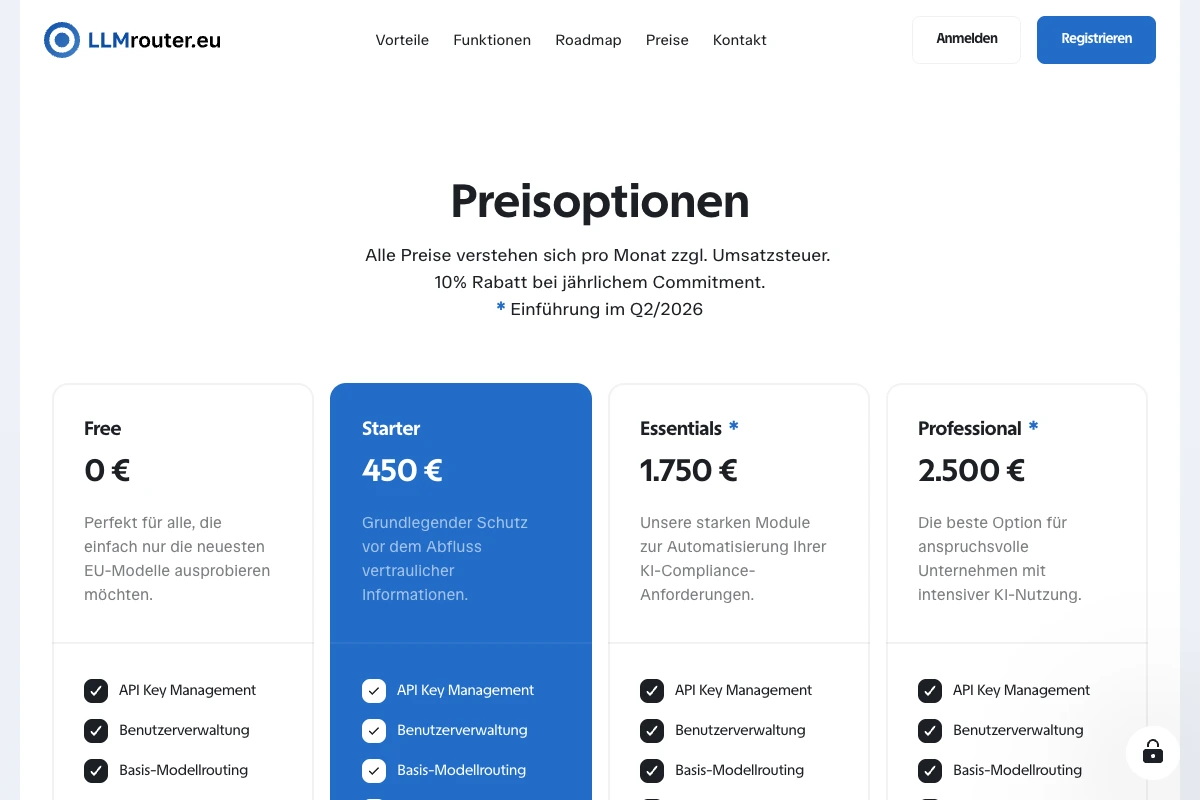
The Free plan costs €0 a month, and in exchange you pay a 7.5% fee when you top up. Paid plans start at €450 a month and bring the fee down to as low as 3.5%. All prices are before VAT.
Two of the four plans still carry the note “launching in Q2/2026” on the site.
For solo founders, LLMrouter.eu probably isn’t the right fit. For a company that wants privacy filters and AI Act features from one vendor, I’d give it a look.
- The operator is a GmbH based in Munich.
- The API is OpenAI-compatible.
- You can download the DPA directly as a PDF.
- A privacy filter and jailbreak protection are built in.
7. LiteLLM
All the providers so far have one thing in common.
Someone else runs the router. With LiteLLM, that someone is you.
Quick explanation:
An LLM gateway is a layer that all your tools send their AI requests through. That helps because you swap models in one place instead of in every single tool.
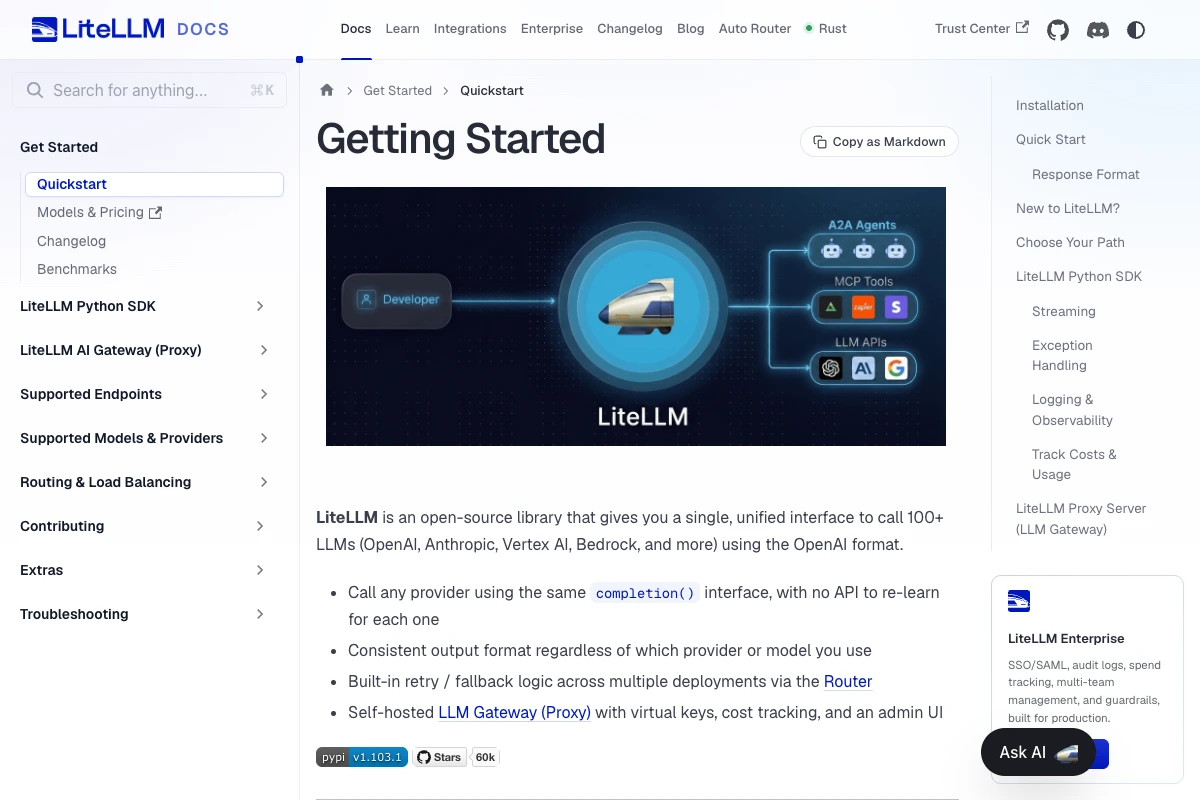
LiteLLM is that kind of gateway as open-source software. One API in the OpenAI format gets you more than 100 models, for example from OpenAI, Anthropic, or Bedrock. The software is free and MIT-licensed.
The project has around 60,000 stars on GitHub. Some enterprise features do sit in a separate directory with different terms.
There’s no router company taking a cut of your tokens. You pay the model providers directly with your own API keys. In return, servers, updates, and the database are your job. Your prompts run through your own system, but they still go to the model providers.
LiteLLM vs. OpenRouter
Mostly, it depends on your time.
OpenRouter handles billing and provider selection for more than 500 models behind a single account. With LiteLLM, you need a separate account with every model provider, and you run the server yourself.
In exchange, you pay no router fee and you alone decide where your data goes.
I’d only go with LiteLLM if you already run a server or have someone on the team who enjoys that kind of work. While your token bill is small, saving 5.5% isn’t worth a weekend of server work to me.
- The software is open source and free.
- One API in the OpenAI format gets you more than 100 models.
- Nobody sits between you and the model providers taking a cut.
- Your requests run through your own system.
8. Vercel AI Gateway
You can skip the router fee without running your own server, too.
Sounds too good to be true, but it’s right there on Vercel’s pricing page.
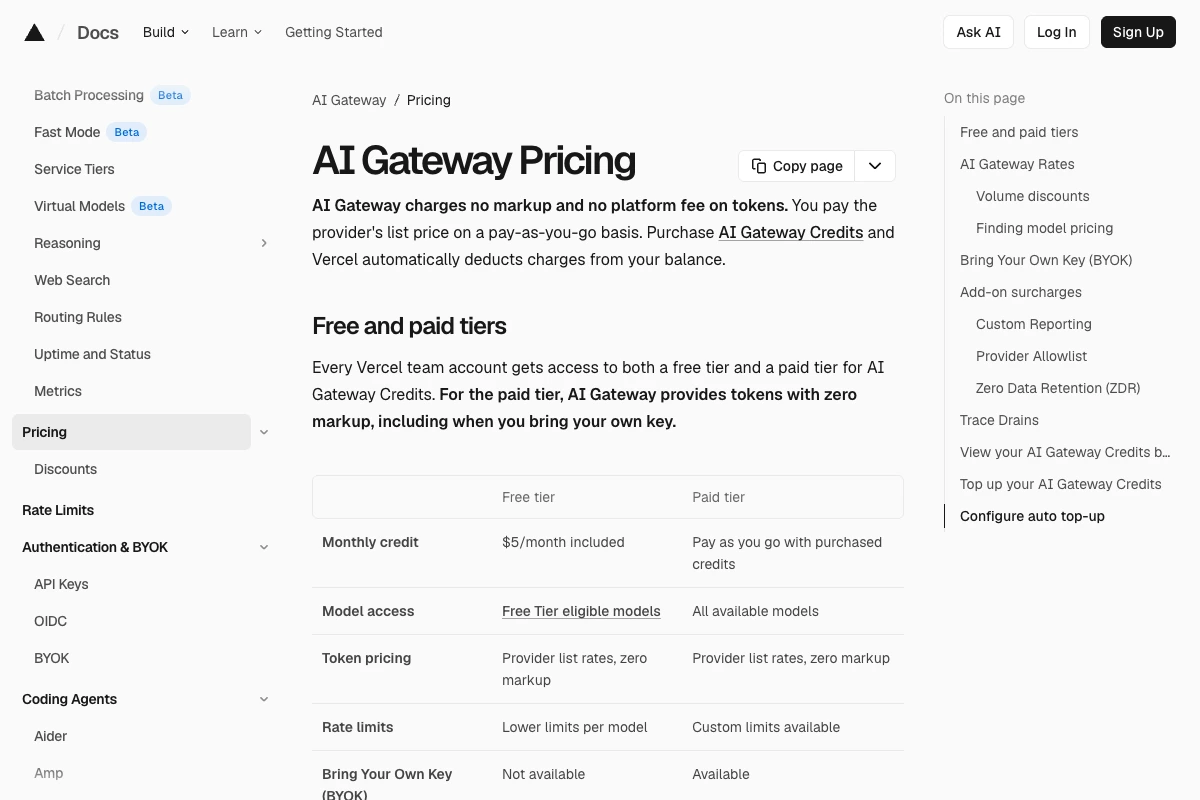
It reads “AI Gateway charges no markup and no platform fee on tokens.” According to Vercel, that holds even when you bring your own keys. Every month, you get free credit that doesn’t expire after a trial period.
The gateway comes from Vercel Inc. in Covina, California. You can pin inference to a region per request. That setting doesn’t control where your request first hits the gateway, though.
Regional prices are set by the model provider. Vercel’s docs give 10% extra for the EU as an example. If you want nothing stored for the whole team, that costs $0.10 per 1,000 requests on the Pro and Enterprise plans.
If your app already runs on Vercel, this is where I’d look first. For customer data, the gateway’s global entry point is too much fine print for my taste.
- Vercel adds no markup on tokens, not even with your own keys.
- You get free credit every month.
- You can pin inference to a region per request.
9. Cloudflare AI Gateway
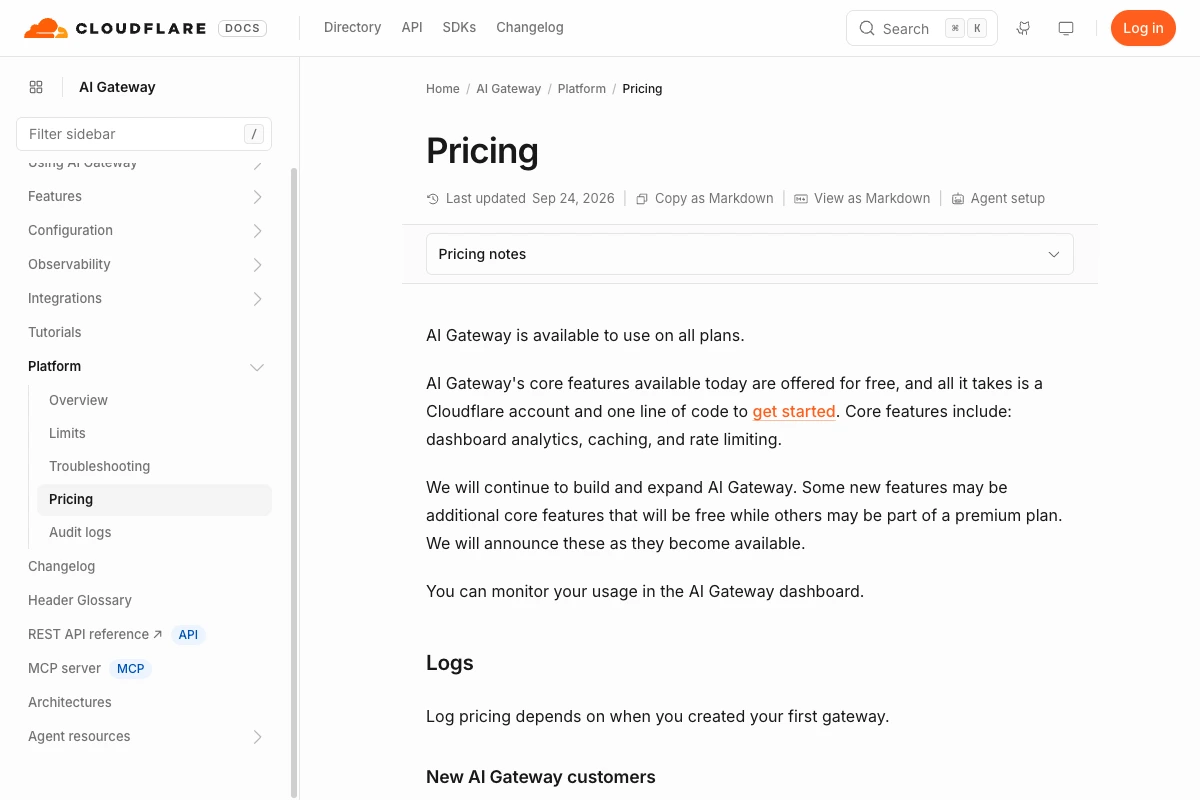
Cloudflare goes one step further. The gateway costs nothing, and you only pay once you use the shared billing.
The core features of the Cloudflare AI Gateway are free on every plan. They include caching, logs, and rate limiting, which caps how many requests per minute get through.
The shared billing is called Unified Billing. For that, Cloudflare takes 5% on every credit purchase, so $100 becomes $105. New customers have also been on a new pricing model for logs since September 24, 2026.
I mainly see Cloudflare as a layer in front of accounts you already have. If you already hold keys with the model providers, you get caching and logs without paying any markup on tokens.
- The core features are free on every plan.
- Caching, logs, and rate limiting come built in.
- Unified Billing is optional.
10. Portkey
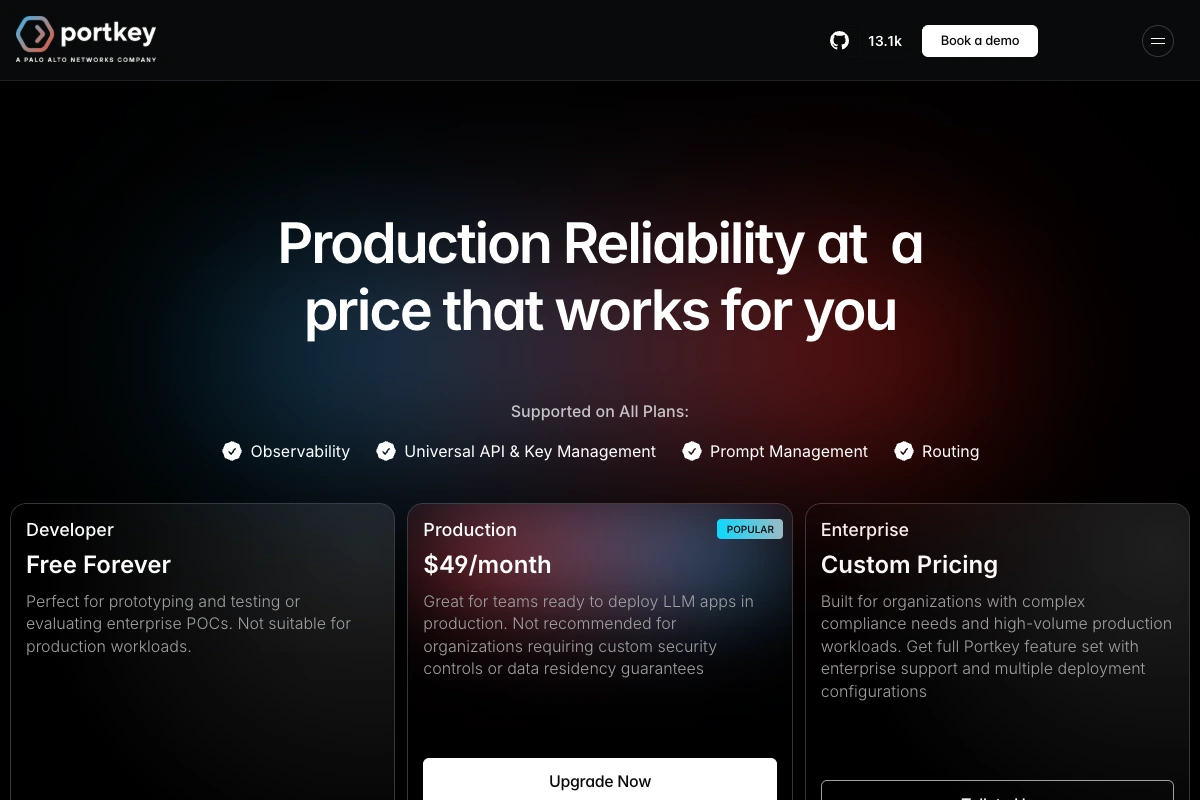
The third US gateway has a new owner. Search for Portkey today and you land on a different name.
On its homepage, Portkey now goes by Prisma AIRS AI Gateway. Palo Alto Networks closed the acquisition on May 29, 2026. Since July 16, 2026, the gateway built on Portkey has been generally available.
The gateway is open source under the MIT license and connects you to more than 1,600 models. The Developer plan is free and keeps 10,000 logs a month for three days. Production costs $49 a month and comes with 100,000 logs.
Portkey, Inc. is based in San Francisco.
I see Portkey mainly as a tool for teams that want to know exactly what each request costs. Where the product goes under Palo Alto, I can’t tell you.
- The gateway is open source under the MIT license.
- More than 1,600 models are connected.
- The Developer plan is free.
11. NanoGPT
Back to hosted routers, this time with an eye on price instead of Europe.
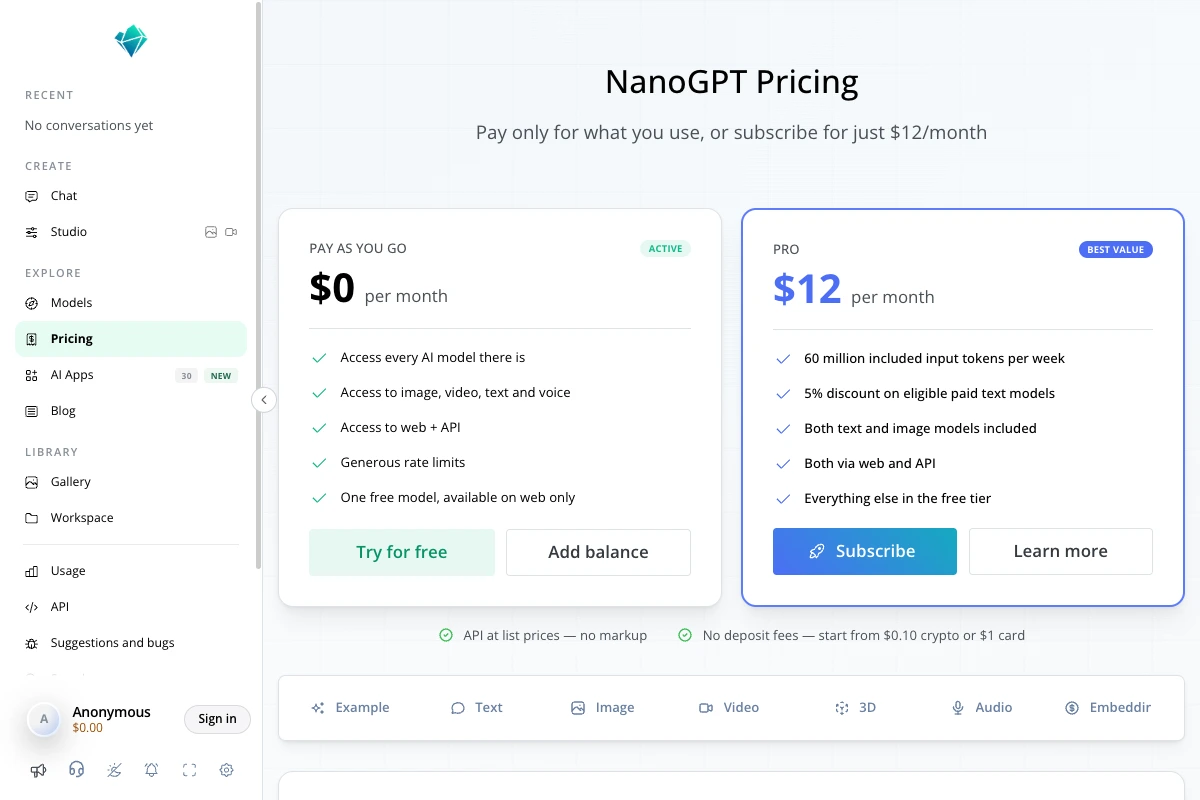
According to its pricing page, NanoGPT from NanoGPT LLC adds nothing on top of list prices. There’s no percentage fee on deposits either.
You should know about two exceptions. If you pin a specific provider, 5% gets added. With your own key, you pay 5% of the regular model costs.
Heavy users can get a $12 monthly subscription that includes 60 million input tokens per week. NanoGPT doesn’t list a postal address, and its terms only point to California law.
I couldn’t find a DPA in either the privacy policy or the terms of service.
As a cheap OpenRouter alternative for side projects, I find NanoGPT interesting. Without a DPA, I wouldn’t use it for customer data.
- There’s no markup on list prices.
- Deposits come without a percentage fee.
- The $12 Pro subscription includes 60 million input tokens per week.
12. Together AI
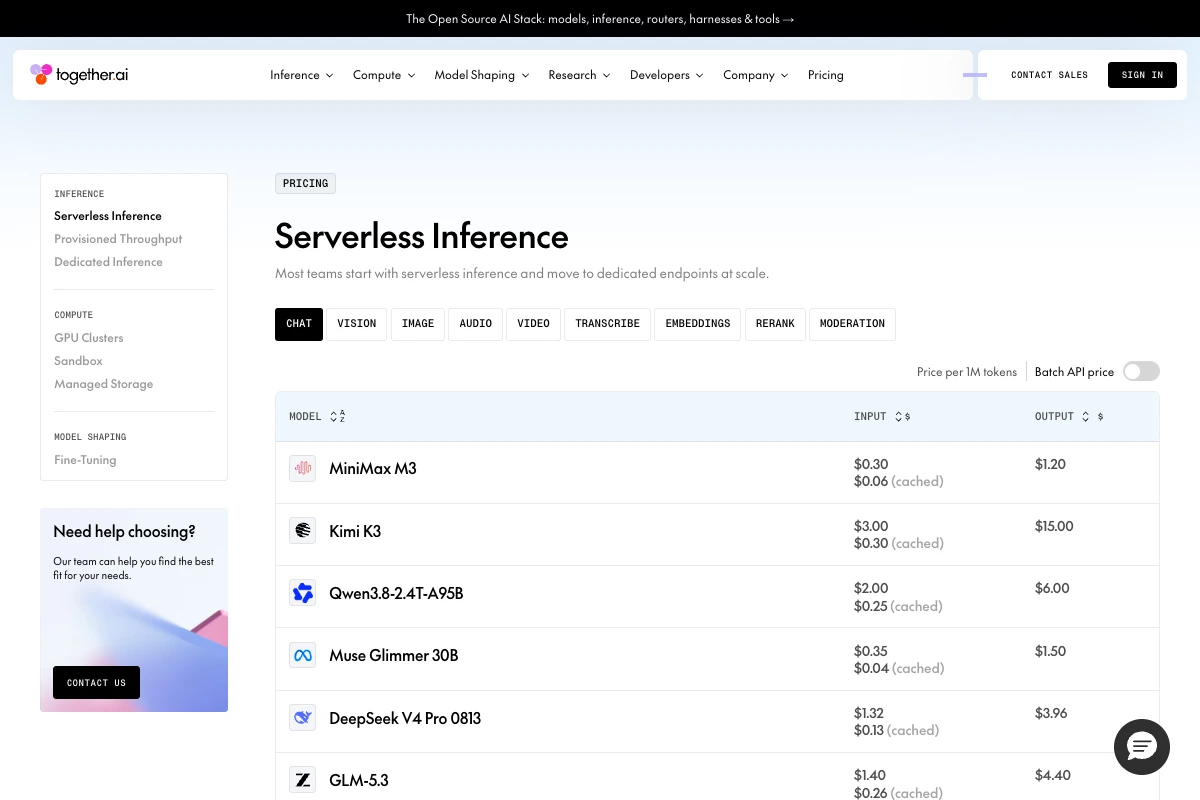
NanoGPT forwards your requests. Together AI runs them on its own infrastructure.
Behind Together AI is Together Computer, Inc. in San Francisco. The catalog holds more than 200 open models. You just point your OpenAI client at Together, without rewriting your app.
For transfers out of the European Economic Area, the privacy policy relies on standard contractual clauses. Billing is in US dollars.
I’d use Together if you specifically want open models and a US company is fine with you. You’ll find an overview of the open models out there in my comparison of open-source LLMs.
- The catalog holds more than 200 open models.
- The API is OpenAI-compatible.
- The models run without a router in between.
13. Mistral
Together brings its own models, but it sits in the US.
The next four providers work the same way, just from Europe.
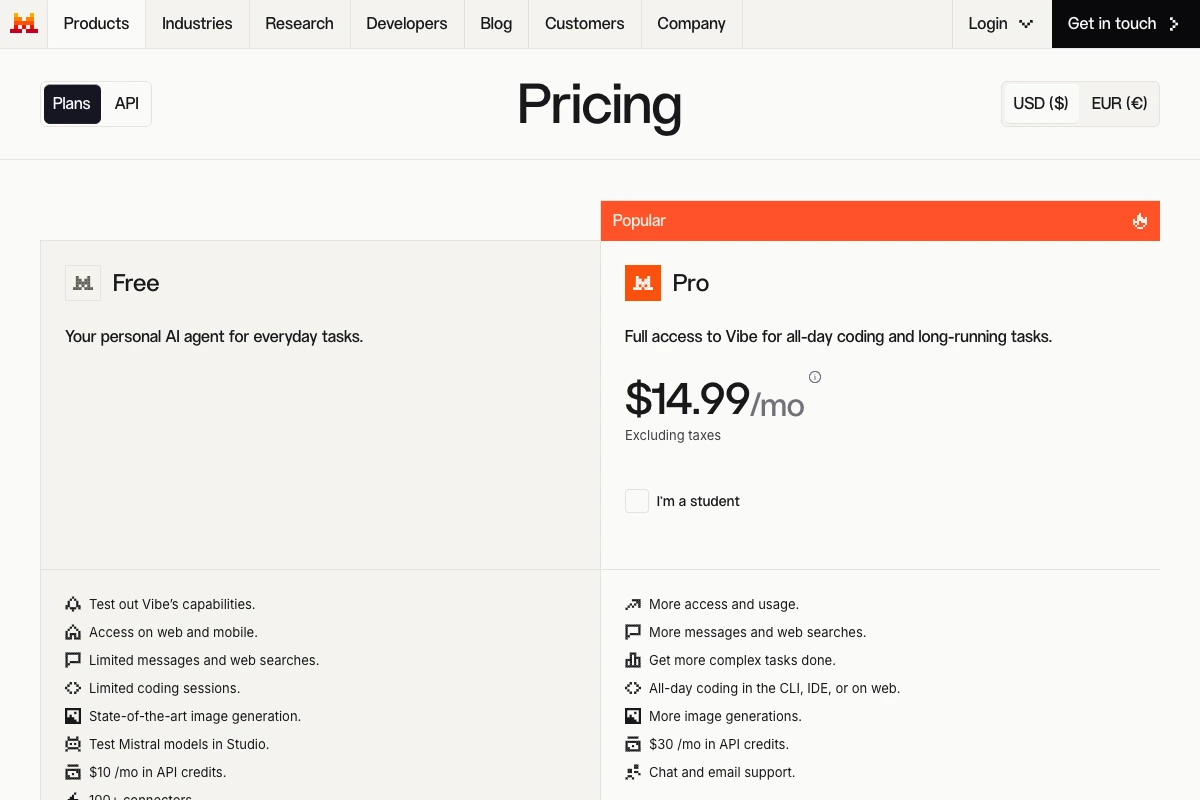
Mistral is based in Paris and builds its own models. A Paris company sounds like EU processing out of the box. With the standard endpoint, it isn’t.
Mistral puts it this way, “Mistral does not commit to a specific inference location.” Your requests only stay in the EU through the dedicated endpoint api.eu.mistral.ai. It costs 1.1 times the list price, so 10% more.
Even then, account and billing data doesn’t necessarily stay in the region. The DPA comes in a version that has applied since July 27, 2026.
If you use Mistral, I’d set up the EU endpoint right away. The extra 10% is what you pay to know where your requests run.
- Mistral is based in Paris and builds its own models.
- Through the EU endpoint, requests stay in the EU.
- The DPA is public.
14. IONOS AI Model Hub
Instead of Mistral’s 10% surcharge, IONOS charges fixed prices per million tokens.
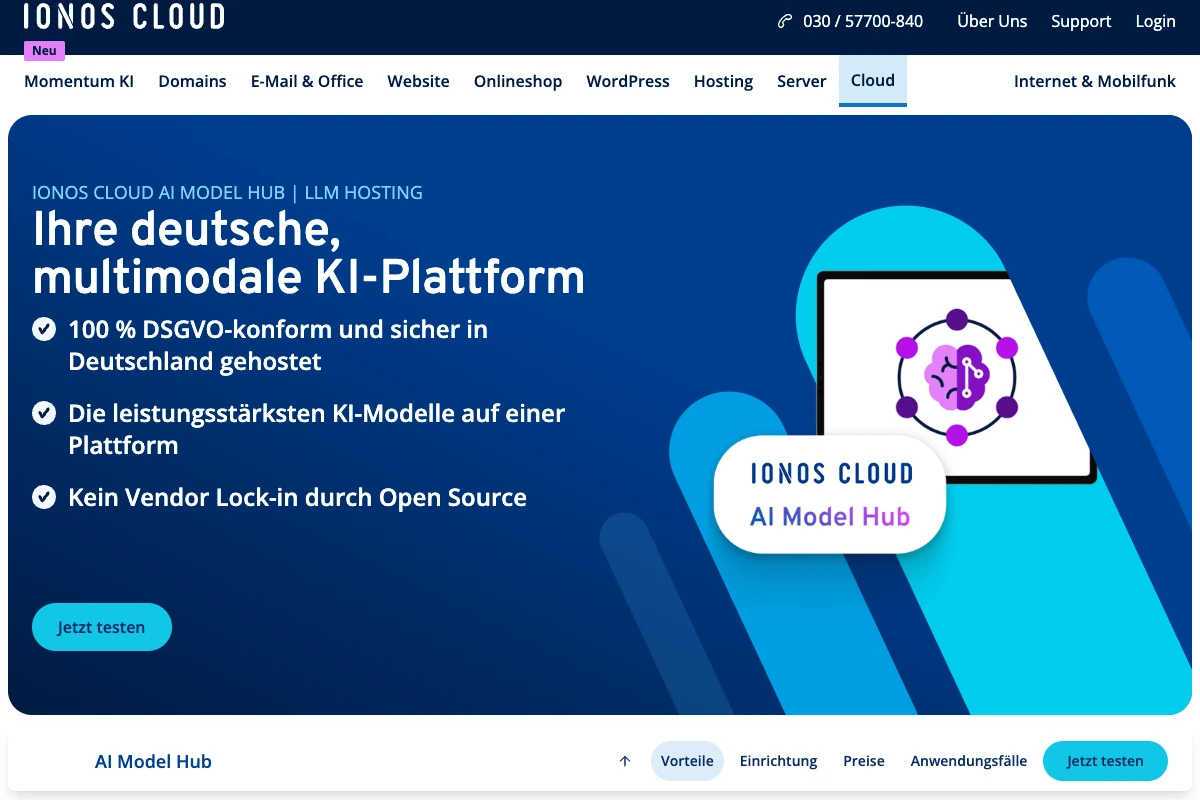
The AI Model Hub is run by IONOS Cloud GmbH in Montabaur, Germany. It serves open-source models from European data centers through an OpenAI-compatible endpoint. There’s no base fee and no minimum spend.
Llama 3.3 70B costs €0.65 per million tokens, for input and output alike. For gpt-oss-120b, you pay €0.15 for input and €0.65 for output. IONOS is also one of the providers behind EUrouter, by the way.
For automations with open models, I think IONOS is a good choice, especially if you want to pay in euros. If you need Claude or GPT models, look elsewhere.
- IONOS Cloud GmbH is based in Germany, and the models run in European data centers.
- You pay euro prices per million tokens, with no base fee.
- The endpoint is OpenAI-compatible.
15. STACKIT AI Model Serving
IONOS talks about European data centers. STACKIT, the cloud of the Schwarz Group, names the region instead.
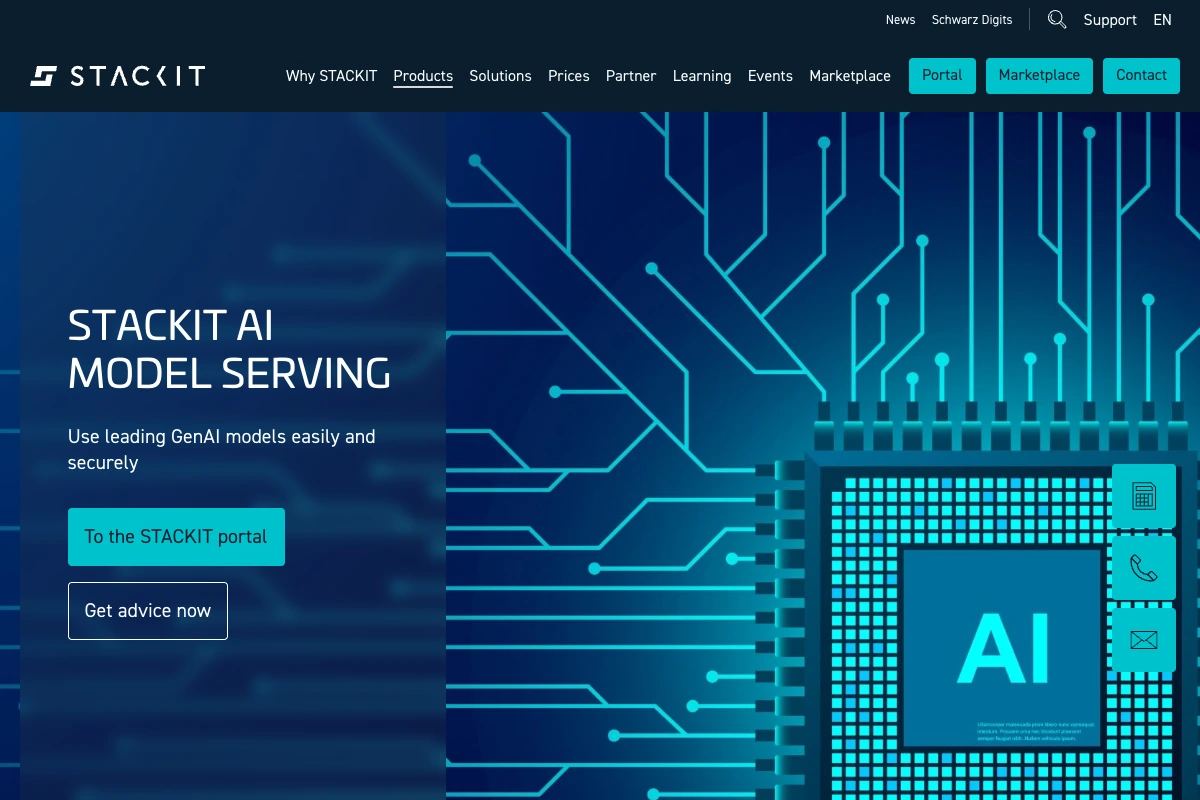
AI Model Serving comes from Schwarz Digits Cloud GmbH & Co. KG in Bad Friedrichshall, Germany. The models run in the “Germany South” region.
On the standard tier, a million tokens costs €0.15 for input and €0.25 for output. Premium models come in at €1.50 and €1.75. You can use STACKIT free for 30 days, but sign-ups are reviewed by hand.
The product page only talks about compatible interfaces. So check the docs to see whether your tool can talk to STACKIT directly.
For me, “Germany South” is the shortest answer on this list when a client asks which country their data lives in.
- The models run in a German region.
- Standard-tier prices are low and quoted in euros.
- You can start free for 30 days.
16. Scaleway Generative APIs
From Bad Friedrichshall, we head back to France. You may already know Scaleway without realizing it, because EUrouter itself runs on Scaleway infrastructure in Amsterdam.
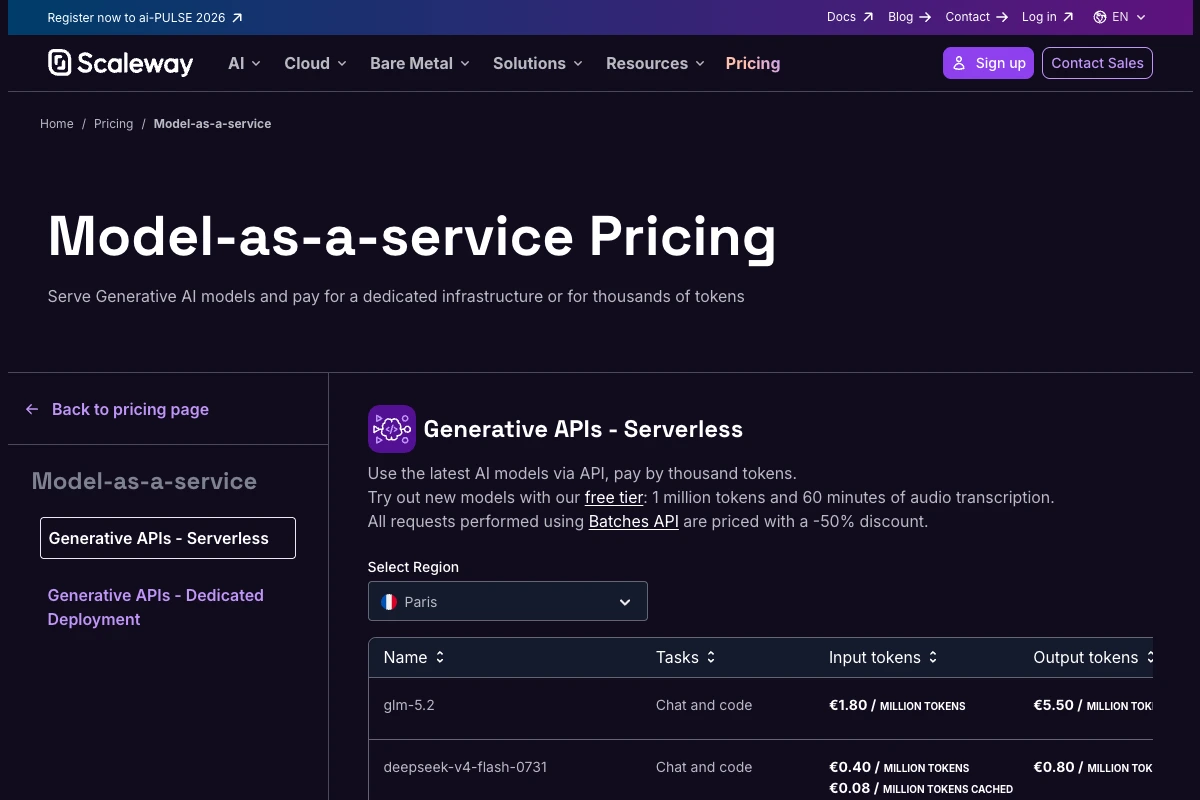
Scaleway is based in Paris, and its Generative APIs are OpenAI-compatible. To get you started, Scaleway gives you one million tokens for free.
After that, you pay euro prices per model. For deepseek-v4-flash-0731 in Paris, that’s €0.40 per million input tokens and €0.80 for output.
For a first try on European infrastructure, the free million tokens make Scaleway my favorite in this group.
- Scaleway is based in Paris.
- The API is OpenAI-compatible.
- You get one million tokens for free.
- Prices are in euros.
17. Amazon Bedrock
Like Scaleway, Amazon Bedrock is one of the 15 providers behind EUrouter.
You can also use Bedrock directly.
Amazon Bedrock has an OpenAI-compatible endpoint for chat requests. You pick the region yourself, EU regions included. How long Bedrock keeps data is something you set per region.
In “none” mode, AWS writes neither the request nor the response to persistent storage and passes nothing on to the model provider.
The endpoint has one limitation. You can’t fetch the list of models through it, so tools that load available models automatically find nothing there.
I’d only use Bedrock if you already have an AWS account. Otherwise, setting up the account, permissions, and regions is more work than any router on this list.
- You choose the region yourself, EU regions included.
- In “none” mode, AWS stores nothing permanently.
- The endpoint for chat requests is OpenAI-compatible.
18. Langdock
I’ve saved one provider for the end, for everyone who isn’t really looking for a router.
If you want an AI workspace for your team and an API on the side, this is your stop.
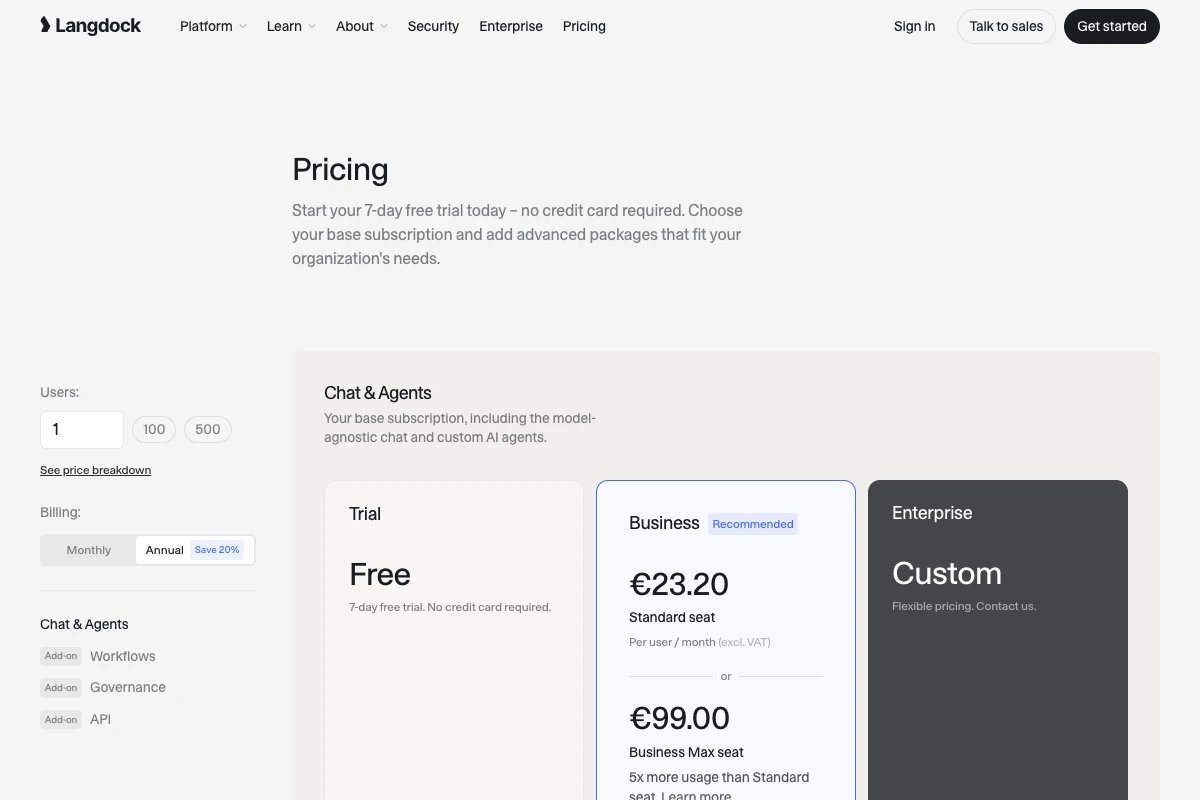
Langdock GmbH from Berlin calls its API “GDPR-compliant, hosted in the EU.”
A seat costs €25 per user per month, before VAT. You can start a seven-day trial without a credit card and get €5 in credit for models.
The API has its own token prices in euros. GPT-5.5 costs €4.80 per million input tokens and €28.81 for output. Whether those prices include a markup, Langdock doesn’t say.
That’s why I see Langdock with teams that want more than an API. It isn’t meant as a straight replacement for a router.
- Langdock GmbH is based in Berlin, and the API runs in the EU.
- You start a seven-day trial without a credit card and with €5 in credit.
- The API bills in euros.
- Chat and agents with the included models aren’t billed by usage.
What Do OpenRouter Fees Actually Cost You?
Langdock shows you a token price in euros. The routers show you a percentage.
You only see what a percentage costs once you turn it into money. Buy €100 in credits at OpenRouter and you pay €5.50 in fees. Use €100 worth of tokens on EUrouter’s Free plan and it’s €15.
So OpenRouter’s fees hang on your credit purchases, while EUrouter’s hang on your usage plus a plan. I ran the numbers in euros because EUrouter bills in euros. The percentages work the same way in dollars. Here’s how it shifts as your usage grows:
gradually.aiOpenRouter charges its fee when you buy credits. Here, it’s calculated on the amount of your token spend.
On EUrouter, Plus beats the Free plan from €650 in monthly token spend. Pro beats Plus from €1,000.
EUrouter Pro only gets cheaper than OpenRouter Business at €1,980 a month. Against OpenRouter’s Standard plan, the break-even point is €3,960.
Up to almost €2,000 in monthly token spend, EUrouter costs you more than OpenRouter.
That’s the price of having the EU as the only mode.
OpenRouter makes one exception for your own keys. If you bring your model providers’ API keys, the first $25,000 in list price per month is fee-free, and 5% applies after that.
The fastest way to run your own numbers is my free API cost calculator. What a model costs per million tokens is in the LLM price index.
That leaves the question that often starts the search in the first place, which is data protection.
Do You Need an Alternative to Keep Your Data in the EU?
Here’s the part the big vendor lists mention in a sentence at most. OpenRouter itself can keep your requests in the EU.
On the Business plan, OpenRouter can route your requests only to providers in the EU or the US, with the same key and the same account. The base URL eu.openrouter.ai makes the difference. If no matching provider is available there, the request fails instead of leaving the region.
The EU address has its limits, though.
Router models like openrouter/auto don’t work there, and neither does web search. OpenRouter also states that “Some non-prompt account data stays in US systems.”
You accept OpenRouter’s DPA through its terms of service. On the Business plan, you can request a signed copy. That level of data protection costs you an 8% fee instead of 5.5%.
So is OpenRouter GDPR-compliant? I can’t give you a blanket answer, because it depends on your data and your contract. With the Business plan, though, you get close to the EU processing of the EU routers.
I haven’t used OpenRouter’s EU address with a Business account myself yet.
If you want to put rules for AI use in writing for your team, my AI policy template gives you a starting point.
What Changes With the Stripe Acquisition?
Nothing for now, if you take OpenRouter at its word.
Stripe announced on August 19, 2026, that it would acquire OpenRouter. OpenRouter wrote “same mission, same name, same product, same roadmap.” It expected the deal to close “in the coming weeks.”
When I went through the pages for this comparison, the close hadn’t been announced yet. So I wouldn’t switch in a panic. I would make sure you can switch quickly at any time.
Whether you switch or stay, make the next switch cheap.
How to Switch in Ten Minutes
The switch itself takes less time than the decision.
Most providers on this list are compatible with the OpenAI API. That means you only swap three things, namely the base URL, the API key, and the model name. The base URL is the address your tool sends its requests to.
In Python, it looks like this for EUrouter:
from openai import OpenAI

client = OpenAI(
    base_url="https://api.eurouter.ai/api/v1",
    api_key="YOUR_EUROUTER_KEY",
)
Take the model name from the new provider’s catalog. Keep OpenRouter running alongside it, so you can compare in peace and switch back anytime.
My advice is to keep the base URL in a setting, not in your code. Then the next switch means changing one value in one place.
In my Claude Code coaching, I show how to bring other models in through OpenRouter and use the Business plan for EU routing. The group sessions run in German, and 1:1 sessions are also available in English. Keep in mind that Anthropic doesn’t officially support models other than Claude in Claude Code.
That swappability is exactly what makes the final decision so easy.
Conclusion
Never compare the providers’ percentages directly. Do the math in money, because sometimes the fee hits your credit purchase, sometimes your tokens, and sometimes a plan comes on top.
If you want a lower fee, look at Vercel, Opper, or LiteLLM if you’re happy to run a server. If you want EU processing without thinking about it, go with EUrouter. And if OpenRouter’s EU address at 8% is enough for you, you don’t have to switch at all.
Today, sign up for an alternative with a free start. Swap the base URL and API key in a single tool. Then send your first request.
After that, you’ll know whether the alternative works with your tool. It takes about ten minutes, and your OpenRouter account keeps running in parallel. EUrouter’s Free plan costs you €0 a month with a €0.10 minimum balance.
A router is infrastructure, not a commitment.
When switching takes ten minutes, you don’t have to decide forever.