47% of marketers already use AI for SEO. And the other 53% are leaving serious time savings on the table.
I've been doing SEO professionally since 2011 and have watched this space closely. The tools that exist today would have saved me hundreds of hours in the early years.
The applications for AI in search engine optimization are broad:
- Keyword optimization (integration of semantically relevant terms)
- AI text generation (e.g., for meta descriptions, page titles, headings, or even entire blog articles)
- Keyword clustering
- Keyword research
- Technical SEO, e.g., creation of structured data
In this article, I've compiled the six currently best AI SEO tools for you: tools that help you save a lot of time with SEO or optimize your website even more thoroughly.
- Surfer SEO leads with over 500 on-page signals and anti-AI detection from $79/month on annual billing
- Jasper AI offers strong value for content creation with SEO integration starting at $59/month billed annually
- In 2026, optimization for AI Overviews, AI Mode, and LLM visibility (ChatGPT, Claude, Perplexity, Gemini) is crucial. Tools like Frase now bundle AI visibility tracking directly
1. Surfer SEO
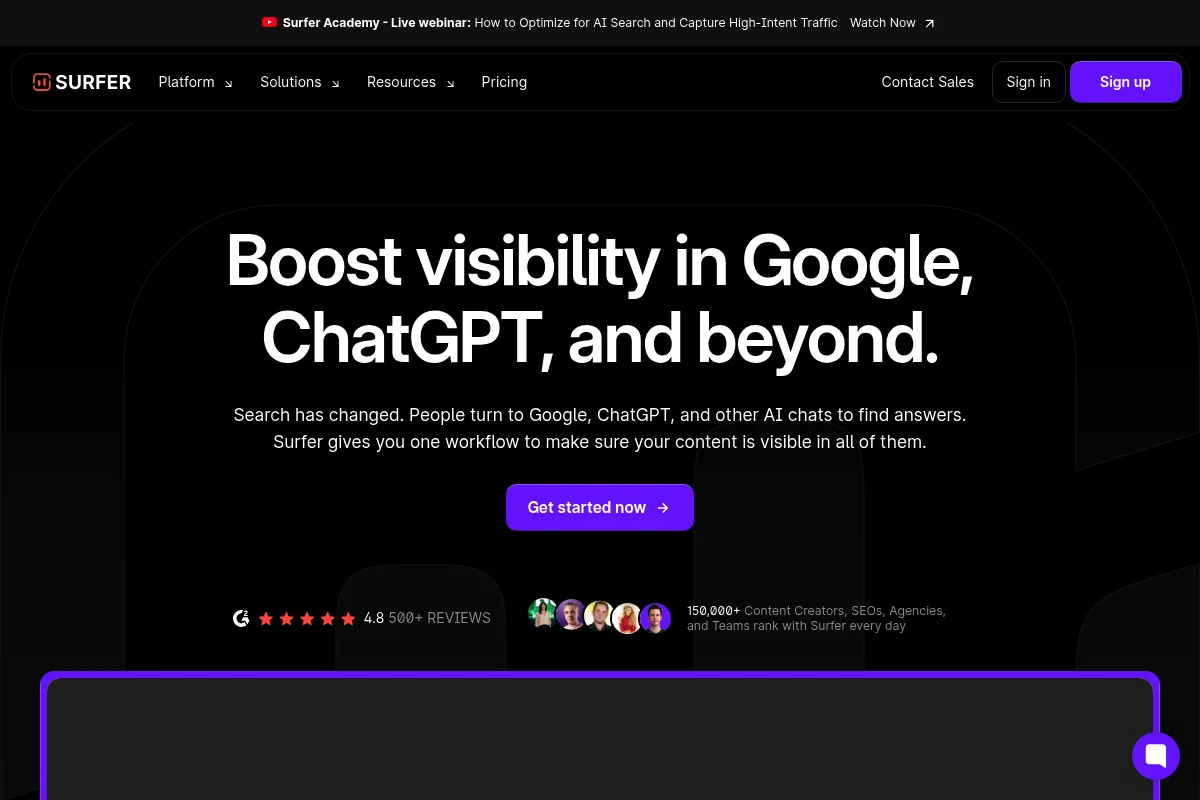
Surfer SEO is the SEO tool I currently use second most (right after ahrefs) and one of the tools that, in my opinion, has the greatest potential to eventually replace all other tools.
It offers several great AI features that make my daily work as an SEO easier, such as a brilliant keyword research function.
With it, you can display relevant topics / keyword clusters for an entered seed keyword like "meditation":
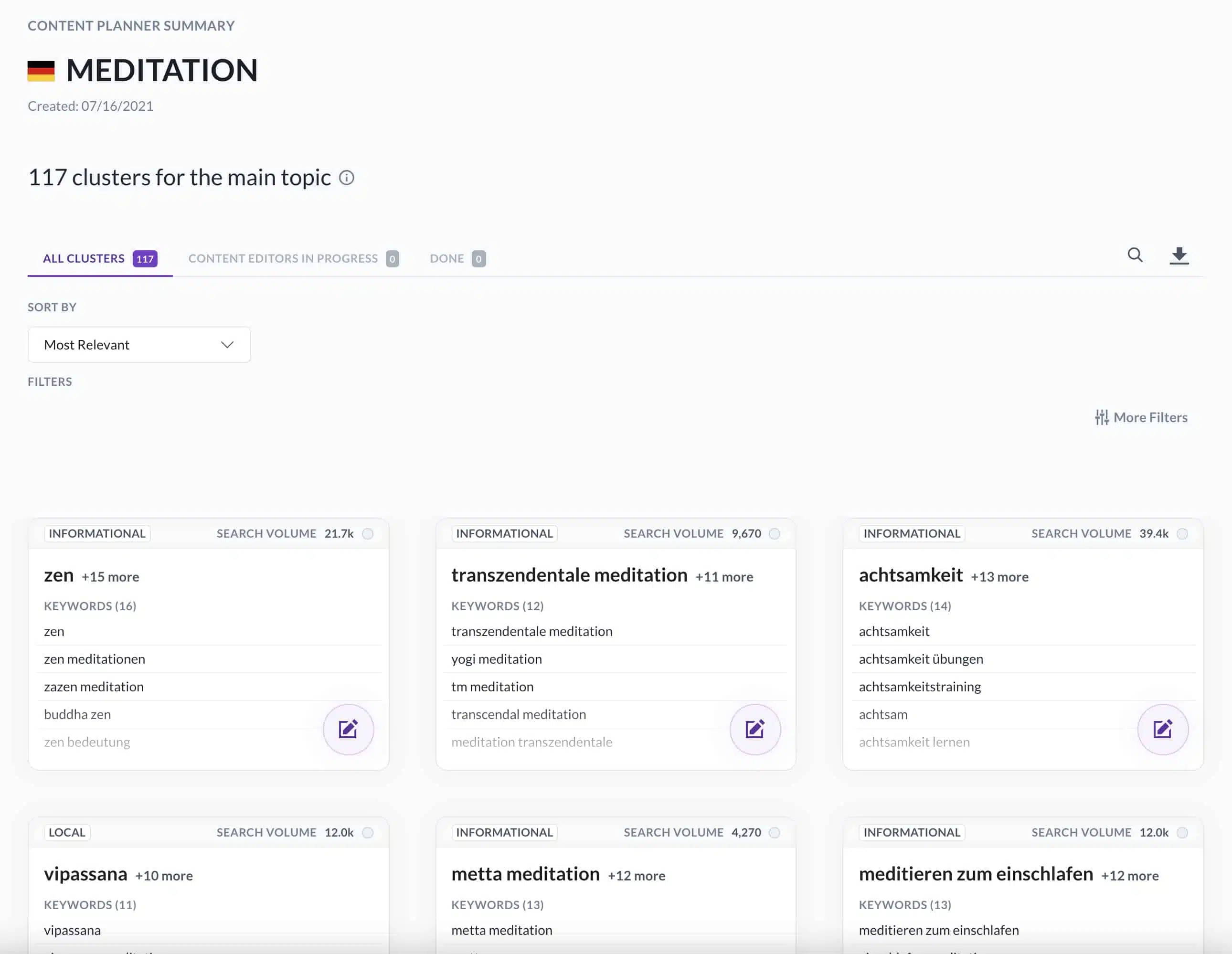
Compared to other keyword tools like UberSuggest and KWFinder, this has the advantage that you not only see the search volume for a single keyword but for the entire topic, and you get matching synonyms.
However, the best AI tool from Surfer SEO is the Content Editor, which is also the heart of Surfer SEO.
It shows you which phrases and words could be important for better ranking and how many words, headings, paragraphs, and images an article should ideally contain.
I try to achieve a Content Score of at least 75 for my blog articles (scores above often result in worse readability).
Surfer SEO also offers brilliant AI text generation directly in the Content Editor. I often use it to generate headings or paragraphs that I then rephrase or use as a basis for my own paragraphs.
2. Neuroflash
Neuroflash is the best German AI text generator on the market, and I'm not just saying that because it comes from Germany.
It really is the best in terms of text quality, and the texts are stylistically better than any other tool I've tested. Both long texts (e.g., blog articles) and short texts (e.g., product descriptions) are convincing.
For SEO, Neuroflash offers many useful templates, for example:
- Meta descriptions
- SEO titles
- Headings
- Blog outlines
- Blog introductions
- Keyword lists
Particularly practical is the ability to chain multiple templates. For example, you can first create a blog outline, then an introduction, and then the first paragraphs.
3. ChatGPT
ChatGPT is probably the most well-known AI tool today.
It uses a so-called "Large Language Model" trained to understand and generate human-like texts. It can answer questions, write creative texts, help with problems, and conduct conversations.
However, ChatGPT's language understanding is not limited to natural language but can also write and explain many different programming languages. It can handle Python, JavaScript, Go, Perl, PHP, Ruby, and Swift, among others.
It also helps me enormously with search engine optimization, e.g., for creating blog article outlines, headings, page titles, meta descriptions, rewriting or summarizing texts, or keyword clustering.
Some ways you can use ChatGPT for SEO I've compiled here: 7 Brilliant Ways to Use ChatGPT for SEO
4. Jasper.ai

Jasper (formerly Jarvis and before that Conversion.ai) is one of the most well-known and oldest text generators on the market.
Jasper was in first place in our test for a long time but now has to give way to Neuroflash. It still performs very well but hasn't evolved as strongly in the last six months as the competition.
It's not only possible to write longer blog articles with Jasper but also introductions, product descriptions, meta descriptions, page titles, or headings. Jasper can also summarize, improve, or rewrite text.
What I particularly like is the Surfer SEO integration for Jasper. You can use the Content Editor directly inside the Jasper app:
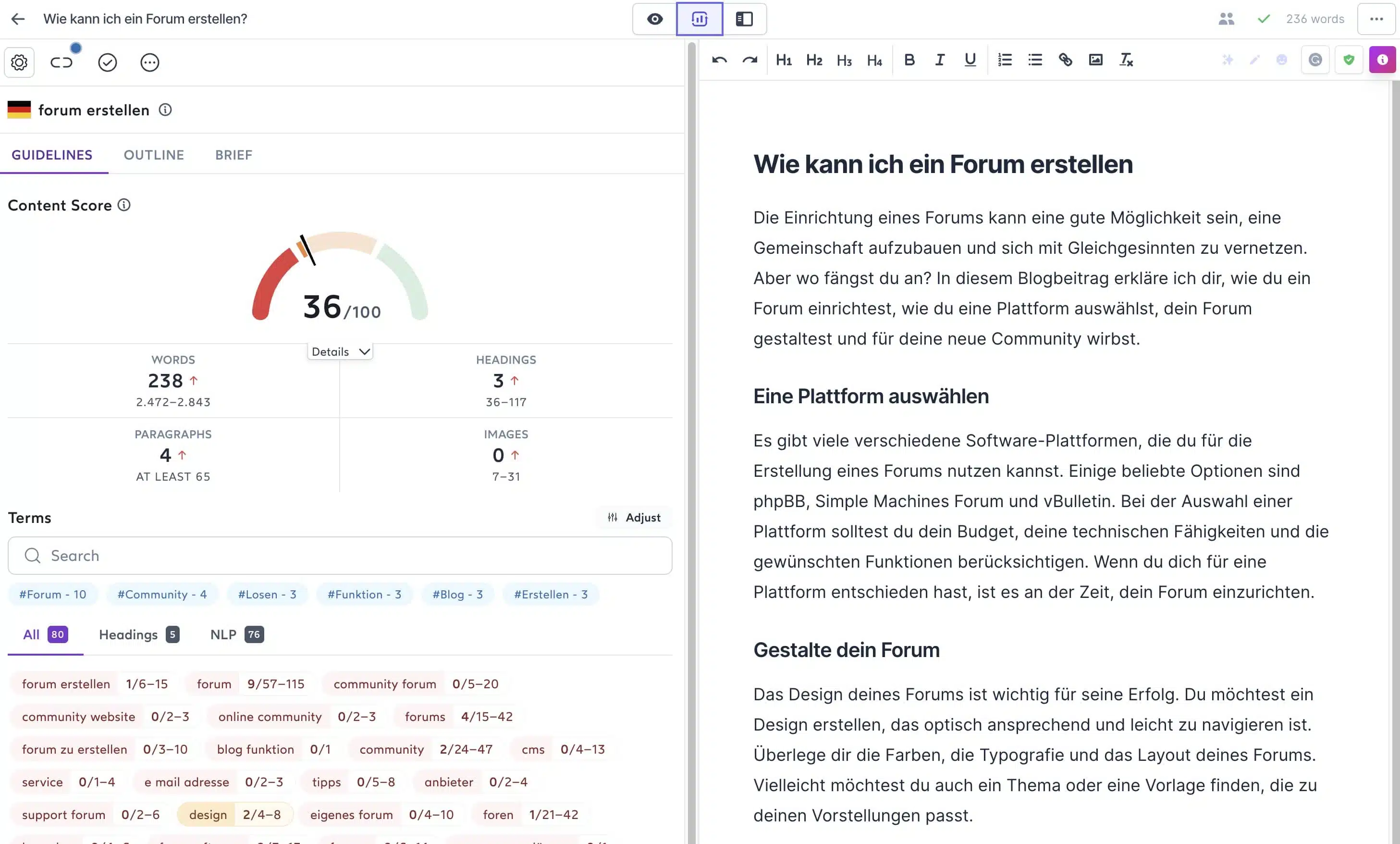
Surfer SEO and Jasper are an absolute dream team!
Important:
Important: Jasper has changed its plan structure since our earlier test. It currently offers a Pro plan at $59/month with annual billing or $69 billed monthly. Some features use credits, so check the included features and usage before subscribing.
5. Frase
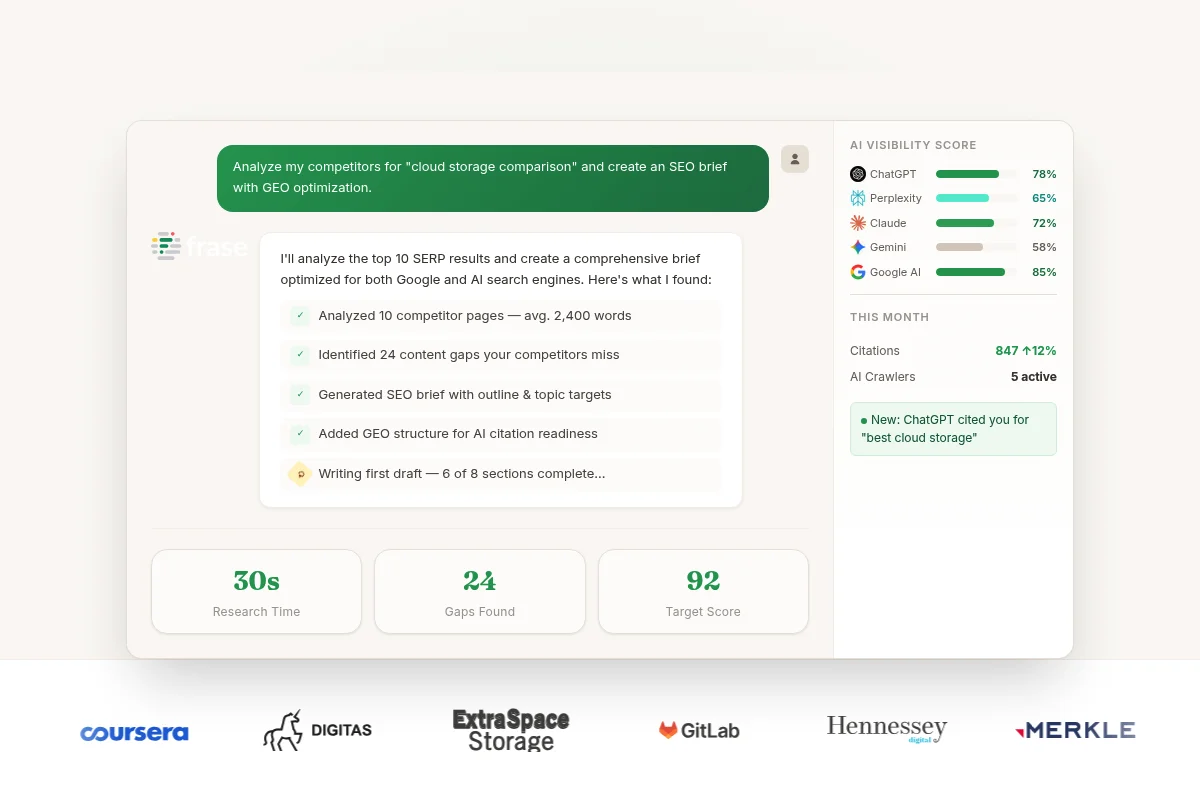
Frase is one of the best AI text generators on the market. It's easy to use, offers a great editor, and produces good quality texts.
Where Frase is better than all other AI text generators is SEO. For one, it offers four useful SEO tools:
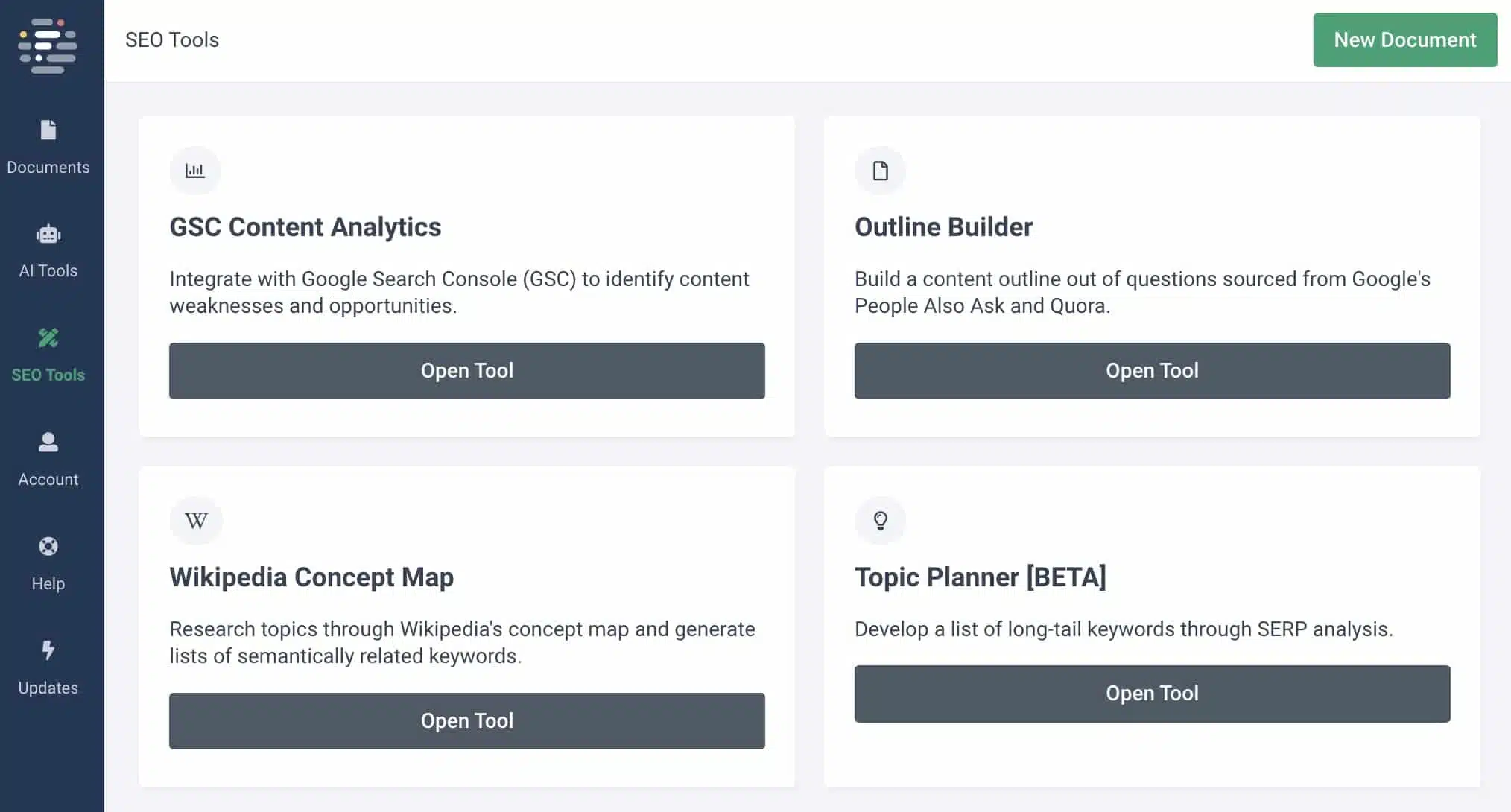
With the "Wikipedia Concept Map" you can search Wikipedia for topics, and with the "Topic Planner" you can generate long-tail keywords, both of which are great for keyword research.
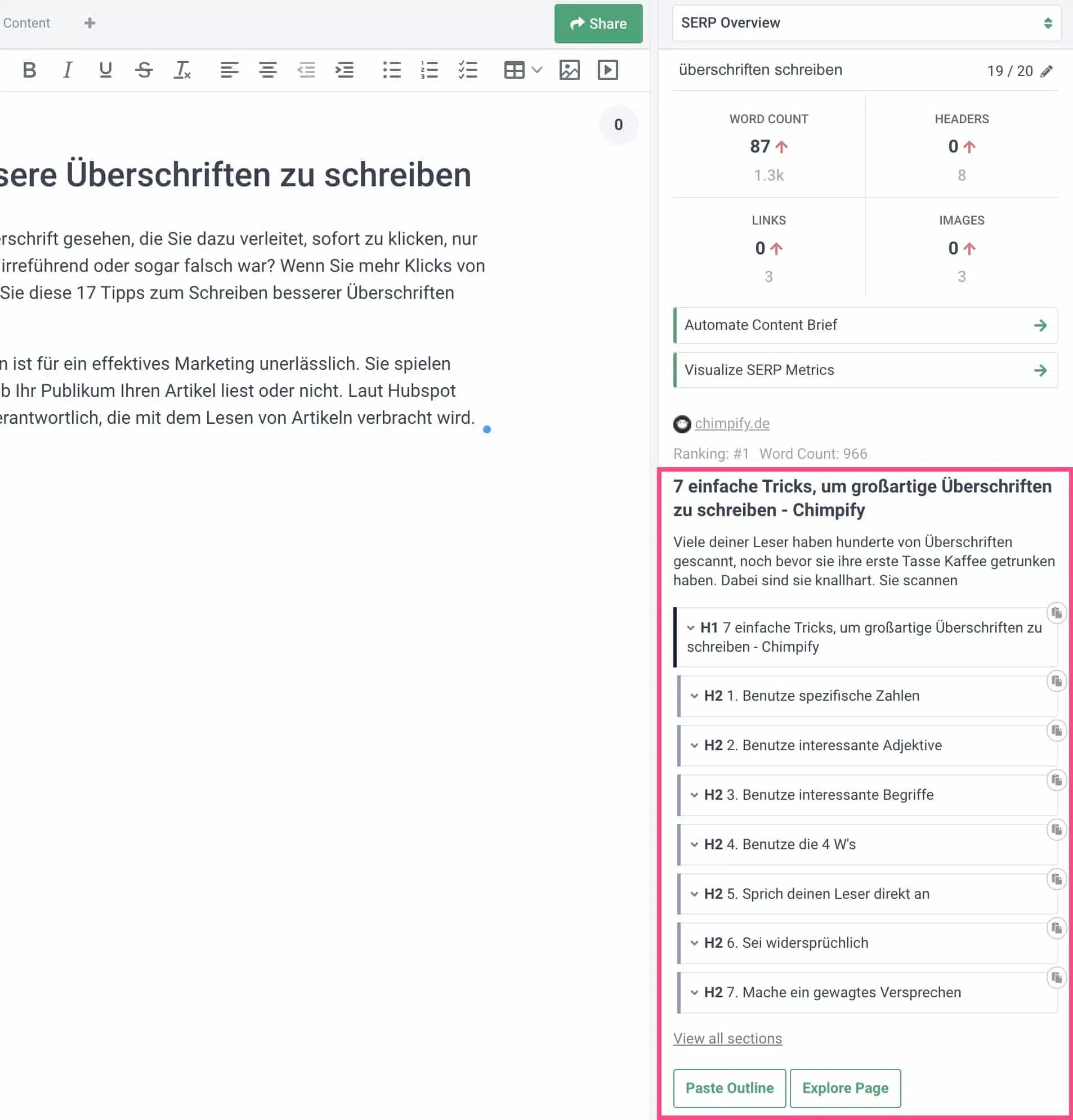
Additionally, it offers brilliant SEO features in the editor that I partly find better than Surfer SEO's Content Editor.
The sidebar in the editor is super brilliant for competitor analysis. The "SERP Overview" shows you, for example, your competitors' article structure for a specific keyword (with the option to adopt it):
Frase offers good value for money:
The basic plan at $39 per month for 10,000 characters per month is quite expensive, but if you add the SEO Add-on for $35 per month, the character limit is removed and you can generate unlimited content with AI.
Personally, I prefer the combination of Jasper and Surfer SEO for SEO texts, but Frase clearly has the edge on price:
Jasper and Surfer SEO are billed separately. Jasper Pro currently costs $59/month with annual billing or $69 billed monthly. Surfer SEO adds its own plan price. The total therefore depends on the Jasper usage and Surfer plan you choose, rather than on an old fixed word-count calculation.
6. Originality.ai
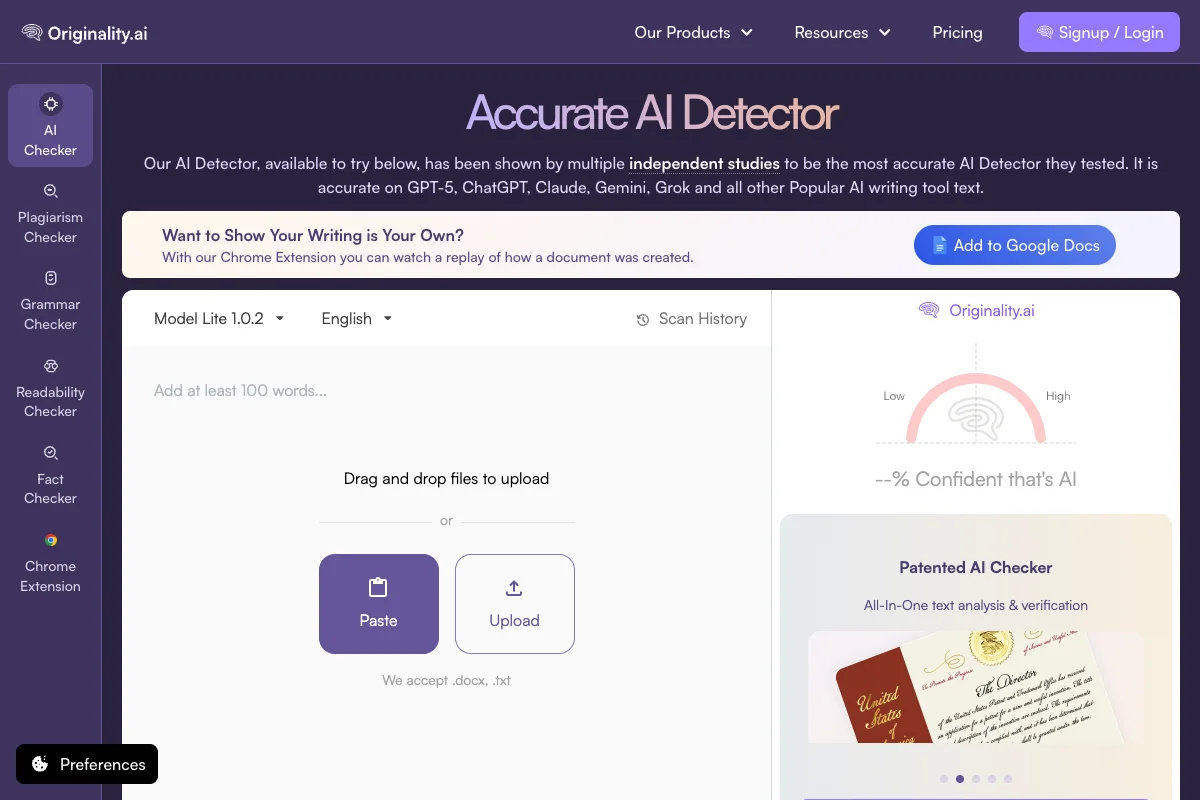
With the increasing popularity of AI chatbots and AI text generators, it's becoming increasingly important for SEOs to be able to detect AI text.
Not only when working with writers or authors who try to sell you AI texts as human-made but also to make AI texts on your own website undetectable. Because search engines might downrank AI content in the future.
Originality.ai is one of the most popular and well-known AI detectors on the market. According to its own claims, it can detect AI text created with all major language model families, including GPT-5.6, Claude Opus 4.8, Gemini 3.5, and Grok 4.5 (as well as older models like GPT-4o and GPT-3.5).
In our test, it was able to detect 15 out of 15 AI texts, making it the best AI content detector.
Experiments have also shown that Originality.ai is now much harder to fool. The tool also very well detects AI texts where typical obfuscation methods like adding punctuation, spelling and grammar errors, synonyms, or rewriting by AI tools were applied.
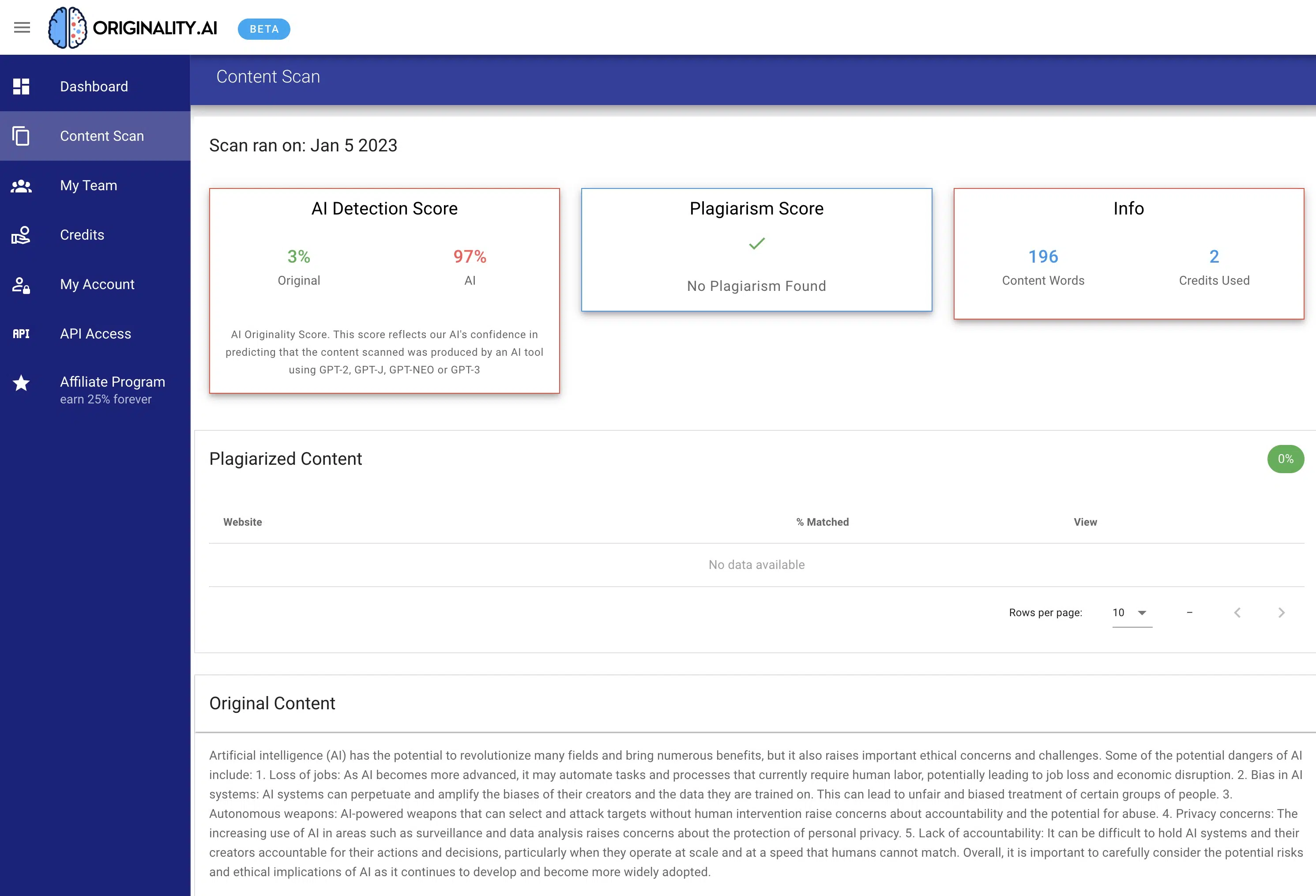
Originality.ai additionally offers a plagiarism checker that can be run simultaneously with the AI detector.
The plagiarism and AI check is usually very fast and the result is clearly displayed:
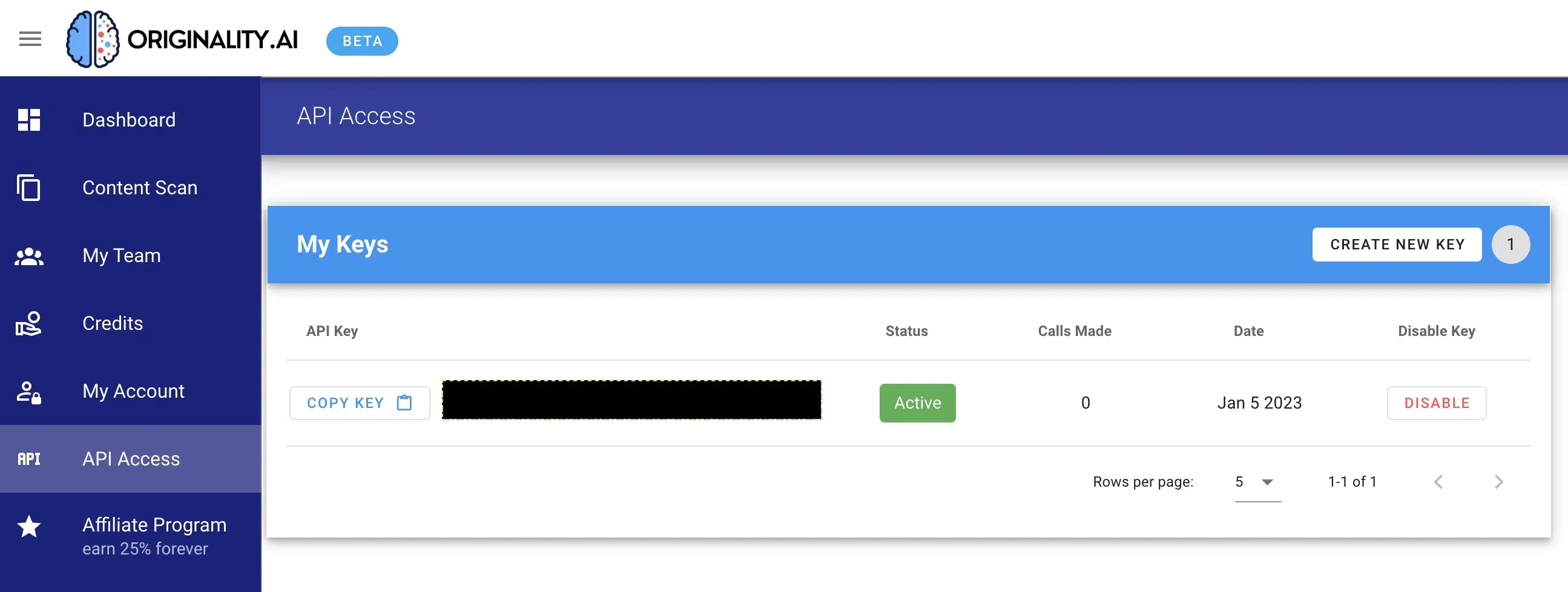
There's also an API if you want to analyze texts or URLs in bulk:
Originality.ai Pro costs $14.95/month or $12.95/month with annual billing. It includes 2,000 credits per month.
One credit scans up to 100 words for AI content. Running AI detection and plagiarism together uses two credits per 100 words.
Frequently Asked Questions About AI SEO Tools
In 2026, search engines use AI for far more than just a few years ago:
- AI Overviews and AI Mode: Google uses Gemini 3.5 to generate direct answers at the top of the SERP in 200+ countries
- Query Fanout: Automatic decomposition of complex queries into sub-queries
- Featured Snippets & "People Also Ask": AI-generated info boxes
- Search Intent Recognition: Understanding what users really want to find
- Personalization: Individual search results based on user behavior
- Spam Detection: Google's August 2024 Core Update set the precedent for combating low-value SEO content
Google also uses AI to evaluate content according to E-E-A-T criteria.