Looking for an AI chatbot that costs nothing?
The good news:
The five best-known chatbots all have a free plan. But ChatGPT, Gemini, Claude, Microsoft Copilot, and Perplexity differ a lot in which model you get, how fast you hit limits, and whether ads appear.
In this article, I'll show you what you get for free, which chatbot fits which task, and when upgrading to a paid plan is worth it.
- ChatGPT, Gemini, Claude, Microsoft Copilot, and Perplexity are free to use. ChatGPT has unlimited text chats, but ads can appear.
- Claude gives you Sonnet 5.5 on the free plan, Perplexity cites sources for every answer, and Copilot and ChatGPT work with restrictions even without an account.
- The cheapest paid plan is Google AI Plus at $4.99 a month, followed by ChatGPT Go at $8. ChatGPT Plus costs $20.
1. The best free AI chatbots compared
You can use these five chatbots for free, permanently. The overview shows which model answers on the free plan, how strong it is in the overall index, which features you get for free, and what the first paid plan costs:


For ChatGPT, OpenAI's own sources disagree on the free model. The pricing page names GPT-6 Luna, the model help article GPT-5.6 Luna. The model picker shows which one answers you. All the details of the free plan are in my article on ChatGPT for free.
2. What do the paid plans cost?
If the free plan stops being enough, you don't have to spend $20 or more right away. These are the cheapest paid tiers of the five chatbots:
- Plan
- Google AI Plus
- Price per month
- $4.99
- What you get
- Twice the Gemini limits, 128,000-token context, 400 GB storage
- Plan
- ChatGPT Go
- Price per month
- $8
- What you get
- More messages, uploads, images and voice chats than Free, may include ads
- Plan
- Perplexity Pro
- Price per month
- $20 (annual $17)
- What you get
- More Pro Searches, deep research and a choice of models
- Plan
- Claude Pro
- Price per month
- $20 (annual $17)
- What you get
- At least 5x Free usage, Opus 5.5 and Claude Code
- Plan
- Google AI Pro
- Price per month
- $19.99 (annual $16.67)
- What you get
- Gemini 4 Argon, 4x limits, 1M-token context, 5 TB storage
- Plan
- Microsoft 365 Premium
- Price per month
- $19.99 (annual $16.67)
- What you get
- Office apps and advanced Copilot with Researcher and Analyst
- Plan
- ChatGPT Plus
- Price per month
- $20
- What you get
- GPT-6 Sol with thinking levels, more Codex, no ads
 gradually.ai
All prices are US list prices before tax; the value in brackets is the monthly price with annual billing.
My tip:
For more Gemini, Google AI Plus is often enough. If you use ChatGPT heavily but don't need reasoning models, Go is the affordable middle step. Plus is only worth it if you need GPT-6 Sol with its thinking levels or more Codex. You can filter every plan by models and limits in the AI subscription comparison.
3. Which chatbot fits which task?
There's no single best chatbot for everything. This is how I'd split up the free chatbots:
- Free chatbot
- ChatGPT
- Why
- Unlimited text chats, images and web search in one account
- Free chatbot
- Perplexity
- Why
- Every answer with numbered sources, 3 Pro Searches per day
- Free chatbot
- Claude
- Why
- Sonnet 5.5 on the free plan, strong on long texts and programming
- Free chatbot
- Google Gemini
- Why
- Connected to Google services
- Free chatbot
- Microsoft Copilot
- Why
- Works with restrictions even without signing in
In everyday work, I often use two chatbots side by side. That costs nothing, and for important questions you see right away whether the answers contradict each other.
4. What is an AI chatbot, anyway?
An AI chatbot is a program you talk to in natural language. Behind it sits a language model that understands your question and writes an answer. Unlike a search engine, the chatbot remembers the conversation and can respond to follow-up questions.
An AI chatbot has three features:
- It gives AI-generated answers to questions or tasks.
- It has a chat interface.
- It remembers the chat history.
The model isn't the same thing as the chatbot. ChatGPT is the interface, GPT-6 Sol or GPT-6 Luna are the models behind it. That's why the same chatbot can answer much weaker on the free plan than on a paid one.
5. The free AI chatbots in detail
5.1 ChatGPT
ChatGPT from OpenAI is the best-known AI chatbot and the most versatile on a free plan. Regular text chats are unlimited. On top come web search, image generation with ChatGPT Images 2.6, voice chats, deep research, and file uploads, each with its own limits.
According to OpenAI, you can try ChatGPT without an account in supported countries, but only with one conversation per browser session.
The catch:
According to OpenAI, ChatGPT may show ads on Free and Go. The context window on Free also holds only 27,000 tokens with GPT Instant, which is tight for long documents. ChatGPT Go at $8 raises the limits, and ChatGPT Plus at $20 adds GPT-6 Sol with thinking levels and no ads. I compare every tier in my article on ChatGPT pricing.
5.2 Google Gemini
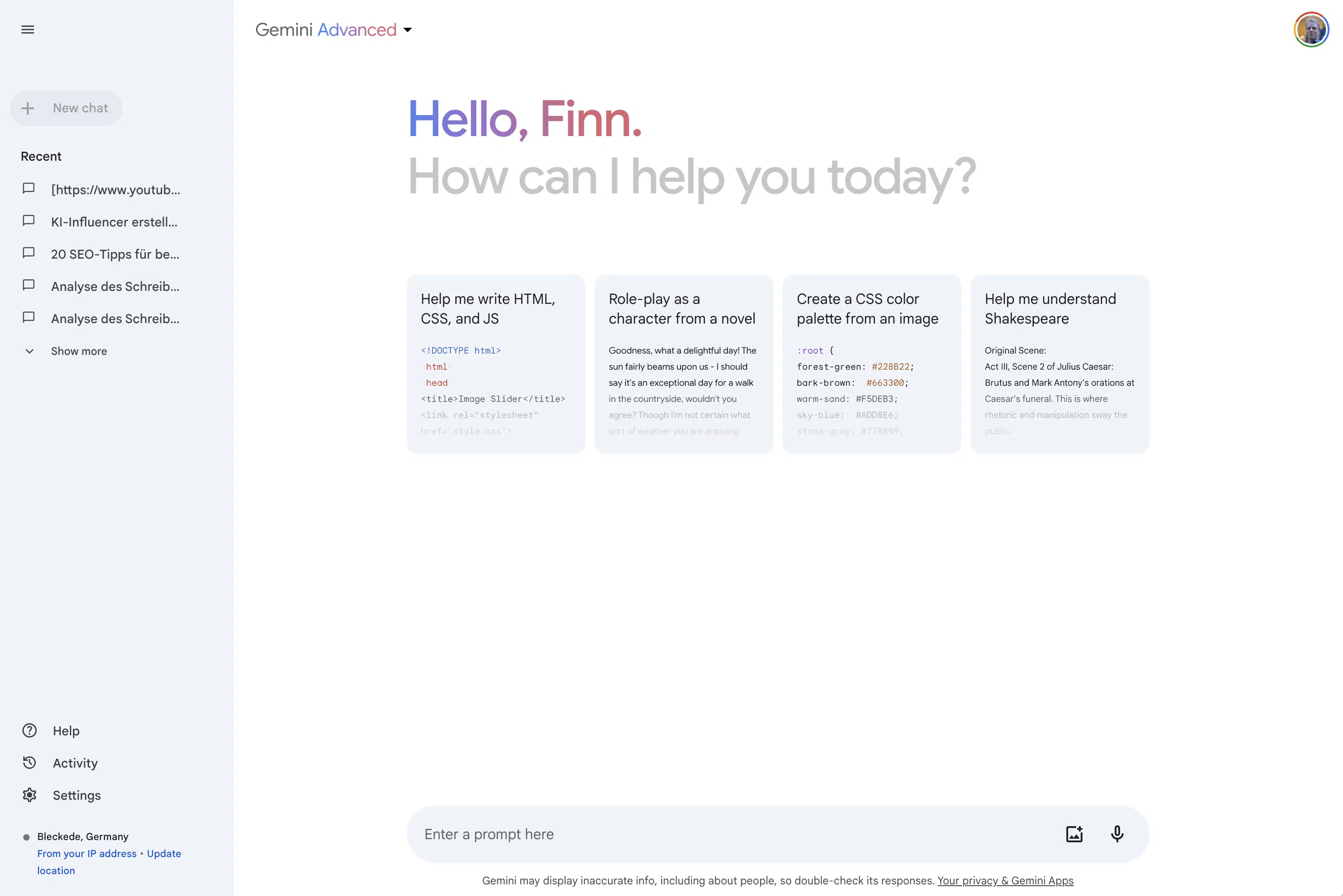
Gemini is Google's chatbot and was called "Bard" until February 2024. According to Google, the free version gives you access to the Flash-Lite model. You create images with Nano Banana, and Google Flow gives you 50 credits a day for videos.
Its biggest strength is the connection to Google. Gemini uses Google Search and works with Gmail, Docs, YouTube, and Maps.
The limits refresh every five hours up to a weekly limit (Google). Google AI Plus at $4.99 doubles them. Google AI Pro at $19.99 gets you Gemini 4 Argon, four times the limits, and a context window of 1M tokens.
5.3 Claude
Claude from Anthropic is my favorite for long texts and programming. On the free plan, you get Sonnet 5.5 and Haiku, plus web search, file uploads, Artifacts, and up to five Projects. You need a free account for it.
Here, Claude explained to me what "E-E-A-T" is, based on the 176-page Google Quality Rater Guidelines:
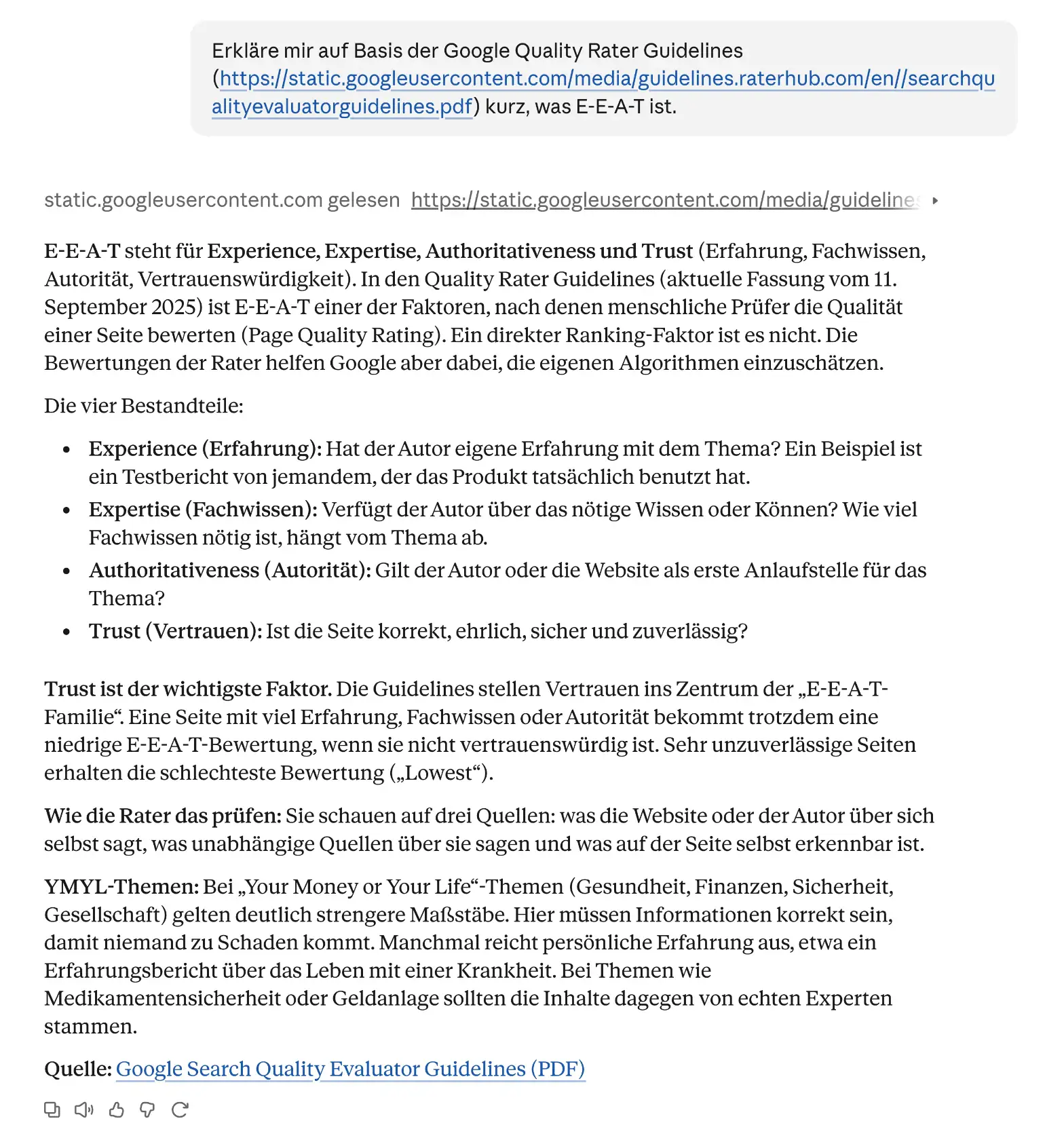
Claude doesn't create images. On the free plan, you also hit the session limit faster than on ChatGPT; it refreshes every five hours. Claude Pro costs $20 a month ($17 with annual billing) and brings at least five times the usage, Opus 5.5, and Claude Code (Anthropic). How Claude stacks up against ChatGPT is in my comparison ChatGPT vs. Claude.
5.4 Microsoft Copilot
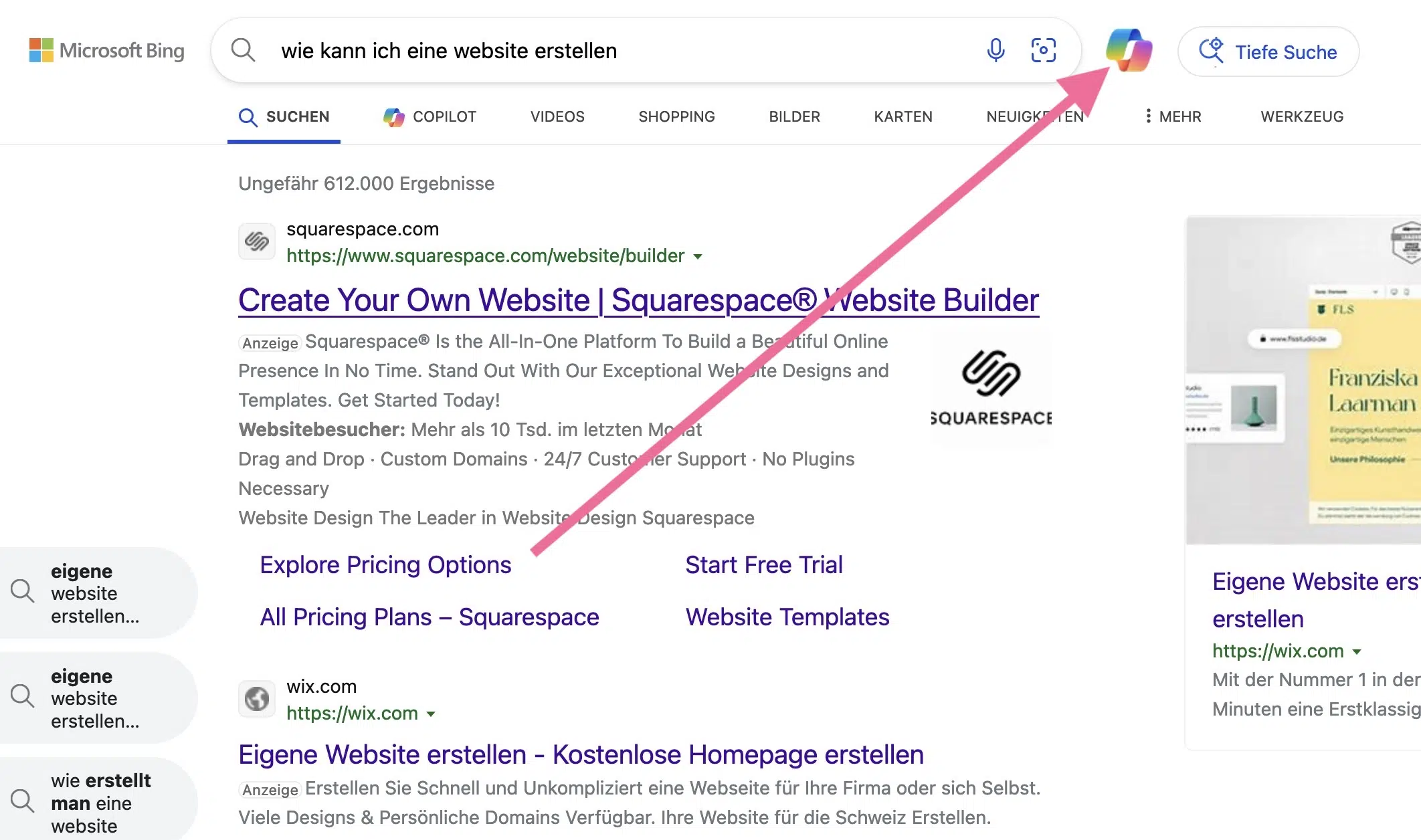
Microsoft Copilot (formerly Bing Chat) is the best pick if you want to start without an account. With restrictions, it works without signing in at all, in the browser and as an app for Windows, macOS, iOS, and Android.
Copilot picks the model automatically. Microsoft doesn't name a fixed model or a daily limit for the free version. With a personal account, you get chat history, image generation, and longer conversations.
More Copilot only comes bundled with Office. Microsoft 365 Premium costs $19.99 a month and includes Researcher, Analyst, and more image creation. Copilot Pro can no longer be purchased.
5.5 Perplexity
Perplexity is more of an AI search engine than a chatbot and hard to beat for research. Every answer includes numbered sources you can click right away:
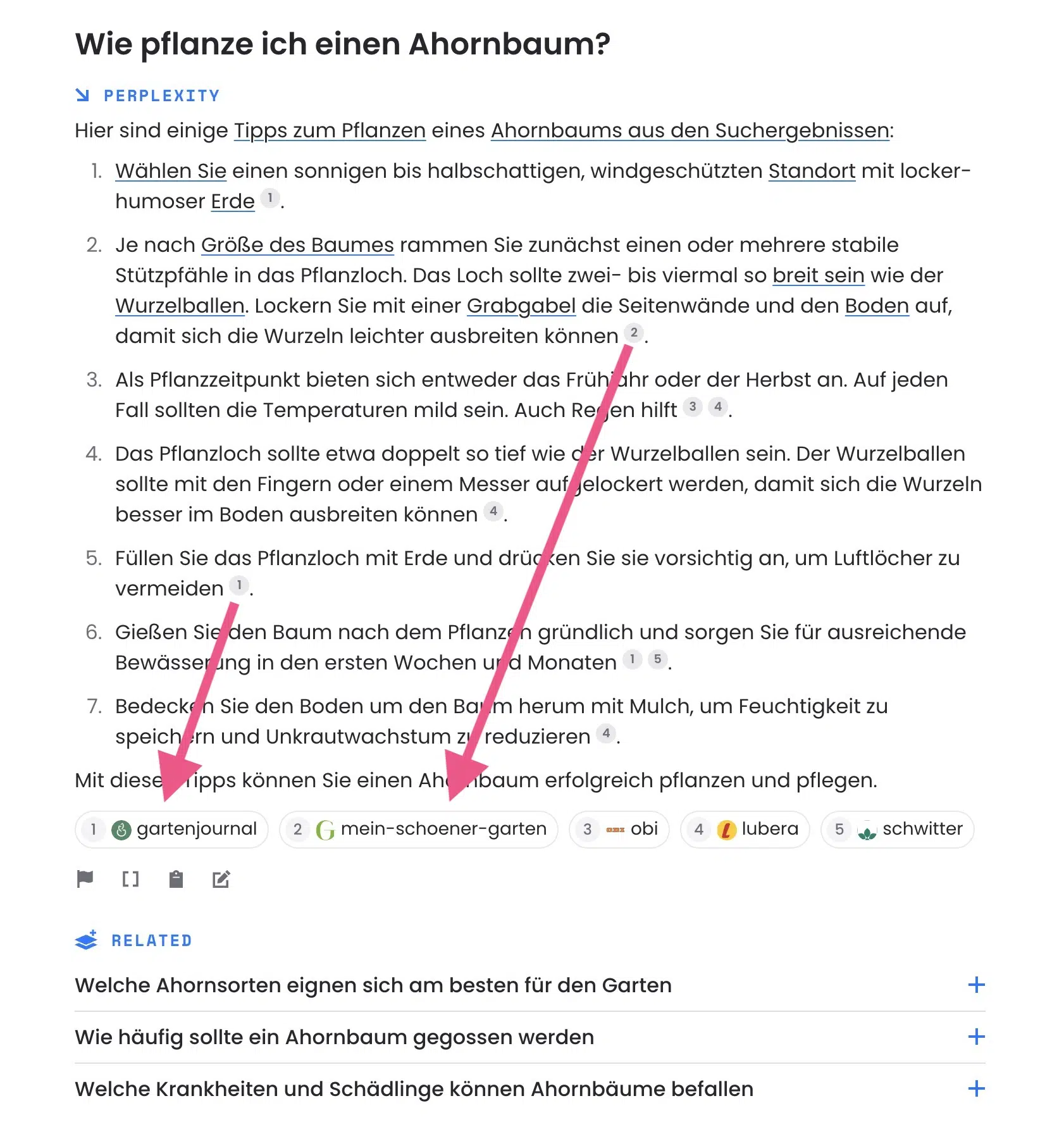
According to Perplexity, the free plan includes basic searches, 3 Pro Searches per day, and 1 Research query per month. Pro Searches run several search steps in a row and answer questions more thoroughly. Perplexity Pro costs $20 a month, or $17 with annual billing.
6. AI chatbots for German texts and privacy
If you mainly use a chatbot to write texts for your business, specialized providers are worth a look. They cost more, but bring templates, an editor, and sometimes servers in Germany.
6.1 ChatFlash (by Neuroflash)
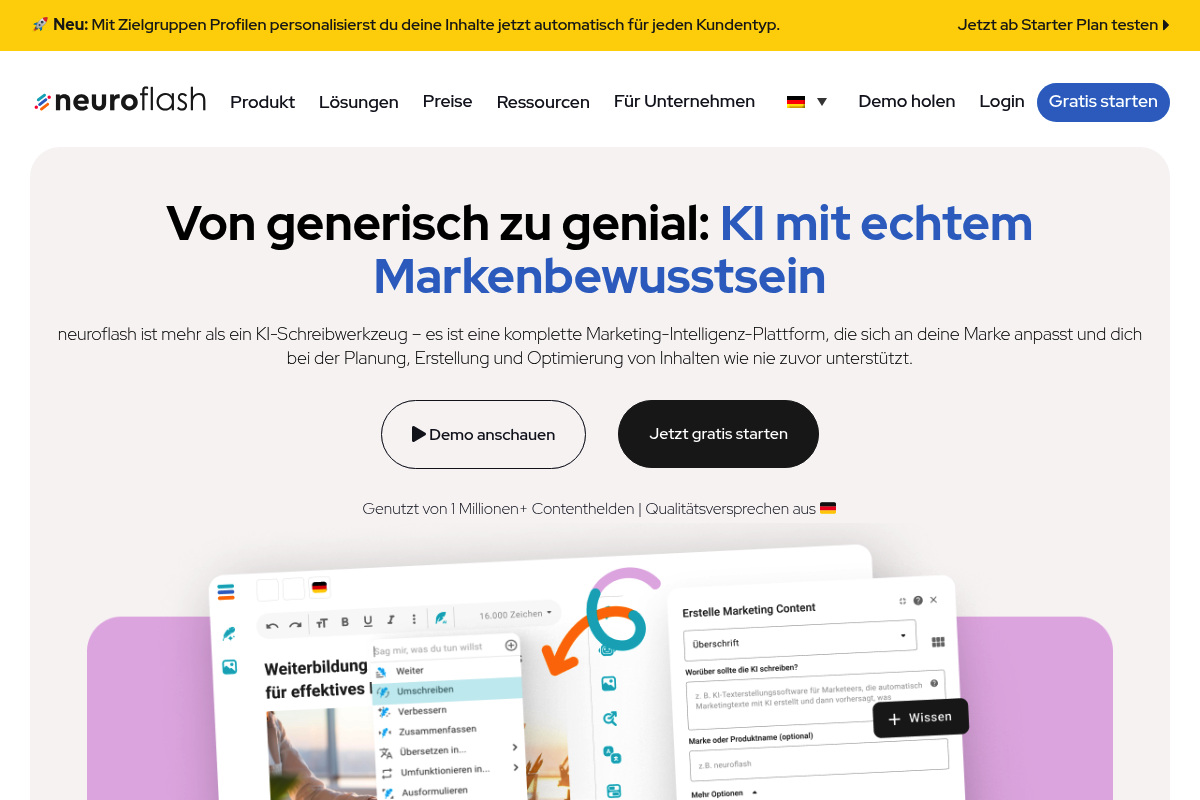
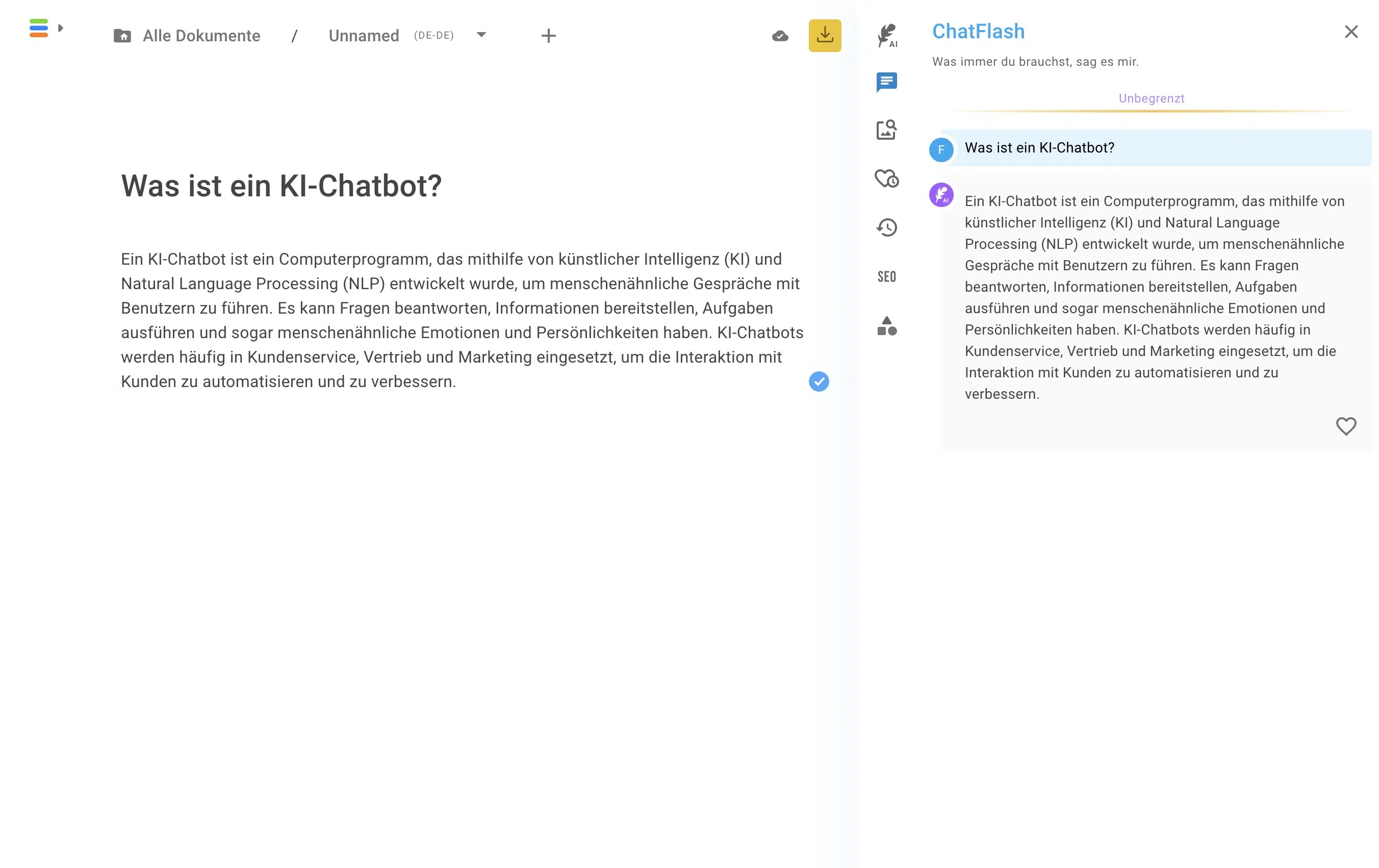
Neuroflash is a German AI text generator with a built-in chatbot called ChatFlash. The interface and support are in German. Depending on the plan, ChatFlash offers several current models and an integrated web search, and you move answers into the editor with one click:
According to the provider, your stored data is kept on servers in Germany, while its privacy policy says AI requests are also processed in the EU and the US. The company is ISO/IEC 27001:2022 certified and says it doesn't use your input for training.
6.2 Chatsonic
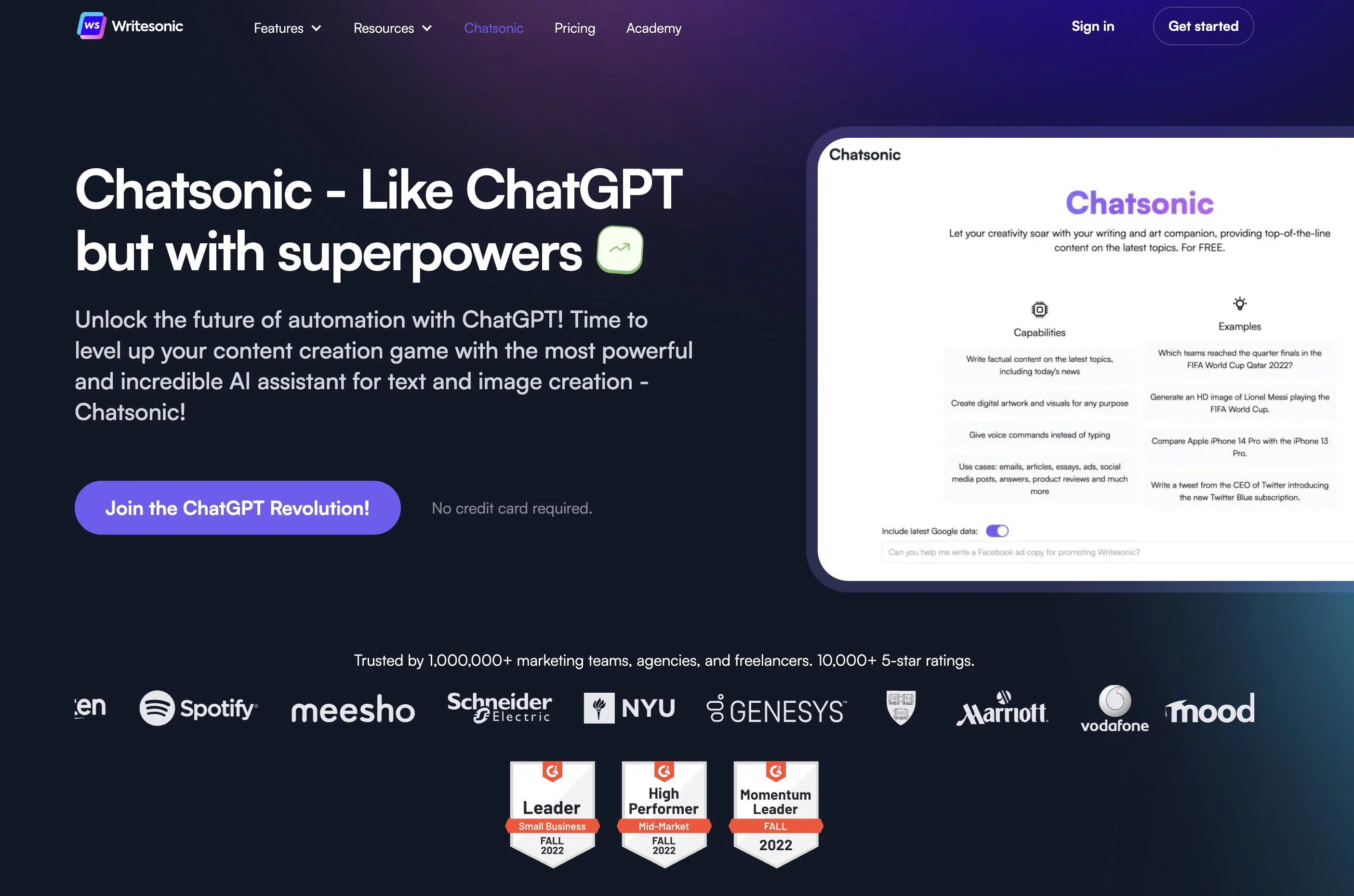
Chatsonic belongs to the AI text generator Writesonic. There's no permanent free plan anymore. You can try Writesonic for free; after that, it starts at $79 a month with annual billing.
6.3 More chatbots with several models
These tools bundle models from several providers under one interface:
- ChatLLM (by Abacus.AI): GPT, Claude, Gemini, and other models in one subscription
- Try Merlin in your browser: a browser extension that brings up an AI assistant on any website with a keyboard shortcut
- Poe (by Quora): many models and custom bots in one app
7. Building your own AI chatbot
For your own website or customer support, you don't need any of the chatbots above, but a builder. You add your content, and the chatbot answers questions based only on it. Well-known providers include:
- Chatbase: your own chatbot from your website, PDFs, and documents, without coding
- Fin (by Intercom): an AI agent for customer support
8. How widespread are the AI chatbots?
According to Similarweb, ChatGPT accounted for 56.4% of global AI chatbot web traffic in September 2026. Gemini reached 25.0%, with Copilot and Perplexity far behind. The chart shows website traffic only, without apps or the API:

 gradually.ai
Traffic is only one signal. Our own data adds search demand, usage, and mentions in tech media, plus benchmarks and the hallucination rate of the models behind the chatbots.
9. How popular are the companies behind the chatbots?
OpenAI is behind ChatGPT, Google behind Gemini and Anthropic behind Claude, plus Microsoft with Copilot and Perplexity. The more popular a company is, the more guides, reviews and help you'll find for its chatbot.
The gradually.ai AI vendor popularity index combines search demand for the vendor and its AI brands, usage via OpenRouter and Hugging Face and mentions in tech media.
OpenAI is at rank 1 of 41 (97 points). Google is at rank 2 of 41 (91 points). Anthropic is at rank 3 of 41 (88 points). Perplexity is at rank 8 of 41 (75 points). Microsoft is at rank 13 of 41 (71 points).
Use the switch above the chart to change between world, EU and Germany.
Vendor popularity index
0 to 100, higher is more popular
As of Nov 26, 2026 · Source: gradually.ai popularity index
10. Which models behind the chatbots are the most popular?
A chatbot is only as good as the model answering inside it. Here you can see which OpenAI, Google and Anthropic models are searched for, used and mentioned the most.
Among the 76 OpenAI, Google and Anthropic language models with a value in the popularity index, Claude Opus 5.5 (88 points), GPT-6.1 Terra (88 points) and Claude Haiku 5.5 (86 points) lead.
OpenAI's most popular model is GPT-6.1 Terra at rank 2 of 502 (88 points). Google's most popular model is Gemini 4 Argon at rank 7 of 502 (85 points). Anthropic's most popular model is Claude Opus 5.5 at rank 1 of 502 (88 points). The index combines search demand, usage and mentions in tech media. The median of all 502 rated language models is 42 points.
Use the switch above the chart to change between world, EU and Germany.
The most popular OpenAI, Google and Anthropic models
Popularity index from 0 to 100, higher is more popular.
20 of 76 models
Source: gradually.ai popularity index
11. How strong are the models behind the chatbots?
How well ChatGPT, Gemini and Claude answer depends on the model. The free plan usually gives you a smaller model, the strongest ones need a subscription. The overall index shows how big the gap is.
The gradually.ai overall index combines independent benchmarks into one value. Among the 48 ranked OpenAI, Google and Anthropic language models, Claude Fable 5.2 (130.0 points), Gemini 4 Carbon (127.0 points) and Gemini 4 Neon (126.7 points) lead.
OpenAI's strongest model is GPT-6.2 Astra at rank 4 of 99 (126.0 points). Google's strongest model is Gemini 4 Carbon at rank 2 of 99 (127.0 points). Anthropic's strongest model is Claude Fable 5.2 at rank 1 of 99 (130.0 points). 100 points is the average of a fixed reference group; 15 points more means a model wins about three of four benchmark comparisons. The median of all 99 ranked language models is 88.8 points.
Overall index (Gradually Meta-Score v6)
20 of 48 models
12. Which chatbot makes up facts the least?
If you use a chatbot for research, you need answers you can rely on. That's why this section only shows the models behind ChatGPT, Gemini and Claude.
Artificial Analysis uses AA-Omniscience to measure how often a model guesses wrong on knowledge questions instead of admitting it does not know. Each model counts with its best measured setting.
Among the 27 measured OpenAI, Google and Anthropic models, Gemini 4 Carbon (4%), Gemini 4 Argon (4%) and Gemini 4 Neon (14%) hallucinate least.
OpenAI's most reliable model is GPT-6.1 Terra at rank 30 of 78 (35%). Google's most reliable model is Gemini 4 Carbon at rank 1 of 78 (4%). Anthropic's most reliable model is Claude Haiku 4.5 at rank 13 of 78 (23%). The median of all 78 measured models is 40%.
Hallucination rate
Share of wrong answers among all answers that are not correct, lower is better. Best measured setting per model.
20 of 27 models
Measured by Artificial Analysis (AA-Omniscience)
13. My verdict
You don't need to spend a cent to try them. Start with ChatGPT, because it does the most, and add Claude for long texts or code. For research with sources, Perplexity is the better choice, and Gemini for anything around Google.
I'd only pay once you regularly hit limits. Then Google AI Plus at $4.99 or ChatGPT Go at $8 is often enough. The bigger plans around $20 are worth it if you need the strongest models every day for your work.