GPT-3.5 or GPT-4? If you've used ChatGPT, you've probably noticed the model selector. But what's the actual difference?
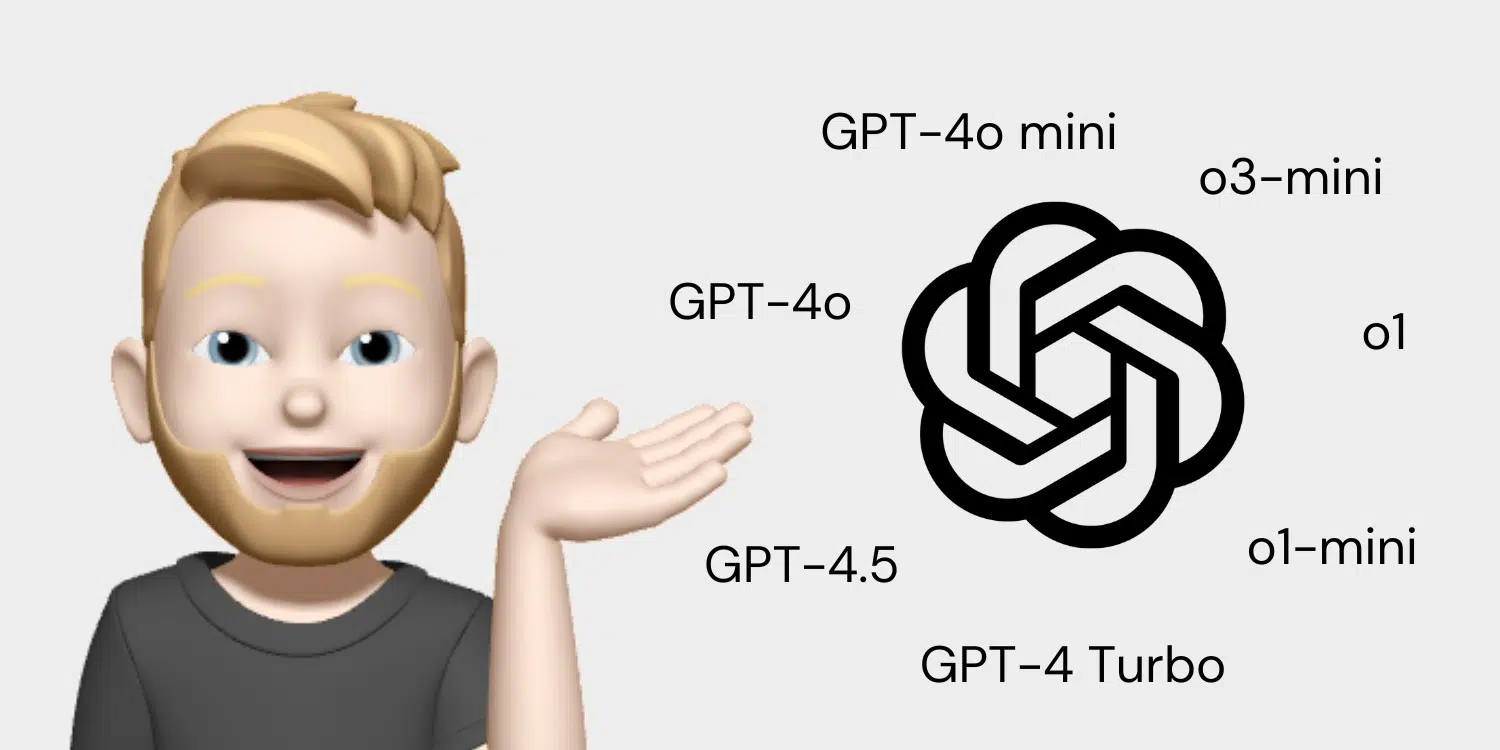
The short version: GPT-4 is dramatically better at almost everything. But GPT-3.5 is faster and (was) cheaper. And in 2026, both are largely overshadowed by the GPT-5 family (now GPT-5.6, July 2026).
In this article, I'll break down the key differences and give you clear recommendations on when to use which model.
- GPT-4 makes 40% fewer factual errors and understands complex instructions significantly better than GPT-3.5
- GPT-4o only costs 2.5x more than GPT-3.5 (instead of the previous 20x) and offers multimodal capabilities
- GPT-3.5 only makes sense for simple tasks, most users should switch to GPT-4o or the current GPT-5.6 family
1. What is GPT-3.5?
GPT-3.5 (also incorrectly called ChatGPT 3.5) is an LLM (language model) from OpenAI. It represents an improved version of GPT-3, which was released in June 2020.
More precisely, GPT-3.5 is not a single AI model, but consists of the language models code-davinci-002, text-davinci-002, and text-davinci-003.
GPT-3.5 was the default model of ChatGPT for a long time, available even to free users. OpenAI has since replaced it with newer models. For an overview of current options, see my comparison of ChatGPT alternatives.
It's well suited for routine text work that is "everyday and not too demanding" and didn't need any of the ChatGPT plugins of that era:
- Formatting (e.g., creating or modifying HTML tables or formatting a blog article)
- Changing between formal and informal tone
- Quick brainstorming
- Translations
- Changing capitalization
- Creating tables of contents
- Creating smaller code snippets
- etc.
The great advantage of GPT-3.5 lies in its speed. It generates responses noticeably faster than GPT-4.
However, GPT-4 is significantly more powerful:
2. What is GPT-4?
GPT-4 (also incorrectly called ChatGPT 4) was the flagship language model in ChatGPT until 2024. It has been available since mid-March 2023 and has since been superseded by the GPT-5 family (now GPT-5.6, July 2026) as the most powerful model.
GPT-4 was trained with significantly more data than GPT-3.5. It can process more information and capture more complex relationships between words.
Since its release, I've tested it extensively and am impressed by the results. It performs significantly better than GPT-3.5 especially in the following tasks:
- Math and logic
- Data categorization
- Programming
- Text comprehension (e.g., understands idioms and complex instructions better)
Since November 2023, the "DALL·E", "Browsing", and "Advanced Data Analysis" (also called Code Interpreter) modes are also included in GPT-4. With DALL·E, you can generate images directly in ChatGPT.
With the ChatGPT plugins of that era, you could access third-party services and data and extend ChatGPT with new features (today, the new MCP-based plugins fill that role). With Advanced Data Analysis, you can analyze documents, such as Excel files or text documents.
However, GPT-4 has three drawbacks:
First, as mentioned above, it could be slow. Second, errors occurred more often with GPT-4, for example, OpenAI's servers could be overloaded and generation could abort. Third, the number of queries for GPT-4 was initially limited to 40 per day (this limit no longer applies).
That's why I often used GPT-3.5 for simple text generation tasks back then. Today, these limitations are largely obsolete with GPT-4o and the GPT-5.6 family.