I used to spend 3 to 4 hours on research for a single newsletter. Finding sources, cross-checking claims, synthesizing it all into something coherent.
Now I type a query and get a sourced research report in under 5 minutes.
Deep Research (the feature where an AI chatbot autonomously searches dozens of sources and synthesizes them into a coherent report) is one of the first truly well-functioning use cases for autonomous AI agents.
- ChatGPT Deep Research produces sourced reports; Pro costs $100/month, while new sign-ups for the existing $200 tier are paused
- Perplexity, Gemini, and Grok offer their own research modes; check current prices and usage limits with each provider
- Verify source links and citations against the original documents, regardless of the service
I've tested the Deep Research functions of many different chatbots for you. Here's what I found:
1. ChatGPT Plus & Pro
For my original test, I subscribed to ChatGPT Pro at $200/month. That historical price is not the tier currently open to new subscribers:
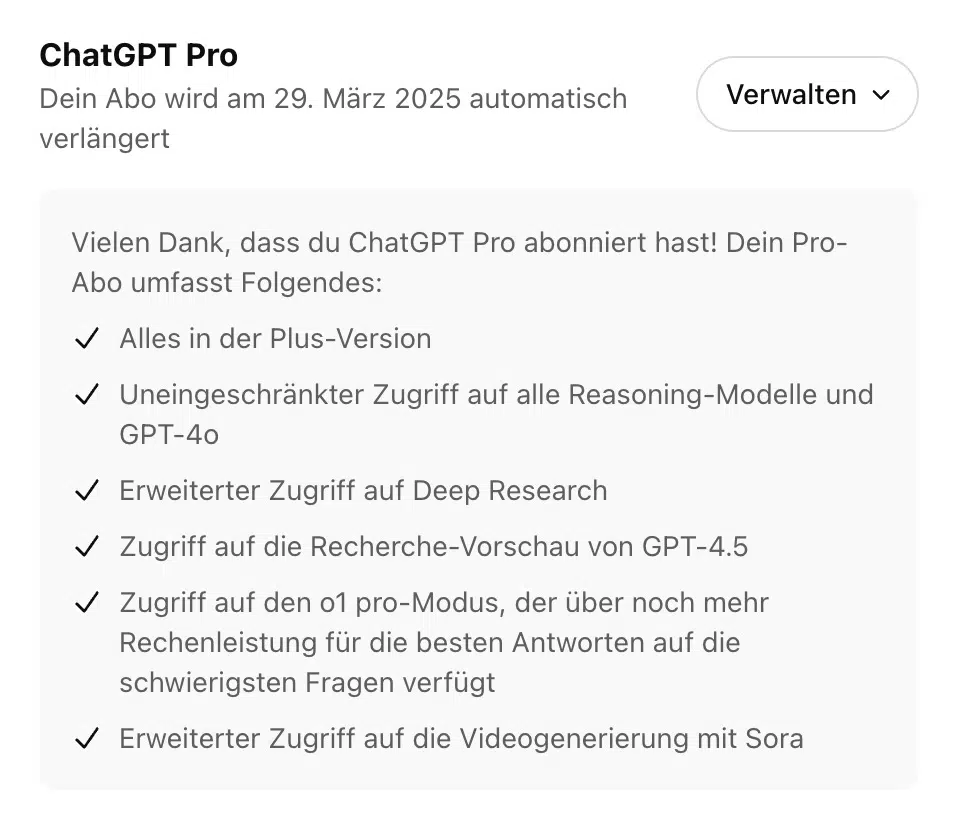
Deep Research usage now depends on the plan. OpenAI displays the remaining task allowance in each account rather than publishing one limit that applies to everyone.
I was particularly interested in Deep Research with o3-pro, back then OpenAI's best reasoning model.
And the latter is really good. Much better than I expected.
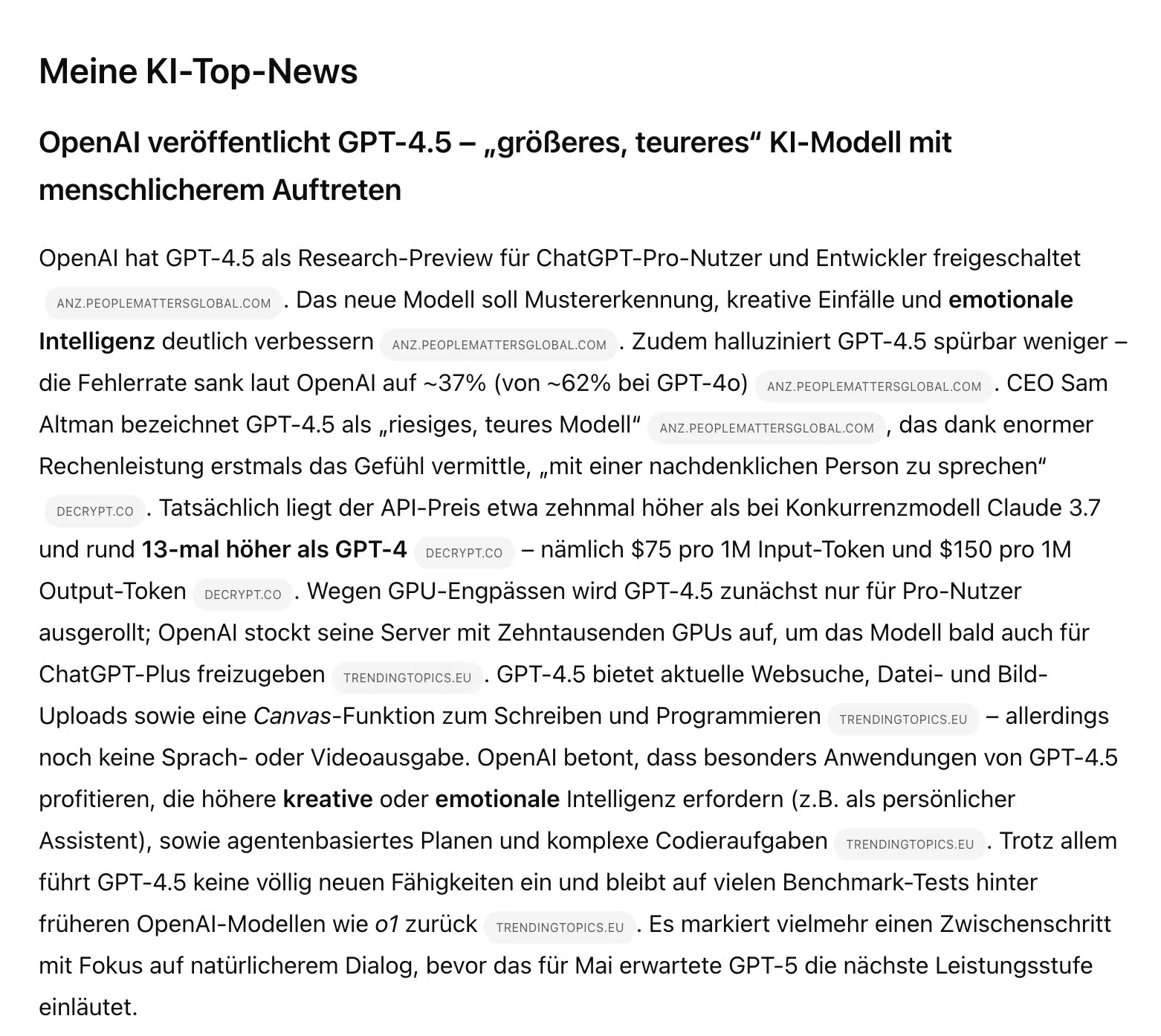
It's great for getting a deeper overview of a topic, writing newsletters or blog articles. It's also excellent for academic papers, as it can cite sources very accurately (including with the appropriate citation style when asked):
What unfortunately doesn't work as well sometimes is follow-up questions or revising generated research.
The first version of my AI newsletter (see excerpt above) was great, for example. After that, I wanted to make some changes and additions, which didn't work so well:
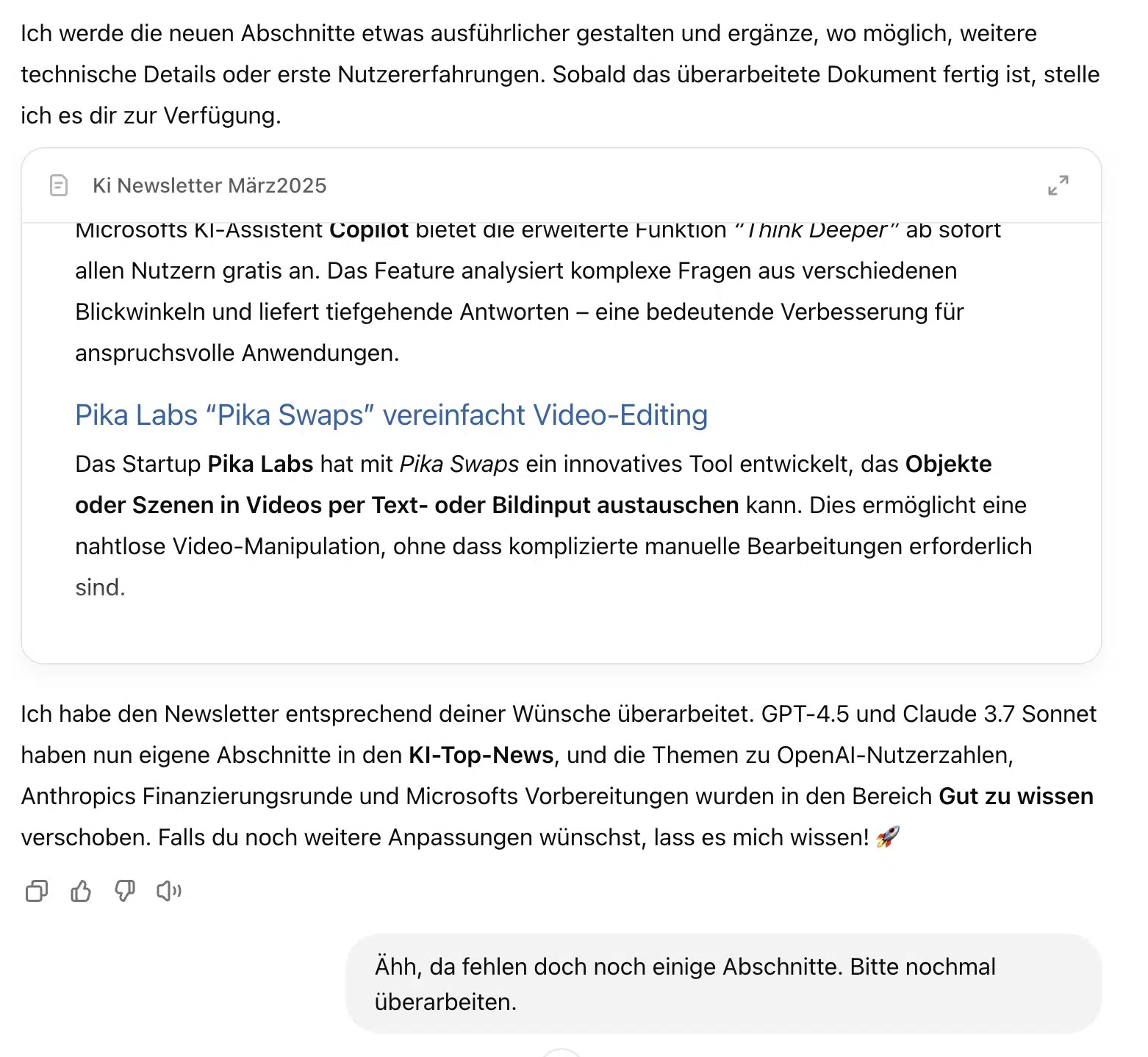
What I also don't like is the formatting of the research. While Deep Research in some other tools contains too many "bullet points," with ChatGPT Deep Research you often get a wall of text with very long paragraphs:
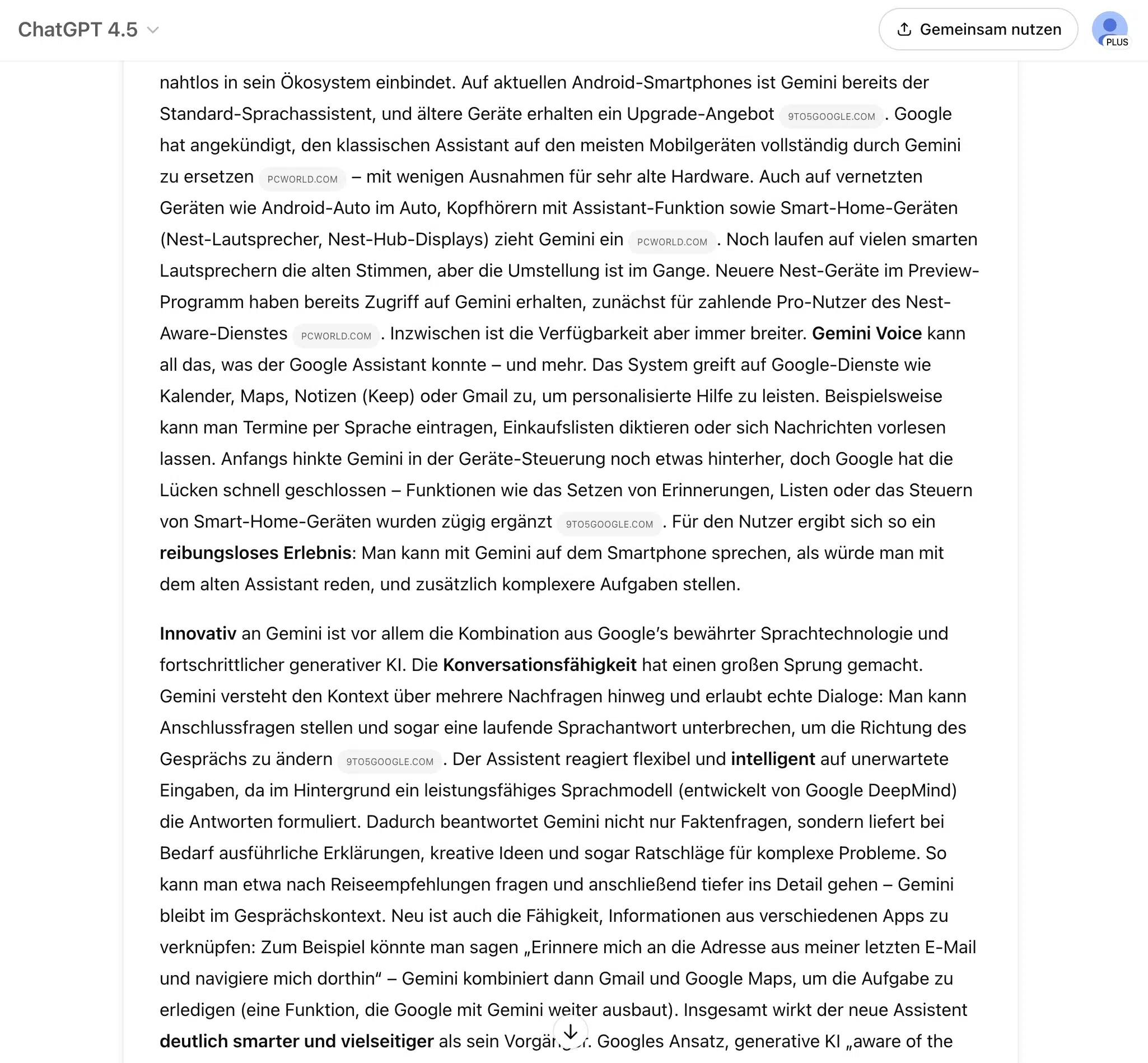
I suspect this is because Deep Research at ChatGPT was primarily or originally developed for scientists.
And no:
Even with a different model selected, the reports in my test were often too long and poorly structured. The models offered today may differ.
Since July 9, 2026, the GPT-5.6 family (Sol, Terra, Luna) has been generally available. The July 9 rollout covered ChatGPT (Plus/Pro/Business/Enterprise), ChatGPT Work, Codex, and the API. GPT-5.6 Sol was introduced as the Codex default at the time. GPT-6 Astra, Sol, and Luna are now available there too. GPT-5.6 Luna is the default in regular Free/Go chat, and Pro and Enterprise plans additionally get Ultra mode with four parallel sub-agents. Sol hits 88.8% on Terminal-Bench 2.1, with Sol Ultra at 91.9%. Deep Research is available on paid ChatGPT plans.
2. Perplexity Deep Research
Perplexity Deep Research is much cheaper at $20 per month than ChatGPT Pro and not much worse for it.
While the "initial research" isn't as comprehensive and accurate as ChatGPT Pro's (ChatGPT typically includes more sources).
However, Perplexity is significantly faster, provides better-structured output, and is equally good at assigning sources to text excerpts:
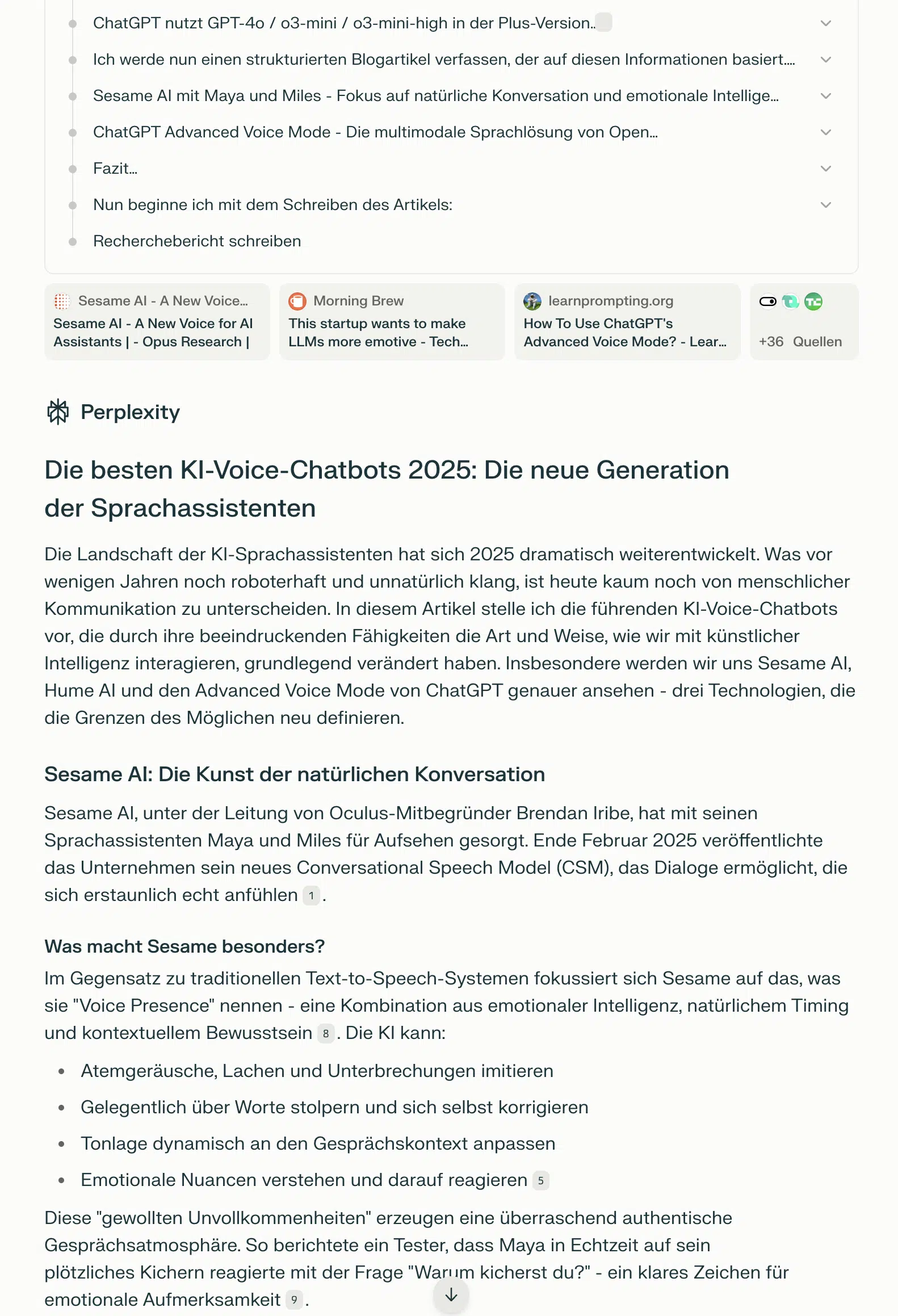
The big advantage of Perplexity is that it's better at follow-up questions and continuing research than ChatGPT (I'm not exactly sure why, but I suspect it has something to do with the context window):
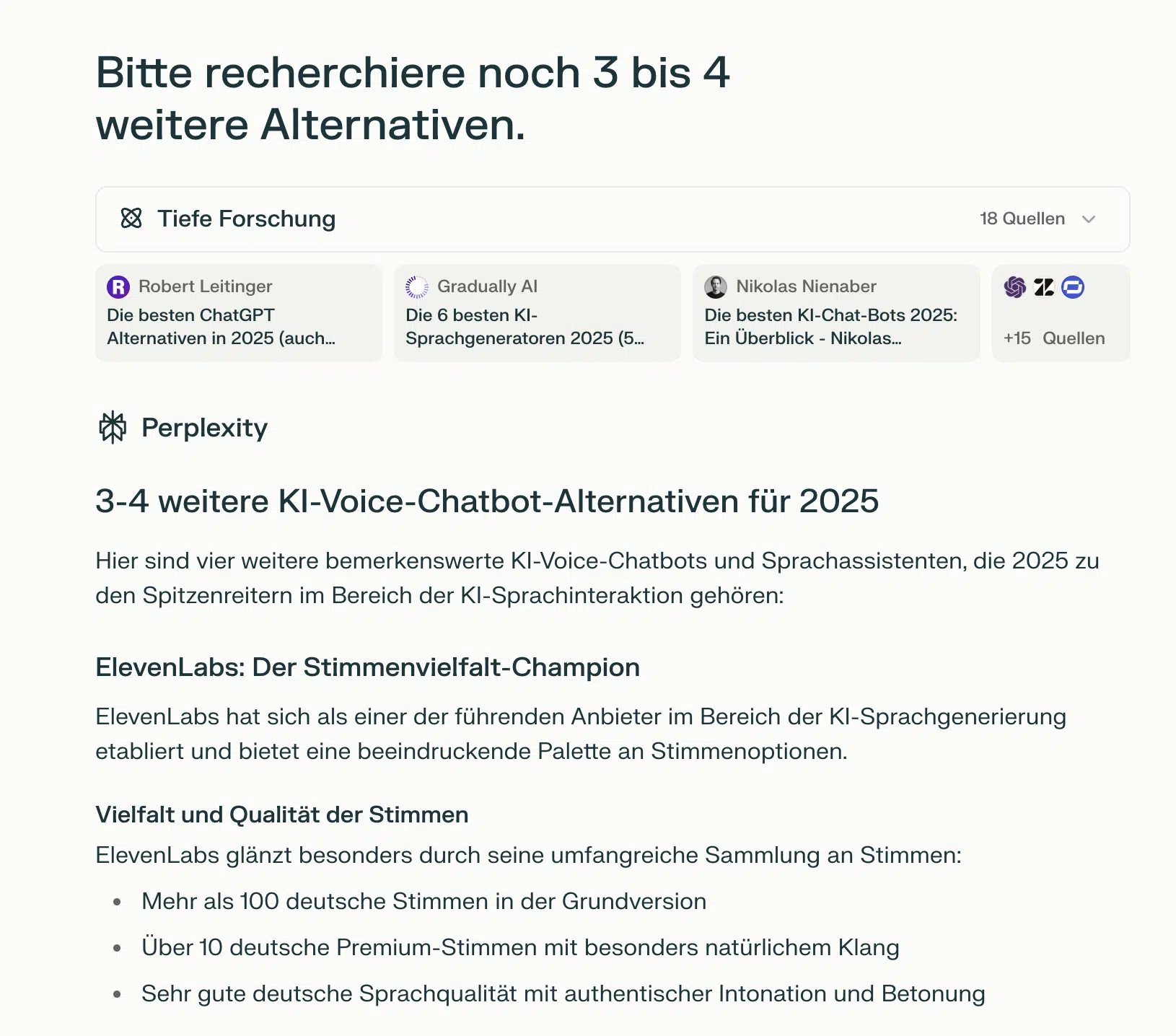
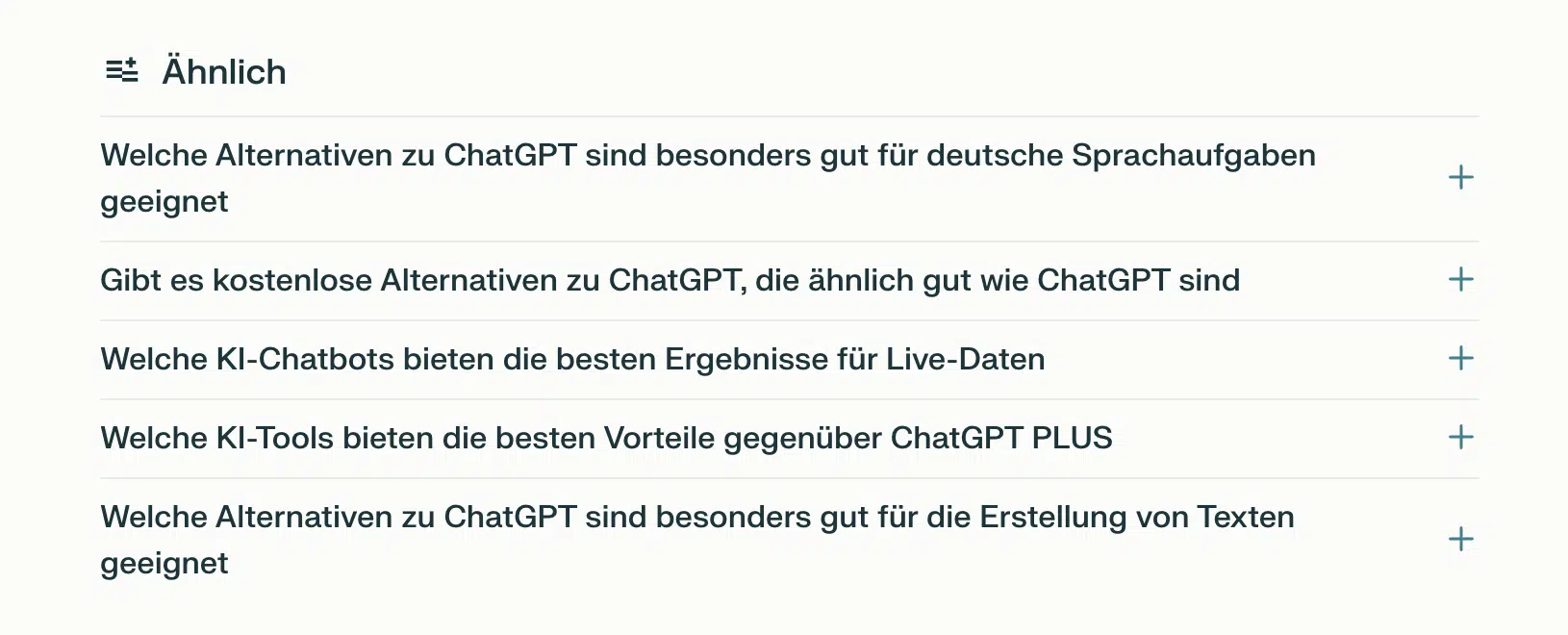
It's also super helpful that Perplexity offers possible follow-up questions after each answer:
What's unfortunate:
Unfortunately, you can't choose the model for Deep Research yourself. Since February 2026, the feature has run on Claude Opus 4.6, and since June 2026 as part of "Perplexity Computer," which can additionally route research tasks across more than 20 other models.
3. Grok DeeperSearch
You can think what you want about Elon Musk. But Grok's research function is really good.
The feature used to be called "Grok 3 Deep Research"; it is now DeepSearch (standard) or DeeperSearch (the more thorough variant) and has been running on Grok 4.5 since July 8, 2026.
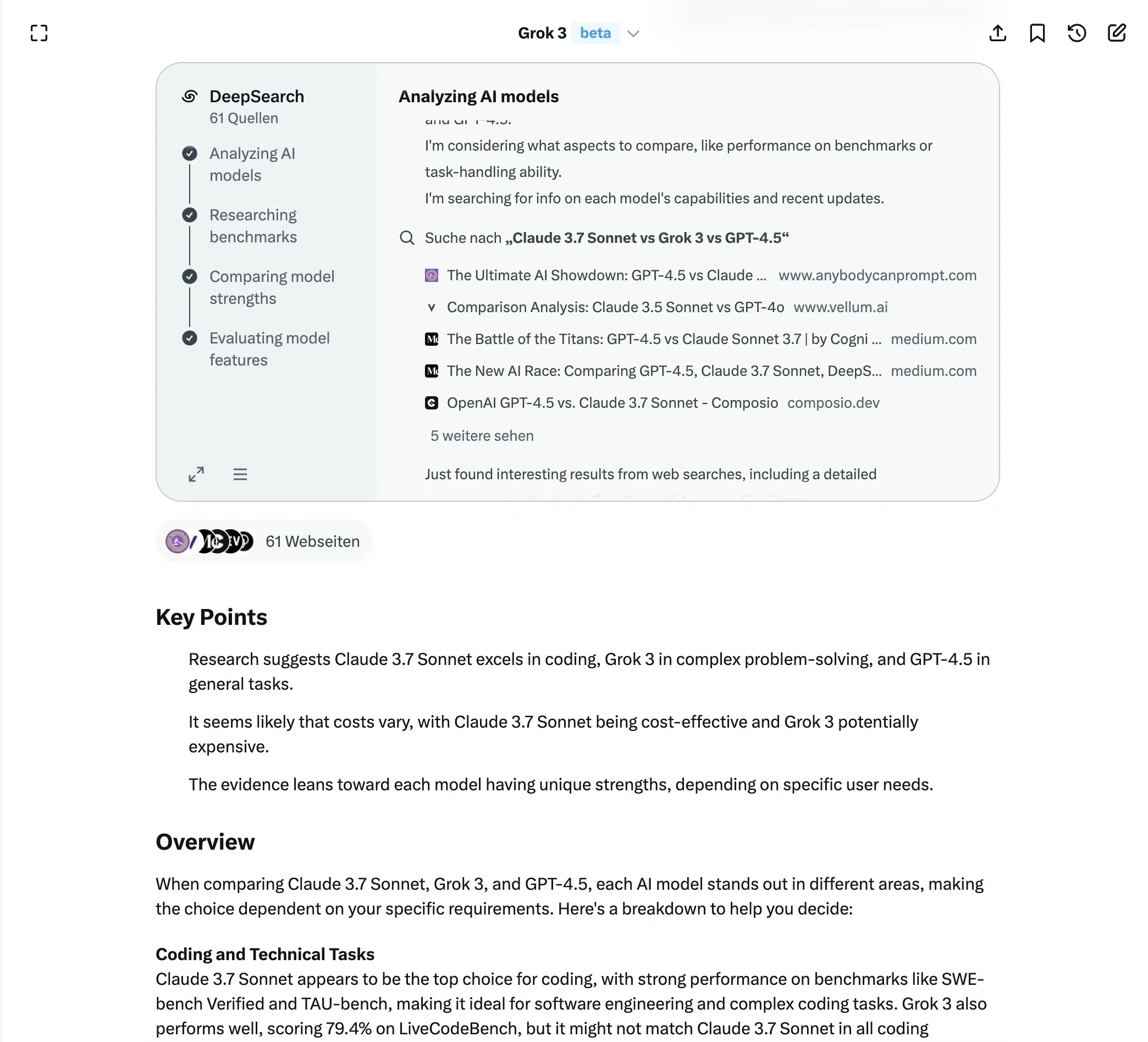
The results are comprehensive, contain many source links (directly in the text), are mostly accurate, and, unlike ChatGPT's Deep Research, better structured:
The only downside:
Grok works best in English. In German, it tends more than other AI models/chatbots to produce "Denglish" (German-English mix).
4. Gemini Deep Research
Google Gemini's Deep Research feature (available in Google AI Pro, formerly Gemini Advanced) lands in last place for me.
It's not bad in itself and would probably rank somewhere between second and third place.
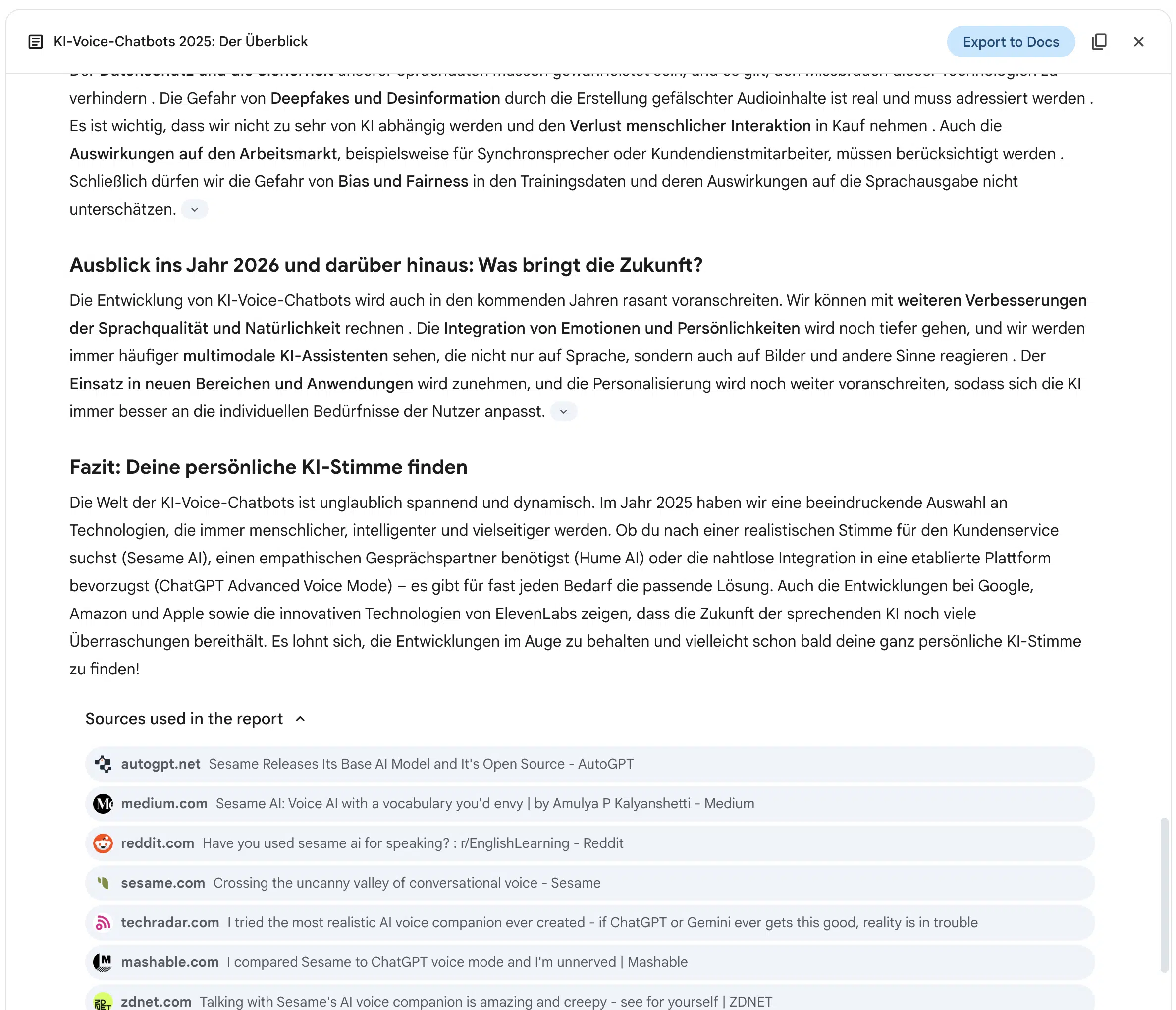
Many sources are searched and the research reports are very well formatted and coherent (which is no surprise, as Google is the leader in search engine technology):
The problem currently is:
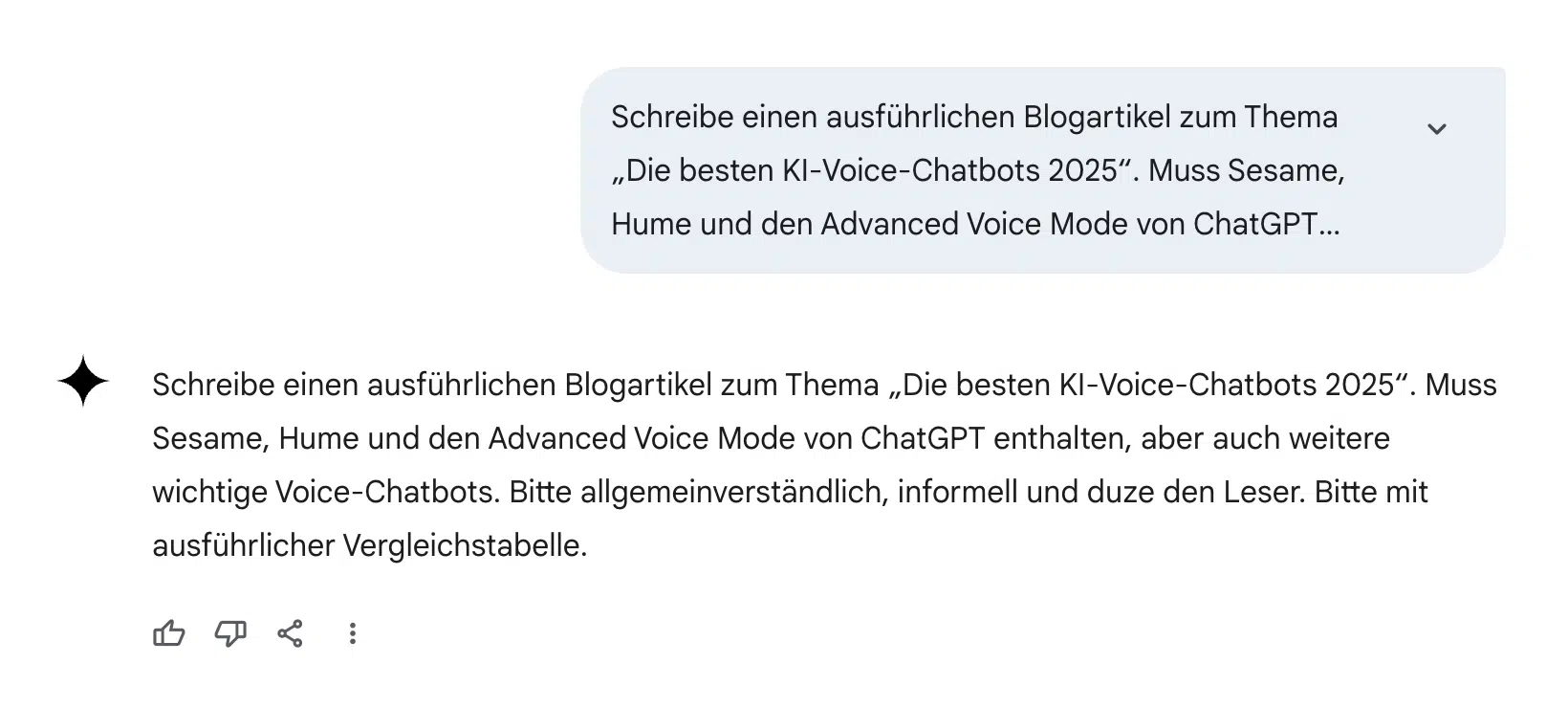
Unfortunately, it doesn't work well yet and is highly error-prone. It took me 4 attempts for Deep Research to start. On the attempt that worked, I needed an incredible 5 prompts.
For example, the very first prompt is always just repeated (without the research starting):
Very high frustration potential. What a shame...
Deep Research Comparison Table
The source and quality assessments reflect my original test. Current allowances and model choices can change. For ChatGPT, OpenAI shows the remaining task allowance in your account.