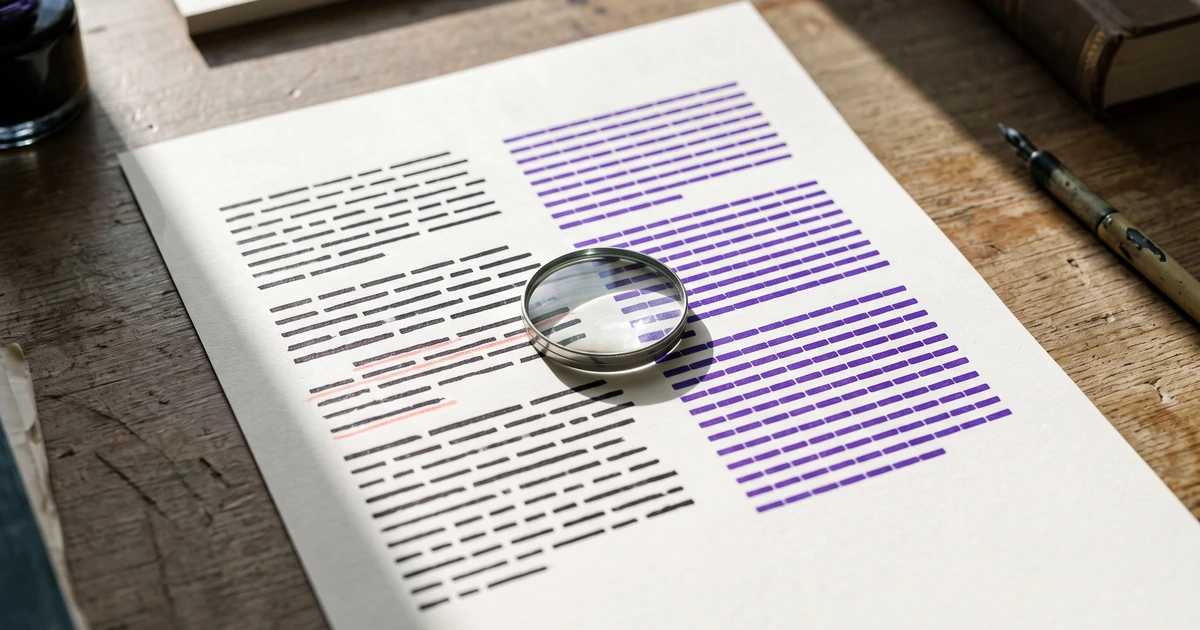
Pangram made the strongest impression in my AI detector comparison. It even recognized both texts in which I had combined human and AI-written passages. GPTZero and QuillBot judged those mixed texts mostly or entirely human.
It still made a mistake. In the English mixed text, Pangram missed an AI-written sentence. Here are the results for my six factual texts, along with my experience pasting text, uploading documents, and reopening reports.
- Pangram correctly classified all six German and English texts as human, AI, or mixed.
- In the English mixed text, it incorrectly marked the first AI-written sentence, containing 19 words, as human.
- Text input, DOCX uploads, and PDF uploads worked. Start with the free allowance of 2,000 words per day.
1. Pangram
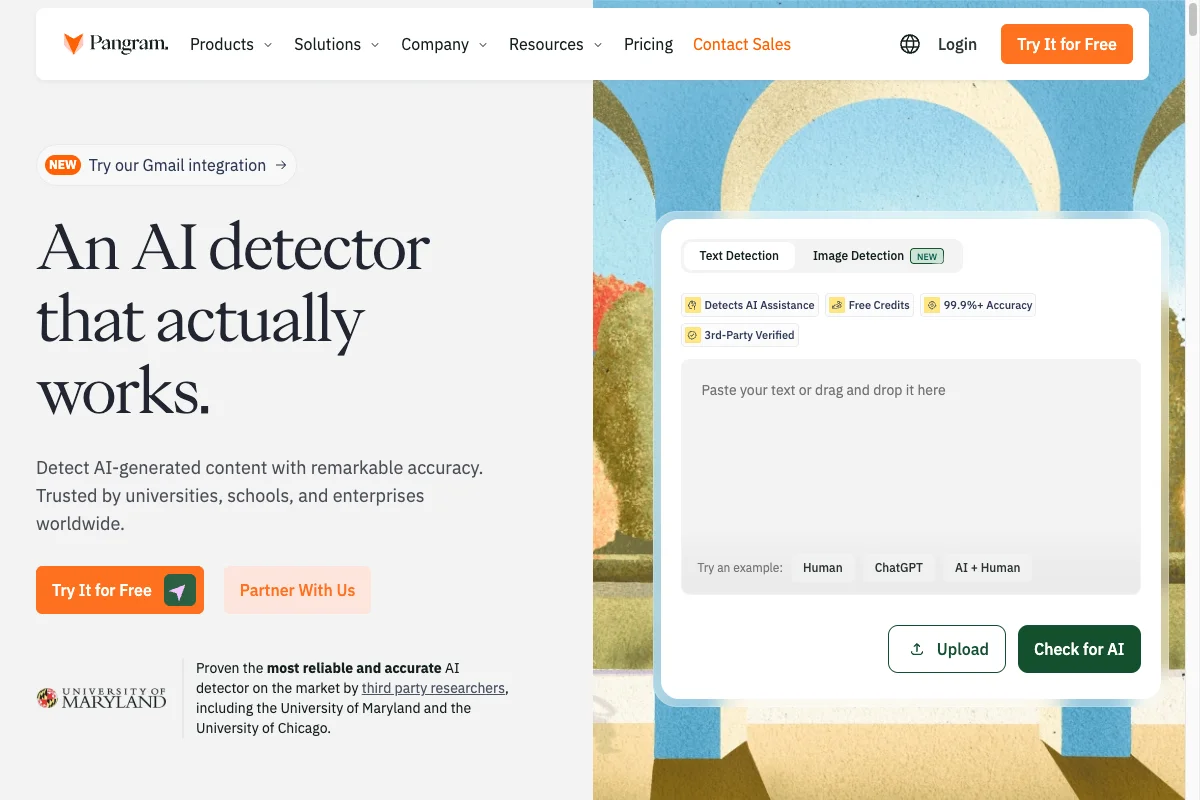
You paste your text and start a check. Pangram then reports whether it considers the document human, AI-generated, or mixed. It also highlights individual passages.
I find those highlights more useful than a large percentage on its own. I can read the passage Pangram flagged. That helped with the mixed texts because I knew where the human section ended and the AI section began.
I would start with Pangram if you want to try an AI detector. It did better on my texts than GPTZero, QuillBot, and ZeroGPT. I would still read the highlighted sentences myself.
2. My Results With German and English Texts
I submitted one human text, one AI-generated text, and one mixed text in each language. The human texts came from 2021 Wikipedia revisions about photosynthesis and the water cycle. For the mixed texts, I added AI-written passages after human sections.
Pangram recognized both human texts as human and both AI texts as AI-generated. It also correctly classified the two mixtures.
My six factual-text checks with Pangram 4.0 on September 19, 2026.
I gave the same texts to other detectors. GPTZero and QuillBot also got the four fully human or AI-written texts right. ZeroGPT, Detecting AI, and my own Gradually detector made mistakes.
 gradually.ai
The mixed texts separated them. GPTZero and QuillBot considered both mostly or entirely human. Pangram detected AI involvement in both. You can see each result in my AI text detector comparison.
3. Where Pangram Got the Mixed Text Wrong
Pangram showed 24% AI for the German mixed text and 22% for the English one. The AI passages were at the end of each text, which is where Pangram highlighted them.
I looked more closely at the English report. Its first AI-written sentence still appeared in the human section. That sentence contained 19 words. Pangram’s AI highlight started only after it.
That matters. Pangram recognized that both sources were present, but it missed the exact boundary. If you need to know which sentences someone wrote themselves, the colored highlights cannot settle that question.
I would not read the percentages as word counts, either. Pangram’s model card says it weights the classified sections by character count. When reviewing a result, I look at the text and its highlights first.
4. My Experience With Uploads and Report History
All six reports appeared in the history after scanning. I could reopen the final English mixed text later. The result and full text were still there, without running another scan.
I also tried uploading a short factual text with 189 words as a Word document and a text-based PDF. Both files imported and scanned successfully. German characters, numbers, and the complete word sequence survived the upload.
That is useful when you already have a text in a document. For scanned pages, I would check the imported text for missing content before trusting the result. I did not try scanned documents in these checks.
5. How Much Does Pangram Cost?
I would start with the free plan. Its daily allowance of 2,000 words is enough to try several examples of your own. You do not need to add a payment method.
The paid plans make more sense if you regularly check longer texts. The prices below use monthly billing.
Source: official Pangram pricing page, checked September 28, 2026.
Image checks are a separate part of the service. My review covers the text detector. You can find the full plan details on Pangram’s pricing page.
6. My Verdict
After this comparison, Pangram would be my first choice for checking possible AI involvement in a text. The overall verdict and highlighted passages were especially helpful with mixed writing.
Six texts are too few to establish a general accuracy rate. The missed AI sentence also shows why I would check any Pangram result before acting on it. Accusing a writer requires more than a detector report.
Start with a text you wrote yourself. Then add an AI-written text and a mixture of both. You will quickly see how Pangram handles the type of writing you actually use.
Try Pangram with your own texts