MiniMax-01
MiniMax
MiniMax-01 refers to the text component of MiniMax’s earlier 01 family. MiniMax-Text-01 uses a 456B MoE base with 45.9B active parameters and up to 1M tokens of context. Its focus is long text work and reasoning, while image and video output belong to other family components.
MiniMax says MiniMax M1 was developed from this text model.
Benchmark meta-analysis
These Gradually indexes place selected published measurements on a 0 to 100 scale. They are not accuracy percentages and do not guarantee results in your application.
Not enough independent results for a score yet
provisional
Method version: benchmark-meta-score-v3
The index includes active measurements from reviewed primary sources when at least five models are compared in the same documented comparison slice across dataset, harness, agent, tools, and trial count. Each benchmark series and evaluator contributes one shared setup slice from the newest capture. When one source and series include several explicitly documented reasoning tiers, the highest documented tier (none through max) is selected, never the best result value. The explicit source label “Non-reasoning” is treated as none. Unknown or ambiguous tiers exclude the model from that series. Within each series, percentages and rates are logit-transformed, other units stay unchanged, and all values are then standardized. A one-factor model then estimates one shared strength per model and, per series, how sharply it separates the models. Area scores move away from that strength only as far as the model's own results in the area support. The overall score weights the core areas at 75% and finance, law and health at 25%. It requires at least eight test series from two sources and three areas. The 0 to 100 scale refers to a fixed reference group of 29 language models whose average sits at 50.
Published model-specific parameters can differ. This is not a controlled experiment; comparisons with such differences are marked provisional.
Unmeasured series are not entered as zero. Where a model has no own results in a core area, its overall strength stands in, and the note “estimated without own results in …” names the area. Fewer test series lead to a larger standard error.
The 95% interval follows from the standard error of 200 recalculations with randomly redrawn test families. It describes how precisely the recorded test series determine the value. It is no prediction for future tasks or for later recalculations with other participants.
The source count is not a count of independent experiments.
OECD handbook on composite indicatorsAll 0 test families and 0 of 0 raw measurements are listed here. The complete calculation for every model is available in the JSON export.
Each evaluator measures different capabilities under its own conditions. Test series, composite indices and their components stay separate. The detailed results below retain their scales, configurations and source dates.
No active result from the reviewed external evaluators can currently be attributed to this model. Other source evidence remains available below.
Coverage is not a quality ranking. Overlapping tests and multiple settings do not count as independent experiments. Vendor claims, historical and disputed results are excluded from this overview and remain labelled in the detailed evidence.
Page 1 of 4
These measurements have no matching peer values under the same test conditions. Their original values and sources remain available here.
Page 1 of 4
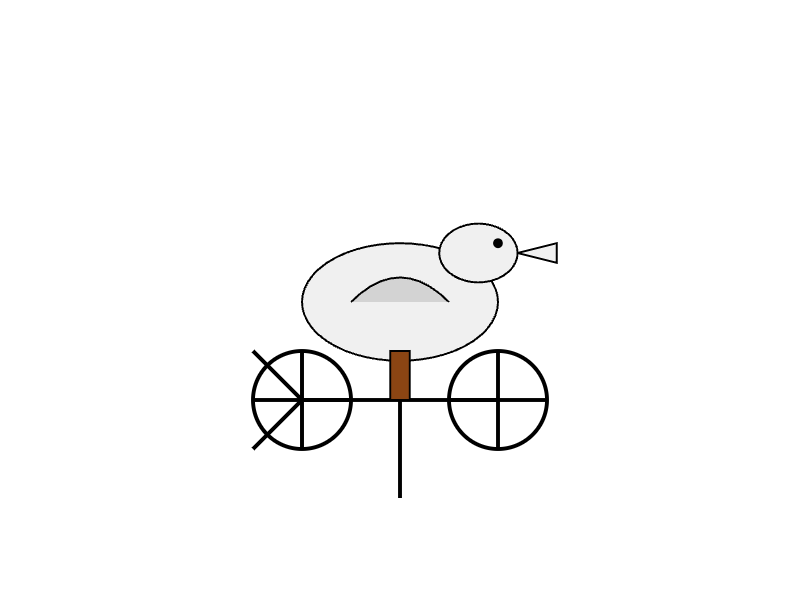
One SVG prompt and fixed output settings. Captures are shown only with 0 reported reasoning tokens or documented lack of reasoning controls. Identical test conditions do not make the models' internal compute identical.
A community classic for free-form SVG drawing.
MiniMax-01

Reasoning (requested): not specified
Visually reviewed. This individual test does not establish overall model quality.
Generate an SVG of a pelican riding a bicycle
Token limit including reasoning: 8,192 tokens
Task origin (Simon Willison)34.2 / 100
| Type | Evidence and data date |
|---|---|
| Price | Base API prices without caching or batch discounts. Higher context tiers and other rates are listed under Costs. |
| Research status | Research date September 8, 2026. 2 source URLs checked. This documents the inspected sources, not an exhaustive inventory of every publication. |
| Not found in the inspected sources | knowledge-cutoff Original wording No exact value located in the checked primary model card/API documentation. |
| Unresolved | AA benchmark rows Original wording No exact Artificial Analysis model page located in the checked public sitemap. |
| Additional source | Model metadata (retrieved September 8, 2026) · MiniMax-Text-01 model card · Editorial description reviewed October 2, 2026 |
| Additional source | Context window data |
| Additional source | MiniMax-01 repository · Editorial description reviewed October 2, 2026 |
| Additional source | MiniMax M1 model documentation · Editorial description reviewed October 2, 2026 |
| Additional source | OpenRouter: Popularity index (derived), CC BY 4.0 |
| Additional source | Vercel AI Gateway: Popularity index (derived), CC BY 4.0 |
| Additional source | Ollama: cumulative downloads for the popularity index |
| Additional source | Replicate: cumulative runs for the popularity index |
| Additional source | Google Trending Now: limited feed selection for Germany and the US |
| Additional source | Creative Commons Attribution 4.0 |