Qwen 3 235B A22B
Unavailable in this round
Alibaba
The original Qwen 3 235B A22B checkpoint combines 235 billion total parameters with 22 billion active parameters and a switchable Thinking mode. Unlike the later separate instruct and thinking variants, it keeps both response modes in one checkpoint.
The architecture uses 128 experts, eight active per token, and 94 layers with 64 Q heads and 4 KV heads. Qwen lists 32,768 native context tokens and up to 131,072 tokens with YaRN. Unlike the separate Qwen 3 235B A22B Instruct 2507 and Qwen 3 235B A22B Thinking 2507, this original checkpoint combines both response modes.
| Specification | Value and source |
|---|---|
| Weights | Open weightsSource |
| Access | LocalSource |
| Parameters | 235BSource |
| Active parameters | 22BSource |
| Context window | 32,768 tokensSource |
| Notes | The retained legacy slug refers to the original hybrid Qwen3-235B-A22B checkpoint. Its model card lists Pretraining and Post-training with switchable Thinking and non-Thinking modes. It is not a separately named Base checkpoint.Source |
| Weights repository | Qwen/Qwen3-235B-A22BSource |
| License | Apache-2.0Source |
| Architecture | Qwen3 causal language model; dense or sparse MoESource |
| Input | TextSource |
| Output | TextSource |
| Native context window | 32,768 tokensSource |
| Maximum context window | 131,072 tokensSource |
| Parameters | 235 BSource |
| Active parameters | 22 BSource |
| Languages | 119 languages and dialectsSource |
| Repository created | 2025-04-27 (Repository creation date is a precise publication proxy, but may differ from the public announcement date or an individual checkpoint's first availability.)Source |
| Training tokens | 36 trillionSource |
Benchmark meta-analysis
These Gradually indexes place selected published measurements on a 0 to 100 scale. They are not accuracy percentages and do not guarantee results in your application.
Not enough independent results for a score yet
provisional
Method version: benchmark-meta-score-v3
The index includes active measurements from reviewed primary sources when at least five models are compared in the same documented comparison slice across dataset, harness, agent, tools, and trial count. Each benchmark series and evaluator contributes one shared setup slice from the newest capture. When one source and series include several explicitly documented reasoning tiers, the highest documented tier (none through max) is selected, never the best result value. The explicit source label “Non-reasoning” is treated as none. Unknown or ambiguous tiers exclude the model from that series. Within each series, percentages and rates are logit-transformed, other units stay unchanged, and all values are then standardized. A one-factor model then estimates one shared strength per model and, per series, how sharply it separates the models. Area scores move away from that strength only as far as the model's own results in the area support. The overall score weights the core areas at 75% and finance, law and health at 25%. It requires at least eight test series from two sources and three areas. The 0 to 100 scale refers to a fixed reference group of 29 language models whose average sits at 50.
Published model-specific parameters can differ. This is not a controlled experiment; comparisons with such differences are marked provisional.
Unmeasured series are not entered as zero. Where a model has no own results in a core area, its overall strength stands in, and the note “estimated without own results in …” names the area. Fewer test series lead to a larger standard error.
The 95% interval follows from the standard error of 200 recalculations with randomly redrawn test families. It describes how precisely the recorded test series determine the value. It is no prediction for future tasks or for later recalculations with other participants.
The source count is not a count of independent experiments.
OECD handbook on composite indicatorsAll 0 test families and 0 of 0 raw measurements are listed here. The complete calculation for every model is available in the JSON export.
Each evaluator measures different capabilities under its own conditions. Test series, composite indices and their components stay separate. The detailed results below retain their scales, configurations and source dates.
| Evaluator | Test series | Composite indices | Recorded active measurements |
|---|---|---|---|
| Artificial Analysis | 2 | 1 | 14 |
Coverage is not a quality ranking. Overlapping tests and multiple settings do not count as independent experiments. Vendor claims, historical and disputed results are excluded from this overview and remain labelled in the detailed evidence.
6 measurements from these sources still lack a verified test-family identity and do not increase the test-series count.
Page 1 of 2
These measurements have no matching peer values under the same test conditions. Their original values and sources remain available here.
Page 1 of 2
One SVG prompt and fixed output settings. Captures are shown only with 0 reported reasoning tokens or documented lack of reasoning controls. Identical test conditions do not make the models' internal compute identical.
Unavailable in this round
A community classic for free-form SVG drawing.
Qwen 3 235B A22B
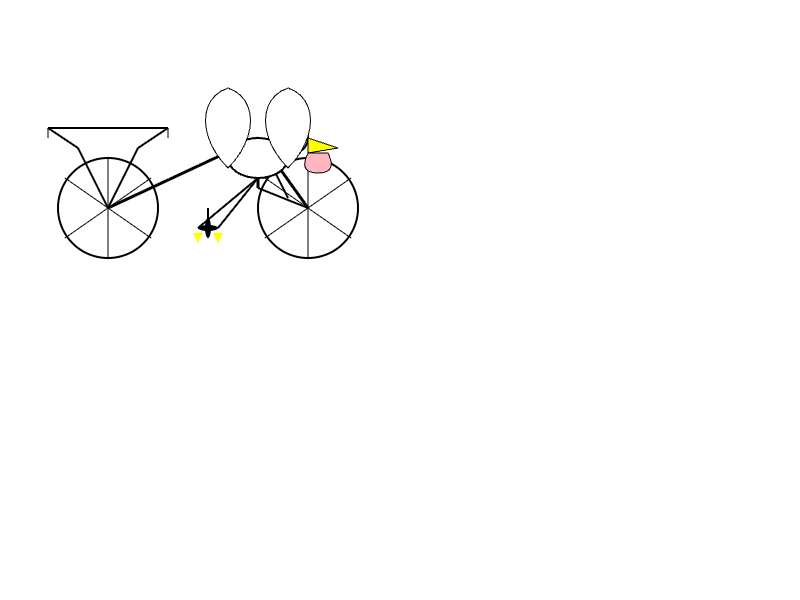
Reasoning (requested): high
Visually reviewed. This individual test does not establish overall model quality.
Generate an SVG of a pelican riding a bicycle
Token limit including reasoning: 8,192 tokens
Task origin (Simon Willison)43.8 / 100
| Type | Evidence and data date |
|---|---|
| Speed | Alibaba, Non-reasoning. Output speed after the first streaming chunk, not total response time. Classified as deprecated by Artificial Analysis. Artificial Analysis maintains only the default 10K-input workload there. Retrieved September 8, 2026. |
| Input | Documented modalities. Retrieved September 8, 2026. |
| Output | Documented modalities. Retrieved September 8, 2026. |
| Research status | Research date September 8, 2026. 4 source URLs checked. This documents the inspected sources, not an exhaustive inventory of every publication. |
| Not found in the inspected sources | excluded-checkpoint-observations Note This profile describes the original post-trained Qwen3-235B-A22B. The report's separate Base results do not measure this checkpoint. |
| Additional source | API pricing |
| Additional source | Artificial Analysis (retrieved October 19, 2026) |
| Additional source | Artificial Analysis (retrieved October 19, 2026) |
| Additional source | Model metadata (retrieved September 8, 2026) · Qwen3 Technical Report · Editorial description reviewed October 2, 2026 |
| Additional source | Model metadata (retrieved September 8, 2026) |
| Additional source | Qwen3-235B-A22B Instruct 2507 model card · Editorial description reviewed October 2, 2026 |
| Additional source | Qwen3-235B-A22B Thinking 2507 model card · Editorial description reviewed October 2, 2026 |
| Additional source | OpenRouter: Popularity index (derived), CC BY 4.0 |
| Additional source | Vercel AI Gateway: Popularity index (derived), CC BY 4.0 |
| Additional source | Ollama: cumulative downloads for the popularity index |
| Additional source | Replicate: cumulative runs for the popularity index |
| Additional source | Google Trending Now: limited feed selection for Germany and the US |
| Additional source | Creative Commons Attribution 4.0 |