Claude Code is the dominant force in AI coding tools. According to the Pragmatic Engineer Survey 2026 (906 developers polled), 46% of professionals name Claude Code as their most loved tool. Separate industry estimates on the enterprise coding model market put Anthropic's share at roughly 54%.
That said:
Plenty of developers have good reasons in 2026 to look around for an alternative. The Max plans at $100 to $200 per month blow past the budgets of most hobby projects. Anyone trying to work with local LLMs hits limits fast. OpenAI Codex has closed much of the benchmark gap. In the Vals AI cohort used below, GPT-5.6 Sol scores 96.2%, just behind Claude Opus 5 at 97.0%.
This article compares 12 serious Claude Code alternatives. The selection is based on official SWE-bench Verified scores, market share data from the Pragmatic Engineer Survey, and the documented features of each vendor. No marketing fluff, no shaky vendor claims, just hard numbers.
- In the consistent Vals AI cohort, Claude Opus 5 leads at 97.0%, followed by GPT-5.6 Sol at 96.2% and Claude Fable 5 at 95.0%. Claude Fable 5.1 is not in that cohort yet. Anthropic's new Terminal-Bench 4.0 results use a different evaluation setup
- For the smallest budget, Cline, Aider, and Continue.dev are the cleanest BYOK options. Google's Antigravity CLI (successor to the Gemini CLI, which was retired on June 18, 2026) no longer works as a free backup: its free tier only covers about 20 requests per day
- In Pragmatic Engineer's developer-preference survey, Claude Code leads with a 46% Most-Loved rating, ahead of Cursor and GitHub Copilot. That does not measure total market reach. On August 21, 2026, OpenAI employee Tibo Sottiaux said Codex had reached 20 million active users, without specifying a weekly or monthly window
Why Look for a Claude Code Alternative at All?
There's no single perfect reason. But three patterns show up in practice over and over:
The Cost
Claude Code Pro sits at $20 per month. Claude Max costs $100 for 5 times the usage, or $200 for 20 times the usage. With heavy agent usage, you hit the Pro limits quickly. Anyone working with subagents or long sessions all day lands on the Max plan fast, which means annual costs of $1,200 to $2,400 per developer.
Platform Lock-in
Claude Code is primarily a terminal tool. The VS Code extension and the desktop app help, but if you want a full IDE or browser solution, you look at Cursor, Devin Desktop, or Replit Agent.
Compliance and Privacy
Anthropic processes code in the US. For GDPR-sensitive projects or self-hosting requirements, open source tools like Cline, Aider, or Continue.dev with local Ollama models are the clean pick.
And since May 2026, there's a fourth reason.
Here's the deal:
OpenAI Codex has nearly closed the gap on SWE-bench Verified. In the current Vals AI cohort, Claude Opus 5 scores 97.0%. GPT-5.6 Sol follows at 96.2%, with Claude Fable 5 at 95.0%.
Claude Fable 5.1 is not in that cohort yet. Anthropic reports 55.8% on Terminal-Bench 4.0 for the model released on September 1, 2026, while Mythos 5.1 scores 60.9%. Those are first-party results from a different benchmark, so they cannot replace the SWE-bench figures in the chart.
The Key Selection Criteria for AI Coding Tools
If you want to replace Claude Code, watch six dimensions:
- Model quality: SWE-bench Verified is the industry standard for coding benchmarks. Scores above 75% count as professionally usable.
- Context window: 200K tokens is the minimum for mid-sized projects. Claude Fable 5.1 and Gemini 3.1 Pro each support 1 million tokens through the API, while GPT-5.5 supports 1 million. Tools can cap that lower (Codex CLI uses 400K, for example).
- Open source vs. proprietary: Open source allows self-hosting, local models, and BYOK. Important for GDPR, compliance, and cost control.
- Sandbox depth: How isolated does the agent run? Cloud sandboxes (Codex Cloud, Devin) are safer than terminal-only tools with auto-approval.
- Git integration: Automatic commits, PR creation, and branch management separate professional tools from toys.
- Pricing model: Subscription (Cursor, Copilot), BYOK (Cline, Aider), or effort-based (Replit Agent) can mean thousands of dollars difference per year depending on your usage pattern.
The table below compares the seven most prominent Claude Code alternatives along these criteria.
The Big Comparison Table: 7 AI Coding Tools Head to Head
The table covers Cursor, OpenAI Codex, Antigravity CLI, GitHub Copilot, Devin Desktop (formerly Windsurf), Cline, and Aider across the 22 most relevant comparison points. All data reflects June 2026 and comes from official vendor sources or verified third parties (Pragmatic Engineer, llm-stats.com, marc0.dev/leaderboard).
What stands out:
On the objective metrics, Codex is the strongest non-Claude alternative on SWE-bench. Antigravity CLI still wins on context window via Gemini 3.1 Pro (1M tokens), but no longer on the consumer free tier. Cline and Aider are the only tools with a real open source license plus Ollama support for local models.
And here's how the monthly entry prices stack up, with Claude Code Pro as the reference:





SWE-bench Verified: The Models Behind the Tools
SWE-bench Verified measures whether an agent can autonomously solve real GitHub issues from production open source projects. The chart uses one Vals AI cohort for every model. Vendor scores from other evaluation setups are excluded.
Claude Opus 5 narrowly leads GPT-5.6 Sol

| Benchmark | Opus 5 | GPT-5.6 Sol | Fable 5 | Opus 4.8 | GPT-5.5 | Gemini 3.1 Pro | GPT-5.3-Codex |
|---|---|---|---|---|---|---|---|
| SWE-bench Verified | 97.0% | 96.2% | 95.0% | 88.6% | 82.6% | 78.8% | 78.0% |
A few notes on the numbers:
- Claude Opus 5 scores 97.0% in this Vals AI cohort. GPT-5.6 Sol follows at 96.2%, with Claude Fable 5 at 95.0%.
- Claude Opus 4.8 reaches 88.6% in the same evaluation setup.
- GPT-5.5 scores 82.6%. GPT-5.3-Codex reaches 78.0% in the current cohort.
- Gemini 3.1 Pro reaches 78.8% in the same Vals AI run.
- Cursor Composer 2.5 reports 79.8% on SWE-bench Multilingual (no official Verified score), putting it roughly on par with Gemini 3.1 Pro.
- Devin Desktop SWE-1.5 is not measured on SWE-bench Verified. Cognition advertises 950 tokens per second, roughly 13x the speed of Claude Sonnet 4.5.
Cursor: The Most Popular Claude Code Alternative
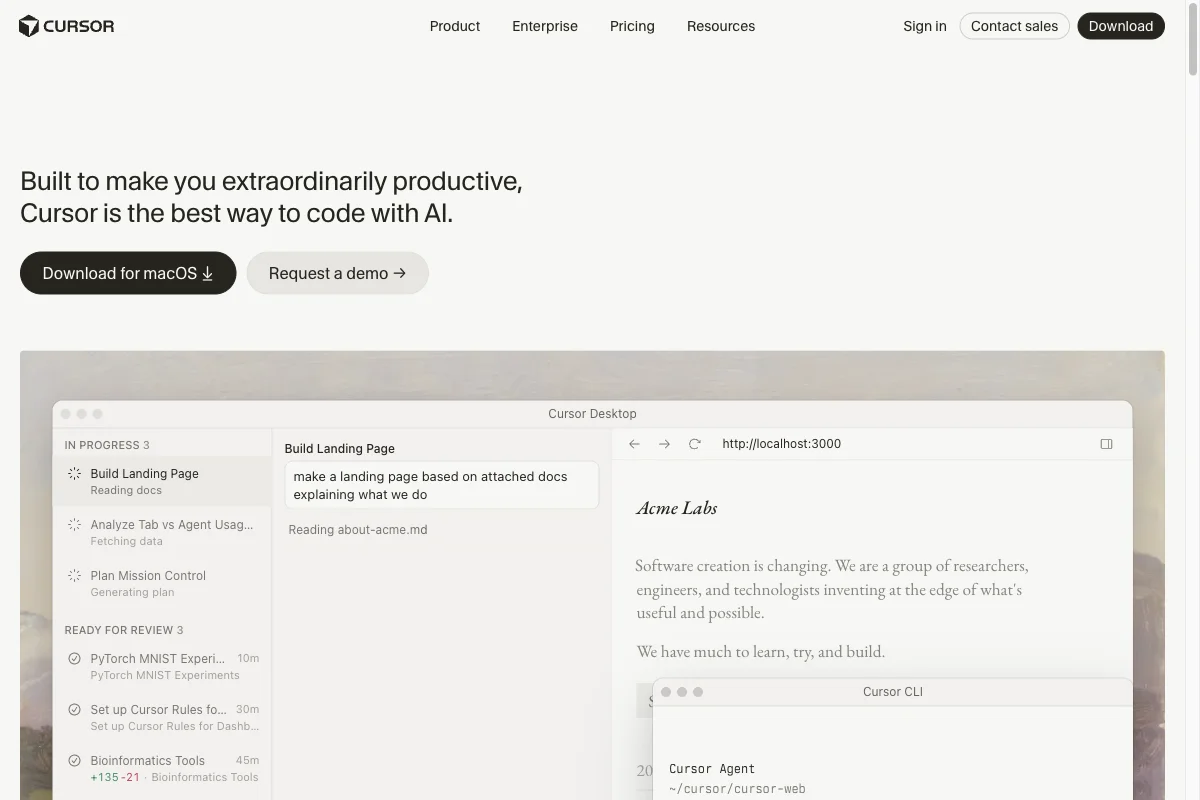
Cursor from Anysphere is the most-used IDE-based Claude Code alternative. In the Pragmatic Engineer Survey 2026, Cursor lands at 19% Most-Loved rating, second place behind Claude Code (46%). The business growth is striking: Cursor's ARR roughly tripled in about four months, from $1B at the end of 2025 to $3B by April 2026, per Sacra estimates. On April 21, 2026, SpaceX announced it had secured an option to acquire Cursor for $60B. Over 50% of the Fortune 500 use Cursor.
With the Composer 2.5 engine (released May 18, 2026), Cursor also has its own coding model. On SWE-bench Multilingual, Composer 2.5 hits 79.8%, putting it on par with Gemini 3.1 Pro. If you want a different model, you can pick Claude Sonnet 5.5, Claude Opus 5.5, GPT-5.5, or Gemini 3.1 Pro directly in Cursor.
- Full IDE built on VS Code with Composer Agent
- Own Composer 2.5 model with aggressive pricing ($0.50 input per 1M tokens)
- Cloud agents since Composer 2.5 for parallel tasks
- Pro plan from $20 per month ($16 with yearly billing)
- Student program: 1 year of Pro free with a .edu email
OpenAI Codex: The Strongest Non-Claude Alternative with Mobile Control
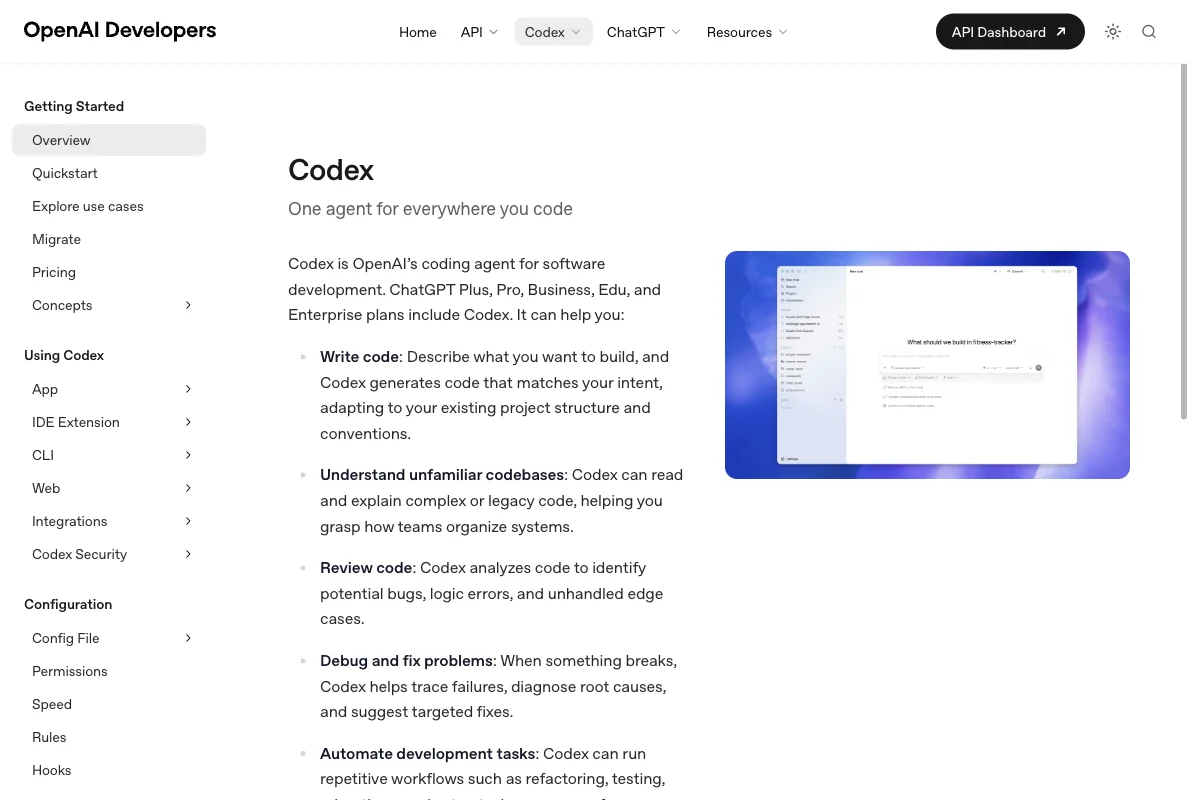
OpenAI Codex is the strongest non-Claude option in the current Vals AI cohort. GPT-5.6 Sol reaches 96.2% on SWE-bench Verified, just 0.8 percentage points behind Claude Opus 5. GPT-5.5 scores 82.6% in the same setup, while GPT-5.3-Codex reaches 78.0%. Codex is available across several surfaces: the CLI (written in Rust, Apache 2.0, 114,493 GitHub stars when checked on August 23, 2026), the desktop app, and Codex Cloud (chatgpt.com/codex). Since May 14, 2026, Codex can also be controlled in preview through the ChatGPT mobile app on iOS and Android. It is not a separate Codex mobile app.
GPT-5.6 Sol became the default model in OpenAI Codex on July 9, 2026. GPT-6 Astra, Sol, and Luna are now available there too. The selected default depends on the plan and settings. GPT-5.6 Luna is the default in regular Free/Go chat, while Terra is available to Free and Go with limited access in ChatGPT Work and Codex. In Codex, Ultra mode with four parallel sub-agents is available starting at the Plus plan; in ChatGPT Work it remains limited to Pro and Enterprise. The GA rollout covers ChatGPT (Plus/Pro/Business/Enterprise), ChatGPT Work, Codex, and the API. Sol hits 88.8% on Terminal-Bench 2.1, while Sol Ultra pushes that to 91.9%. On the harder SWE-Bench Pro test it scores 64.6%, and the Artificial Analysis Coding Agent Index puts it at 80. Programmatic Tool Calling with model-generated JavaScript running inside a V8 sandbox is a fresh API capability, too.
OpenAI reported on June 2, 2026 that Codex had more than 5 million weekly active users. On August 21, 2026, OpenAI employee Tibo Sottiaux wrote that Codex had reached 20 million active users. The current figure specifies no weekly or monthly window and is therefore not directly comparable with the historical WAU figure. For a full command reference, see our Codex Commands article.
# Install Codex CLI via npm
npm i -g @openai/codex

# Or via Homebrew
brew install --cask codex

# Start interactively
codex

# Headless with a specific task
codex exec "Refactor src/auth to TypeScript strict mode"
Pricing follows the ChatGPT model: Plus costs $20 per month, while Pro $100 offers five times Plus usage. Existing Pro $200 subscriptions offer twenty times Plus usage, but new sign-ups are currently paused. Codex API usage is billed by tokens and can become expensive with heavy use.
Antigravity CLI: Google's New AI Terminal (and the End of the Gemini CLI)
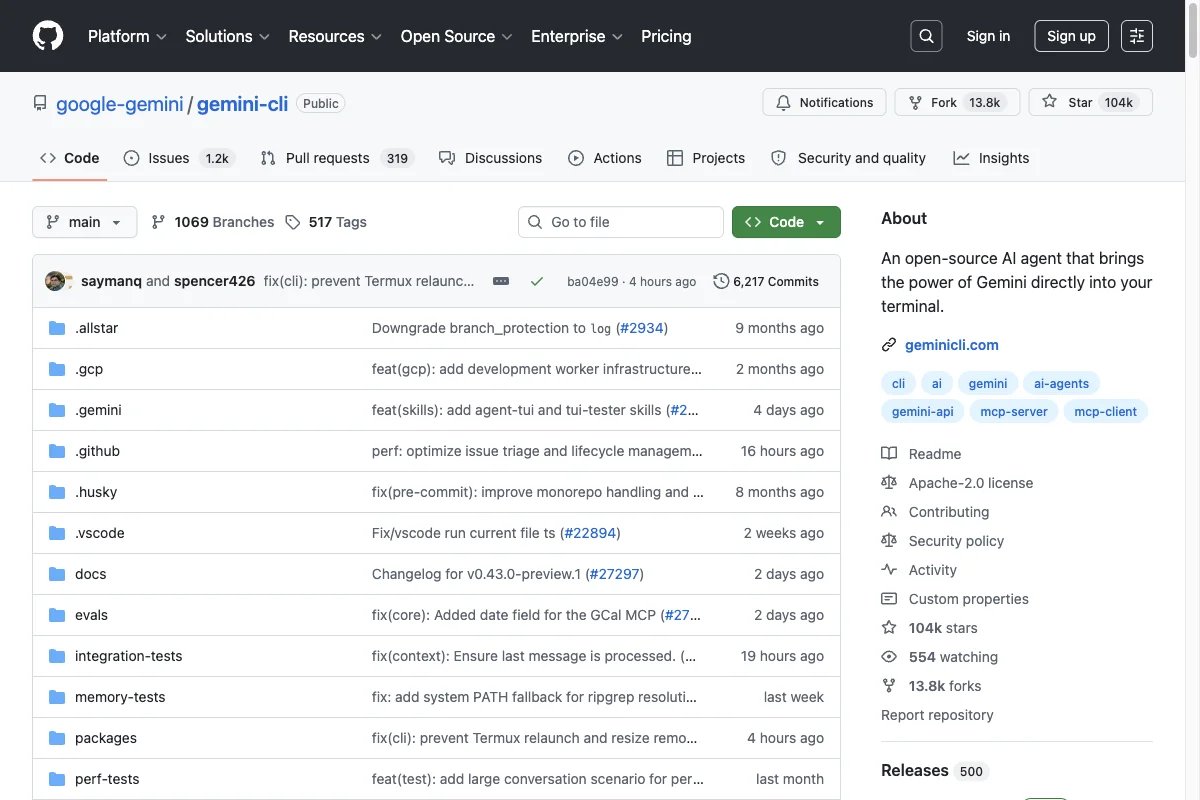
Google's terminal option is now called the Antigravity CLI (command: agy): subagents, hooks, MCP support, and free model choice including Claude Sonnet 4.6 and Opus 4.6. Its predecessor, the Gemini CLI, is history. Google confirms on the official deprecation page that Gemini Code Assist for Individuals, Google AI Pro, and Google AI Ultra have stopped serving Gemini CLI requests since June 18, 2026. The Login with Google option is no longer available for Gemini CLI on those consumer tiers either.
The old Gemini CLI only keeps working with a Gemini API key, Vertex AI, or a Gemini Code Assist Standard or Enterprise license. Its successor, the Antigravity CLI, is closed source and free during the public preview, but with a mini free tier of about 20 agent requests per day. More quota comes with Google AI Pro at $20 a month, up to AI Ultra Max at $200 a month.
On SWE-bench Verified, Gemini 3.1 Pro reaches 80.6%, and on GPQA Diamond the model leads the entire field at 94.3%. The hardware optimization (TPU instead of GPU) keeps Gemini consistently available even during long sessions.
# Install (macOS/Linux)
curl -fsSL https://antigravity.google/cli/install.sh | bash

# Start interactively (login via Google account)
agy

# Direct command without a session
agy -p "Explain the architecture of this project"
If you work in the Google stack, there is no way around the Antigravity CLI today. For the full command reference with all slash commands, flags, and MCP details, see our Antigravity CLI Commands article.
GitHub Copilot: The Established Alternative for VS Code
Since March 2026, GitHub Copilot is no longer just an autocomplete tool. With Agent Mode in VS Code and JetBrains, the Autonomous Coding Agent (Issue to PR), and Agentic Code Review, Copilot plays in the same league as Claude Code and Codex. The multi-model setup lets you freely pick between GPT-5.5, Claude Sonnet 5.5, Claude Opus 5.5, and Gemini 3.1 Pro.
Among enterprise customers, Copilot still dominates: 56% of companies with 10,000+ employees use Copilot (Pragmatic Engineer Survey, multiple tools allowed). The reason is usually not technical superiority but the deep GitHub integration and existing Microsoft contracts.
Cline: The Open Source Alternative with 5 Million Installs
Cline (formerly Claude Dev) is the most popular open source alternative to Claude Code. With 63,000+ GitHub stars and over 5 million installs across VS Code, Cursor, JetBrains, Zed, and Neovim, Cline has built a broad community.
The decisive advantage is BYOK: Cline works with 30+ LLM providers, from Anthropic Claude and OpenAI GPT to Google Gemini, AWS Bedrock, Azure, and local Ollama models. If you need a GDPR-compliant setup, you combine Cline with an EU-hosted API endpoint or a local model. Since March 2026, there's also auto-routing, which picks the cheapest suitable model per task.
Pricing reality: at medium usage, Cline with Claude Sonnet 4.6 as the backend costs about $8 to $12 per month in API charges, well below Cursor Pro or Claude Code Pro. With power usage, that climbs to $30 to $50, still cheaper than Claude Max. Sonnet 5.5 costs a third less per token than Sonnet 4.6, so the amounts come out lower with the newer model.
Aider: Terminal-First with Native Git Integration
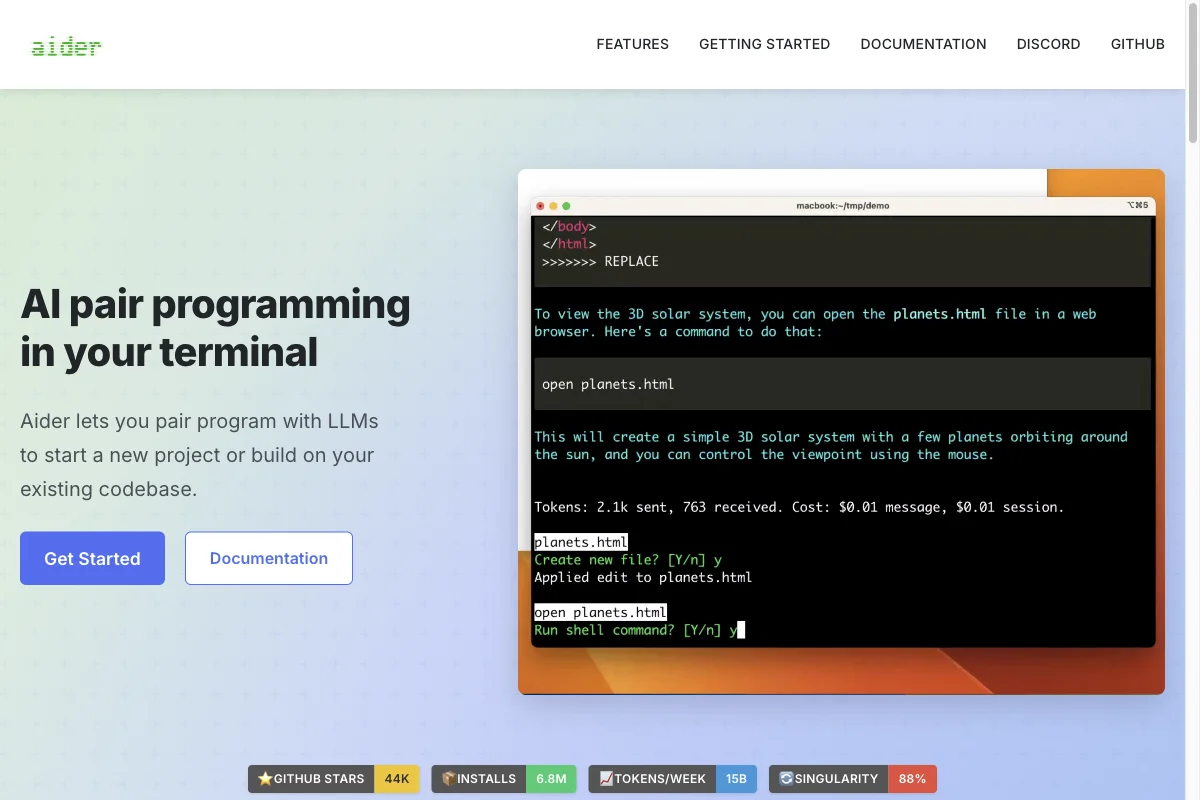
Aider is the pioneer of open source coding agents (46,000+ GitHub stars) and has been the reference for git-native workflows since 2023. What makes Aider unique is the automatic Git commits with meaningful messages and the diff-first approach: instead of writing whole files, Aider emits patches.
On the Aider Polyglot benchmark, the supported top models have hit these scores:
# Install Aider
pip install aider-install
aider-install

# With Claude Sonnet 5.5
aider --model anthropic/claude-sonnet-5-5 src/auth.py

# With a local Ollama model
aider --model ollama/qwen3.6:27b src/auth.py
Aider is fully free (Apache 2.0). You only pay for the API costs of your chosen model. For hobby projects or terminal purists, Aider is the natural pick.
Devin Desktop (formerly Windsurf): The Fast IDE Alternative from Cognition
The IDE was acquired by Cognition (the makers of Devin) as Windsurf in July 2025 for around $250 million and renamed Devin Desktop on June 2, 2026. The VS Code fork IDE has been running on the proprietary SWE-1.5 model since October 2025 at 950 tokens per second, roughly 13x faster than Claude Sonnet 4.5.
The flagship feature is Cascade, a multi-agent workflow for complex refactorings across multiple repositories. Codemaps visualize dependencies, Tab/Supercomplete delivers inline suggestions, and Preview Mode shows changes before execution. Before the acquisition, Windsurf had $82M ARR and over 350 enterprise customers.
Pricing follows Cognition's unified structure: Pro costs $20 a month, Max costs $200 with priority on flagship models, and Teams costs $80 as a base fee plus $40 per seat, including SSO and admin tools.
More Alternatives in Brief
Beyond the seven tools in the main comparison, there are five more alternatives that are interesting depending on the use case:
Continue.dev: The Self-Hosting Tool
Continue is the pick for privacy-focused teams: it has more than 34,000 GitHub stars and 2.5 million VS Code installs, and it's fully free and open source. BYOK with OpenAI, Anthropic, Gemini, Ollama, AWS Bedrock, Azure, and xAI. Self-hosting with your own compliance pipeline is standard. For enterprise customers with their own LLM stack, it's the best solution.
Zed: The Rust Editor with an Agent Panel
Zed Industries introduced its own Agent Panel in 2026 and supports the Agent Client Protocol (ACP), an open standard for external CLI agents. That means you can invoke Claude Code directly from inside Zed. Zed Pro costs $10 per month with unlimited edit predictions, while Business costs $30 per seat. The editor is written in Rust and ranks among the fastest code editors on the market.
Google Antigravity: Google's Agentic IDE
Antigravity is Google's own coding IDE, integrated directly with Gemini 3.1 Pro. The tool combines browser control, MCP servers, and an agent workflow in the style of Cursor and Devin Desktop. Antigravity has been gaining traction since early 2026, especially with teams that already use Google Workspace.
Devin: The Autonomous Cloud Agent
Devin from Cognition runs fully in the cloud and executes tasks from 4 to 12 hours without human intervention. The isolated VM sandbox plus integrations with Slack, Linear, Jira, and GitHub make Devin the pick for enterprise teams with long refactoring projects. Pro costs $20 a month, Max costs $200, and Teams costs $80 as a base fee plus $40 per seat. Cognition was valued at $25B in April 2026.
Replit Agent 3: Browser-First for Vibe Coding
Replit Agent runs fully in the browser, perfect for tablet users or developers without a local IDE. The effort-based pricing costs under $0.25 per checkpoint for simple tasks, with bundles billed for complex tasks. Replit clearly aims at vibe coders, non-devs, and fast prototyping.
Which Alternative Fits Which Use Case?
The right choice depends on the concrete workflow, budget, and compliance requirements. The matrix below cuts to the point:
Local Claude Code Alternatives with Ollama
If you genuinely don't want to send code to external servers, you need local models. Three local setups are especially practical:
- Cline + Qwen3-Coder 30B-A3B: Best mix of model quality and VS Code integration. This mixture-of-experts model activates only a fraction of its 30 billion parameters, which keeps it fast, and it hits around 50% Pass@1 on SWE-bench Verified. It runs locally on an M2 Max thanks to a compact download under 20 GB.
- Aider + Qwen3.6-27B: For terminal fans. This dense 27B model (Apache 2.0, released April 2026) scores 77.2% on SWE-bench Verified and matches Claude 4.5 Opus on Terminal-Bench 2.0 at 59.3%. The 17 GB download runs on roughly 19 GB RAM. Aider delivers the git-native workflow.
- Continue.dev + Self-Hosted LLM: For enterprises with their own server infrastructure. Continue.dev supports private endpoints, RBAC, and audit logs.
# Install Ollama (macOS)
brew install ollama

# Pull Qwen3-Coder 30B-A3B
ollama pull qwen3-coder:30b

# Open Cline in VS Code, pick the provider
# Settings -> Cline -> Provider: Ollama
# API Base URL: http://localhost:11434/v1
# Model: qwen3-coder:30b
Local models currently lag the frontier models by about 5 to 10 percentage points. They're enough for simple tasks (CRUD APIs, tests, refactorings), but for complex architecture reasoning, frontier models such as Claude Fable 5.1, Opus 5.5, or the GPT-5.6 family still hold a clear edge.
2026 Trends: Where the Market Is Heading
Four shifts stand out in May 2026:
Mobile-First Coding
OpenAI launched the Codex Mobile App for iOS and Android on May 14, 2026. That makes Codex the only tool with a real mobile strategy right now. Cursor, Claude Code, and Devin Desktop have no mobile apps. If you want to delegate tasks on the go, Codex is hard to skip.
Consolidation
Cognition bought Windsurf, so Devin and Windsurf now live under one roof. Roo Code was archived on May 15, 2026, and Kilo Code (backed by $8M in seed funding) is absorbing the user base. The trend points to fewer but stronger players.
The Open Source Wave
Cline, Aider, and Continue.dev together have several million active users. The BYOK model has established itself as a serious alternative to subscription plans, especially for cost-conscious developers.
Standardization
The Model Context Protocol (MCP) has effectively become the standard for tool integration. Zed's Agent Client Protocol (ACP) also promises an open interface for CLI agents in any editor. If you bet on MCP, you stay tool-agnostic.
Verdict: The Best Claude Code Alternative in 2026
There's no single perfect alternative. The right pick depends on workflow and budget:
- For maximum benchmarks outside Claude: OpenAI Codex with GPT-5.6 Sol (96.2% in the current Vals AI SWE-bench Verified cohort, from $20 with ChatGPT Plus).
- For maximum frugality: Cline or Aider with BYOK, and local Ollama models for smaller projects.
- For IDE fans: Cursor with Composer 2.5 or Devin Desktop with SWE-1.5.
- For open source and GDPR: Cline with BYOK or Aider with an Ollama backend.
- For GitHub-centric enterprise teams: GitHub Copilot with Agent Mode.
- For autonomous long tasks: Devin with isolated VM sessions.
For most professional developers, switching away from Claude Code isn't worth it right now. In the Pragmatic Engineer Survey, it leads with a 46% Most-Loved rating and holds roughly 54% of the enterprise coding market. Claude Opus 5 also tops the Vals AI cohort compared above. Fable 5.1 does not yet have an independent result in that cohort. If you fit one of the special scenarios above, you'll still find the right alternative in 2026.
Bottom line:
The market is getting more diverse, not less. Hybrid setups (e.g., Claude Code as the primary tool, Cline as a cheap BYOK backup, Antigravity CLI for Google-stack projects) are the norm in 2026, not the exception.